
Title
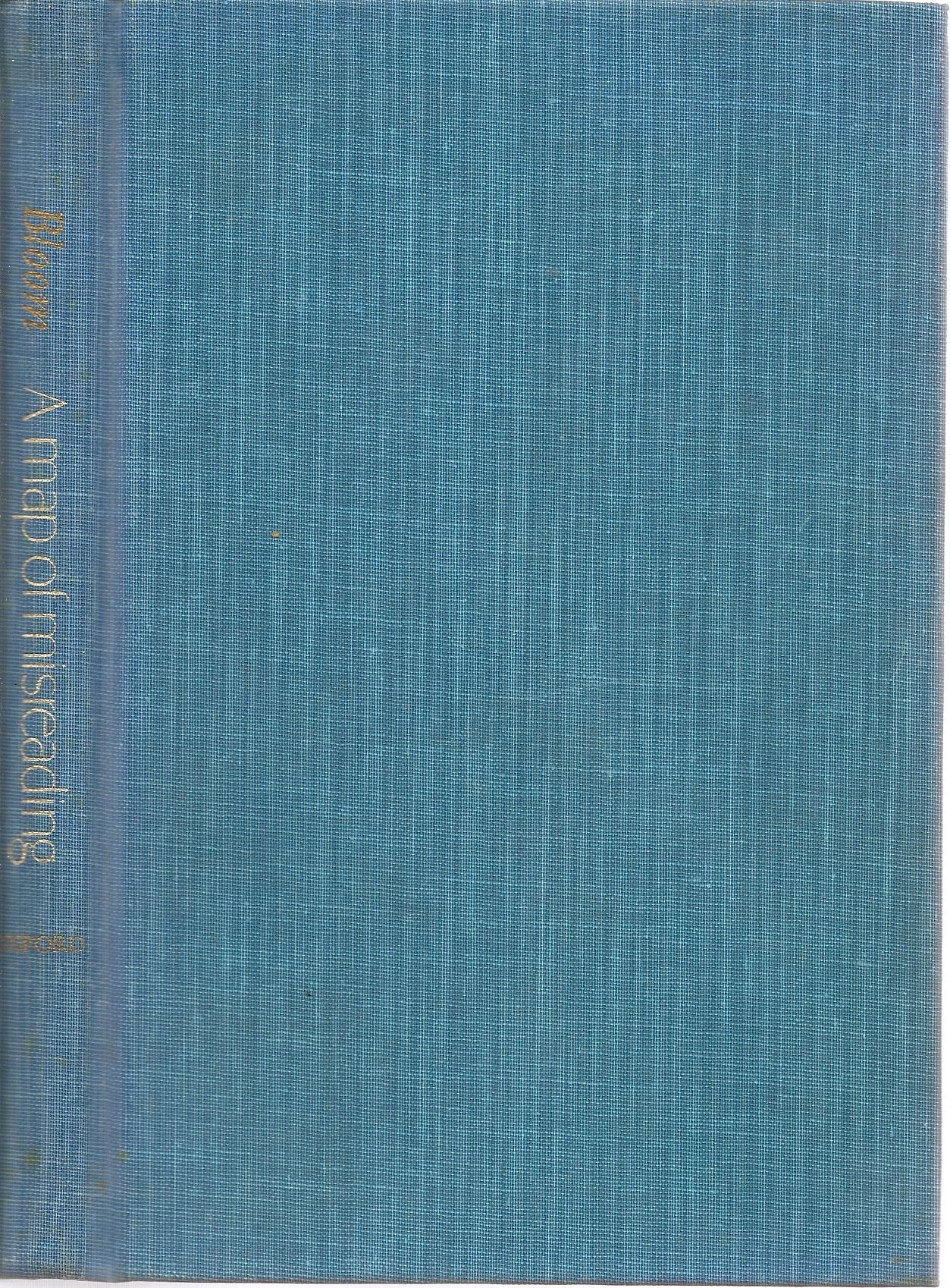
A map of misreading,Used
Sold by Ergodebooks, an authorized reseller.
Returns accepted within 30 days | support@ergodebooks.com
Shipping Information
- Free Standard Shipping — United States only
- Processing Time: 3–5 business days
- Estimated Delivery: 6–10 business days after dispatch
- Double-boxed, fully insured & discreetly packaged
- Tracking number sent via email once dispatched
Returns & Refund
Returns accepted within 30 days of delivery.
Damaged or Defective Item
Free return shipping + replacement or full refund
Wrong Item Received
Free return shipping + replacement or full refund
Change of Mind
Return shipping at customer's expense · 25% restocking fee applies
Payment Option

In A Map of Misreading Harold Bloom, who 'has helped to make the study of Romantic poetry as intellectually and spiritually challenging a branch of literary studies as one may find' (The New York Times Book Review), presents the first formal advance in the techniques of closely reading poetry since the early days of the New Criticism. Here, in a followup to his brilliant and highly controversial The Anxiety of Influence, Bloom demonstrates how the theory he proposed in that book works in practice. By applying his critical techniques to close readings of poems by major poets from Milton and Wordsworth to Ammons and Ashbery, Bloom demonstrates that patterns of imagery in poems represent both a response to and a defense against the influence of precursor poems, and as such may be seen as both rhetorical figures and psychological defense mechanisms. Thus one may chart how meaning is produced by the interplay of images and rhetorical figures. Bloom does just that by tracing the course of misreading in Browning's Childe Roland.The heart of A Map of Misreading is, of course, Bloom's map. He shows how it guides the reader by examining the work of two giants against whom the major English and American poets had to create their own psychic defenses Milton and Emerson and by discussing their influence on poems by Wordsworth, Shelley, Keats, Tennyson, Whitman, Dickinson, Stevens, Warren, Ammons, and Ashbery.Harold Bloom is one of the most remarkable critics writing about English and American literature today. In A Map of Misreading he travels previously unexplored regions, charting the terrain for those who would follow. The map he brings back from these territories is invaluable for readers who want to venture forth to the new critical worlds Bloom has discovered.
⚠️ WARNING (California Proposition 65):
This product may contain chemicals known to the State of California to cause cancer, birth defects, or other reproductive harm.
For more information, please visit www.P65Warnings.ca.gov.