
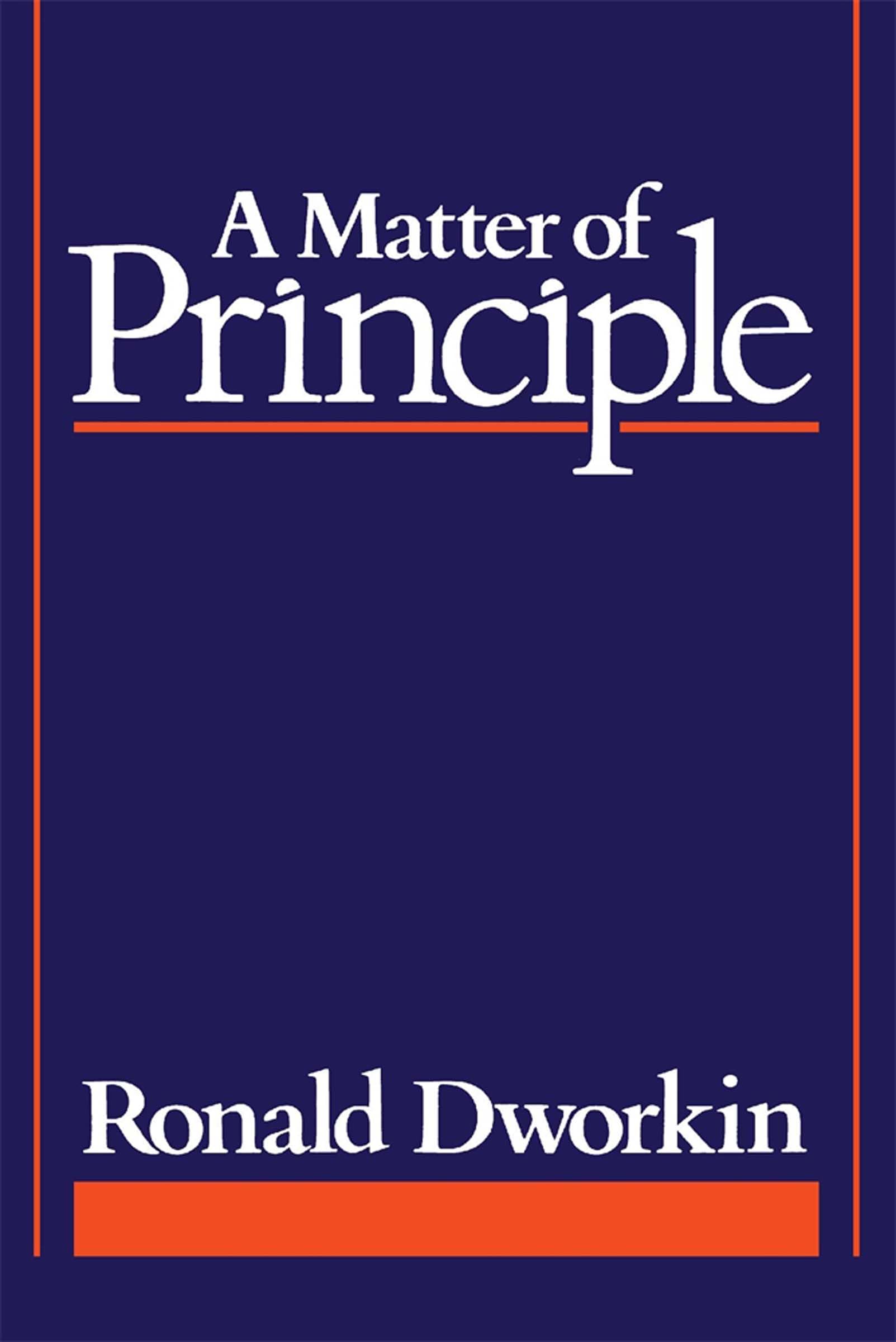
Title
A Matter of Principle,New
Sold by Ergodebooks, an authorized reseller.
Returns accepted within 30 days | support@ergodebooks.com
Shipping Information
- Free Standard Shipping — United States only
- Processing Time: 3–5 business days
- Estimated Delivery: 6–10 business days after dispatch
- Double-boxed, fully insured & discreetly packaged
- Tracking number sent via email once dispatched
Returns & Refund
Returns accepted within 30 days of delivery.
Damaged or Defective Item
Free return shipping + replacement or full refund
Wrong Item Received
Free return shipping + replacement or full refund
Change of Mind
Return shipping at customer's expense · 25% restocking fee applies
Payment Option

This is a book about the interplay of urgent political issues and hotly debated questions of moral philosophy. The controversies it joins are old; but history has given them fresh shape. For example, whether judges should and do make law is now of more practical importance than ever before, as recent presidents have appointed enough justices to the Supreme Court to set its character for a generation.With forceful style, Ronald Dworkin addresses questions about the AngloAmerican legal system as protector of individual rights and as machinery for furthering the common good. He discusses whether judges should make political decisions in hard cases; the balancing of individual rights versus the good of the community; whether a person has the right to do what society views as wrong; and the meaning of equality in any framework of social justice. Dworkin strongly opposes the idea that judges should aim at maximizing social wealth. It is his conviction that the area of discretion for judges is severely limited, that in a mature legal system one can always find in existing law a right answer for hard cases.Dworkin helps us thread our way through many timely issues such as the rights and privileges of the press under the First Amendment. He reviews the Bakke case, which tested affirmative action programs. These essays also examine civil disobedience, especially in nuclear protests, and bring new perspective to the debate over support of the arts.Above all, this is a book about the interplay between two levels of our political consciousness: practical problems and philosophical theory, matters of urgency and matters of principle. The concluding essay on press freedom expands the discussion of conflict between principle and policy into a warning. Though some defenders of the press blend the two in order to expand freedom of speech, the confusion they create does disservice to their aim and jeopardizes the genuine and fragile right of free speech. We stand in greater danger of compromising that right than of losing the most obvious policy benefits of powerful investigative reporting and should therefore beware the danger to liberty of confusing the two. The caution is general. If we care so little for principle that we dress policy in its colors when this suits our purpose, we cheapen principle and diminish its authority.
⚠️ WARNING (California Proposition 65):
This product may contain chemicals known to the State of California to cause cancer, birth defects, or other reproductive harm.
For more information, please visit www.P65Warnings.ca.gov.
- Q: How many pages does 'A Matter of Principle' have? A: This book contains four hundred twenty-five pages. It's a comprehensive exploration of political issues and moral philosophy.
- Q: What is the binding type of this book? A: The binding type is paperback. This makes it lightweight and easy to handle for extended reading sessions.
- Q: What are the dimensions of 'A Matter of Principle'? A: The dimensions are six point fourteen inches in length, zero point eight inches in width, and nine point twenty-five inches in height. These dimensions make it portable and suitable for carrying.
- Q: Who is the author of 'A Matter of Principle'? A: The author is Ronald Dworkin. He is a renowned philosopher and legal scholar known for his work in political philosophy.
- Q: What is the main theme of the book? A: The main theme explores the interplay between urgent political issues and moral philosophy. Dworkin discusses the role of judges and individual rights.
- Q: Is this book suitable for beginners in philosophy? A: Yes, it's suitable for beginners. Dworkin's writing is accessible, making complex ideas understandable for those new to the subject.
- Q: How should I care for this paperback book? A: To care for this book, keep it in a dry place and avoid direct sunlight. Store it upright to prevent bending or damage to the spine.
- Q: Can I use this book for academic purposes? A: Yes, this book is suitable for academic purposes. It provides insightful analysis on legal systems and moral philosophy, making it a valuable resource.
- Q: Is 'A Matter of Principle' appropriate for young adults? A: Yes, it is appropriate for young adults. The themes discussed are relevant and can engage mature teens interested in politics and philosophy.
- Q: What if my book arrives damaged? A: If your book arrives damaged, you should contact the seller immediately for a return or replacement. Most sellers have a satisfaction guarantee.
- Q: Are there any specific critiques discussed in the book? A: Yes, Dworkin critiques various legal philosophies, including the idea that judges should maximize social wealth. He discusses the balance between rights and community good.
- Q: What kind of readers will enjoy 'A Matter of Principle'? A: Readers interested in political philosophy, law, or ethics will enjoy this book. It appeals to those seeking to understand the complexities of justice and individual rights.
- Q: What notable cases does Dworkin review in the book? A: Dworkin reviews notable cases such as the Bakke case regarding affirmative action. He also discusses civil disobedience and press freedom.
- Q: How does Dworkin view the role of judges? A: Dworkin believes judges play a critical role and should strive to find the 'right answer' in difficult legal cases rather than making political decisions.
- Q: Can I recommend this book for a book club? A: Yes, it is a great choice for a book club. The discussions it raises about rights, justice, and morality are thought-provoking and encourage debate.