
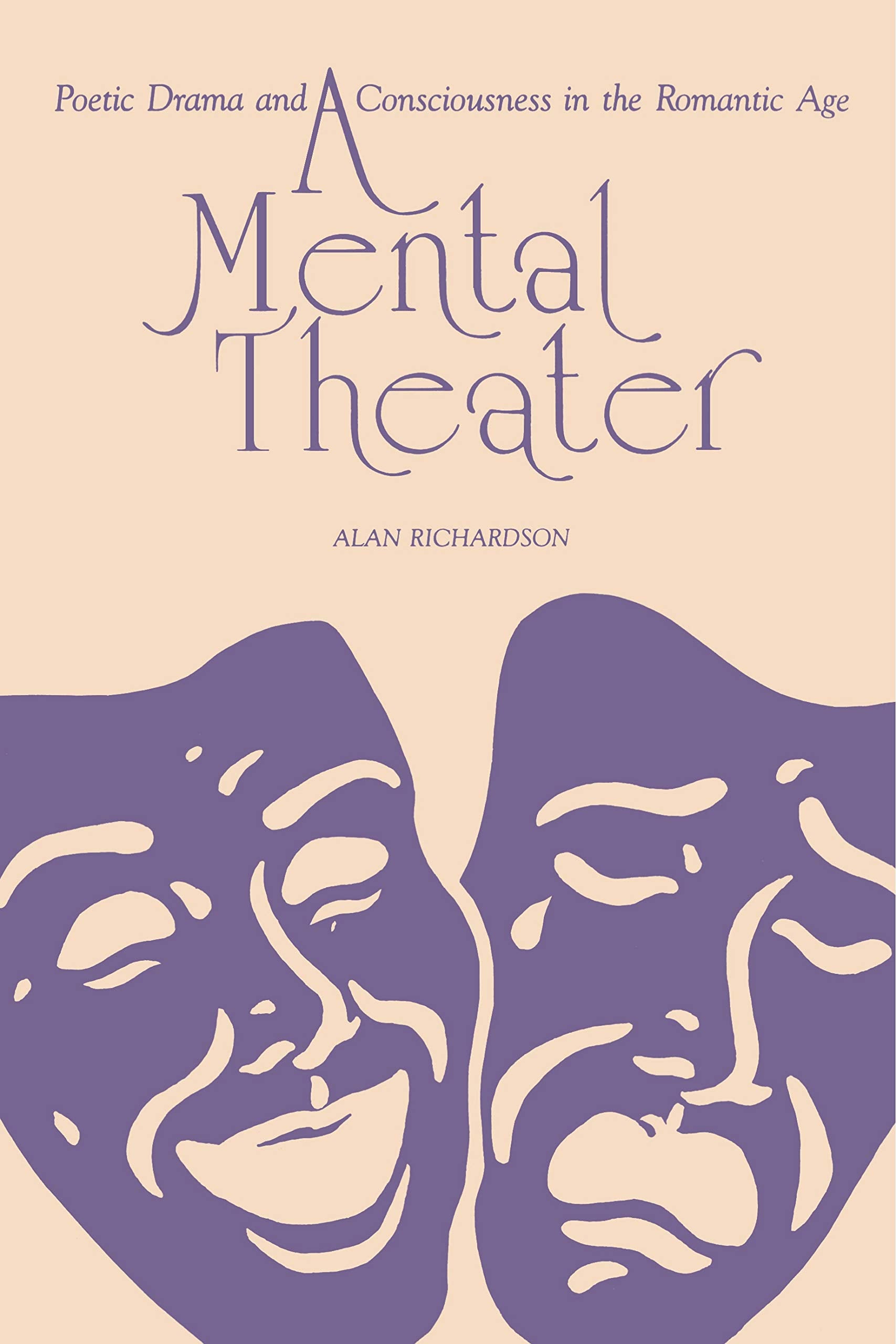
Title
A Mental Theater: Poetic Drama And Consciousness In The Romantic Age,New
Sold by Ergodebooks, an authorized reseller.
Returns accepted within 30 days | support@ergodebooks.com
Shipping Information
- Free Standard Shipping — United States only
- Processing Time: 3–5 business days
- Estimated Delivery: 6–10 business days after dispatch
- Double-boxed, fully insured & discreetly packaged
- Tracking number sent via email once dispatched
Returns & Refund
Returns accepted within 30 days of delivery.
Damaged or Defective Item
Free return shipping + replacement or full refund
Wrong Item Received
Free return shipping + replacement or full refund
Change of Mind
Return shipping at customer's expense · 25% restocking fee applies
Payment Option

Certain works of Romantic dramaPrometheus Unbound, Cain, The Cencihave received a good deal of critical attention, by as a whole the genre has been misunderstood and only slightly considered. Alan Richardson redresses a tradition of critical neglect by considering the works of Romantic drama not as failed stageplays ('closet drama') but as constituting a new, distinctively Romantic genre. In turning from the contemporary stagewhich was marked by spectacle, rant, and melodramathe Romantic poets developed an altogether new kind of drama, one which they hoped could recapture the intensity of Shakespearean tragedy that Neoclassical writers had scarcely approached.Richardson calls this genre (after Byron) 'mental theater,' both because its works are concerned with portraying the development of selfconsciousness and because it fuses the subjectivity of lyric with the interaction of dramatic poetry. Moreover, these works are addressed directly to the mind of the reader, bypassing the medium of stage representation. This study places Romantic selfconsciousness in a fundamentally new light. Far from uncritically pursuing an egoistic stance, the Romantics criticize through their poetic drama the attempt to attain psychic autonomy. The protagonists of Romantic drama are seduced by their antagonists into entering such a condition only to find in it a hollow, deathly isolation. They find in selfconsciousness not their promised liberation, but a tormented fate modeled after that of their betrayers. Wordsworth, Byron, and Shelley delineate the limitations of 'Romantic' selfconsciousness in their works of mental theater; Shelley alone envisions their transcendence through his radical transformation of consciousness in the conclusion to Prometheus Unbound.This interpretation of mental theater will lead to a new evaluation of the Romantics as dramatic poets. It brings back to critical attention neglected but challenging works such as Byron's Heaven and Earth and Beddoes's Death's JestBook, and provides vital new perspectives on undervalued texts like Wordsworth's The Borderers and Byron's Manfred and Cain. It qualifies decades of critical speculation on 'Romantic individualism' and 'Romantic consciousness,' and helps return the ideal of imaginative sympathy to the central position held in the critical writings of the Romantics themselves. Finally, in emphasizing the dramatic quality of mental theater, it challenges the stillprevalent view that Romantic poetry in inherently lyrical in character. Scholars concerned with English Romantic drama, Romantic literature, and the Romantic period as well as English drama will find this work to be an important contribution to their understanding.
⚠️ WARNING (California Proposition 65):
This product may contain chemicals known to the State of California to cause cancer, birth defects, or other reproductive harm.
For more information, please visit www.P65Warnings.ca.gov.