
Title
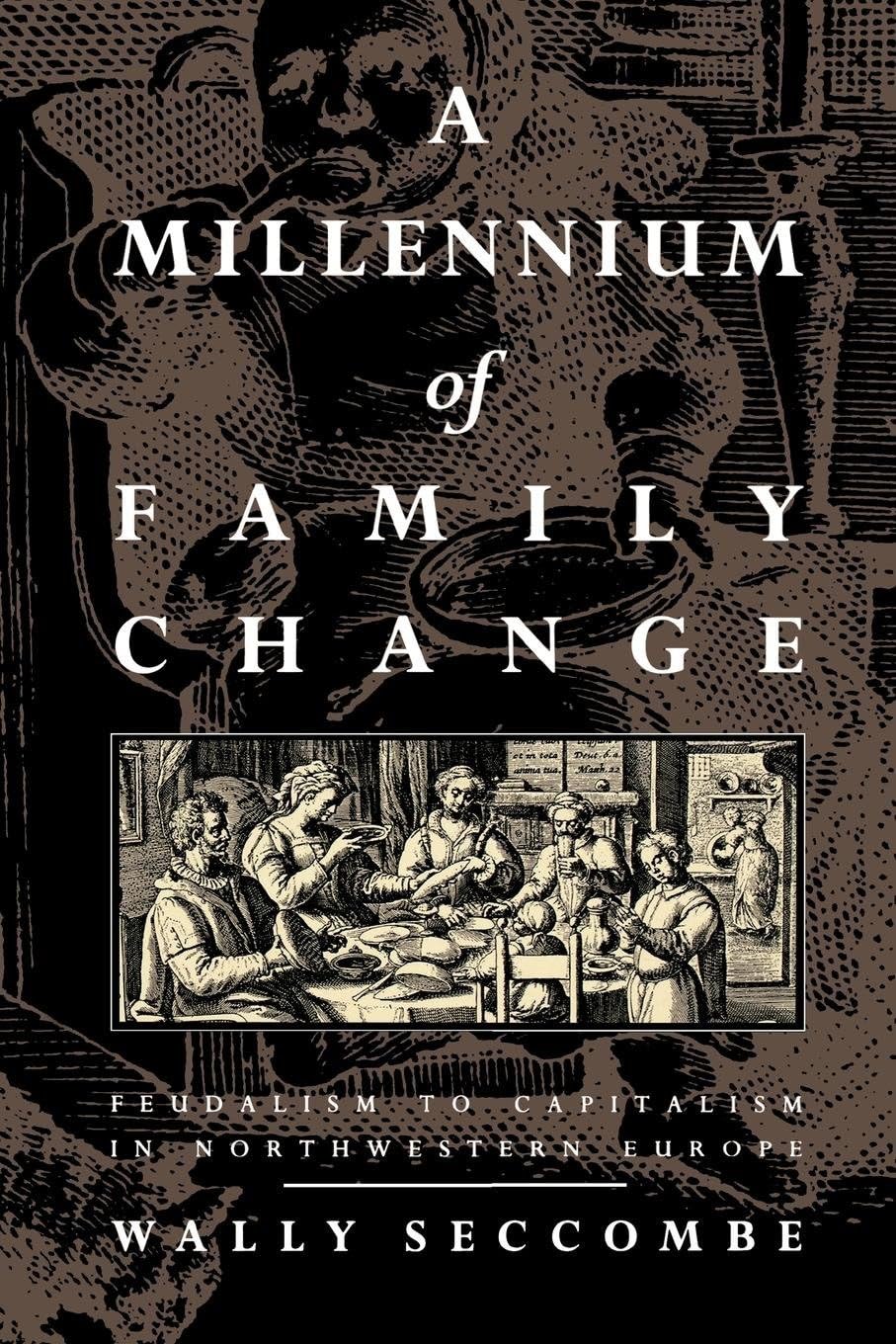
A Millennium Of Family Change: Feudalism To Capitalism In Northwestern Europe
Sold by Ergodebooks, an authorized reseller.
Returns accepted within 30 days | support@ergodebooks.com
Shipping Information
- Free Standard Shipping — United States only
- Processing Time: 3–5 business days
- Estimated Delivery: 6–10 business days after dispatch
- Double-boxed, fully insured & discreetly packaged
- Tracking number sent via email once dispatched
Returns & Refund
Returns accepted within 30 days of delivery.
Damaged or Defective Item
Free return shipping + replacement or full refund
Wrong Item Received
Free return shipping + replacement or full refund
Change of Mind
Return shipping at customer's expense · 25% restocking fee applies
Payment Option

How Do Changes In Family Form Relate To Changes In Society As A Whole? In A Work Which Combines Theoretical Rigour With Historical Scope, Wally Seccombe Provides A Powerful Study Of The Changing Structure Of Families From The Middle Ages To The Beginning Of The Industrial Revolution. Responding To Feminist Critiques Of Sexblind Historical Materialism, Seccombe Argues That Family Forms Must Be Seen To Be At The Heart Of Modes Of Production. He Takes Issue With The Mainstream Consensus In Family History Which Argues That Capitalism Did Not Fundamentally Alter The Structure Of The Nuclear Family, And Makes A Controversial Intervention In The Longstanding Debate Over European Marriage Patterns And Their Relation To Industrialization. Drawing On An Astonishing Range Of Studies In Family History, Historical Demography And Economic History, A Millennium Of Family Change Provides An Integrated Overview Of The Long Transition From Feudalism To Capitalism, Illuminating The Farreaching Changes In Familial Relations From Peasant Subsistence To The Making Of The Modern Working Class.
⚠️ WARNING (California Proposition 65):
This product may contain chemicals known to the State of California to cause cancer, birth defects, or other reproductive harm.
For more information, please visit www.P65Warnings.ca.gov.
- Q: What is the size of the book? A: The book measures six point one inches in length, zero point eight nine inches in width, and nine point two inches in height.
- Q: How many pages does 'A Millennium of Family Change' have? A: The book contains three hundred fifty-four pages, providing an in-depth exploration of family dynamics and historical transitions.
- Q: What type of binding does this book have? A: The book is paperback bound, making it a flexible and lightweight option for readers.
- Q: Who is the author of this book? A: The book is authored by Wally Seccombe, who provides a comprehensive analysis of family changes throughout history.
- Q: What is the genre of 'A Millennium of Family Change'? A: The book falls under the category of Economic Conditions, focusing on historical and social changes in family structures.
- Q: Is this book suitable for academic use? A: Yes, this book is suitable for academic use, as it combines theoretical rigor with historical scope in family studies.
- Q: What themes are explored in this book? A: The book explores themes such as the relationship between family forms and modes of production throughout history.
- Q: How does this book address feminist critiques? A: The book responds to feminist critiques by emphasizing the importance of family structures in historical materialism.
- Q: Is this book appropriate for young readers? A: This book is likely more suitable for adult readers, given its complex themes and historical analysis.
- Q: How should I store this book? A: Store this book in a cool, dry place, standing upright to maintain its shape and condition.
- Q: Can this book be cleaned if it gets dirty? A: Yes, you can lightly wipe the cover with a dry cloth to remove dust or smudges without damaging the book.
- Q: What should I do if the book arrives damaged? A: If the book arrives damaged, you should contact the seller for information on their return policy and how to initiate a return.
- Q: Is there a warranty for this book? A: Typically, books do not come with a warranty, but you should check with the retailer for specific return options.
- Q: What is the manufacturer's name for this book? A: The manufacturer of this book is Verso Books, known for publishing insightful titles in social and economic history.
- Q: Are there any notable studies referenced in the book? A: Yes, the book draws on an astonishing range of studies from family history, historical demography, and economic history.
- Q: What is the ISBN for this book? A: The ISBN can typically be found on the back cover or inside the book, providing a unique identifier for this title.