
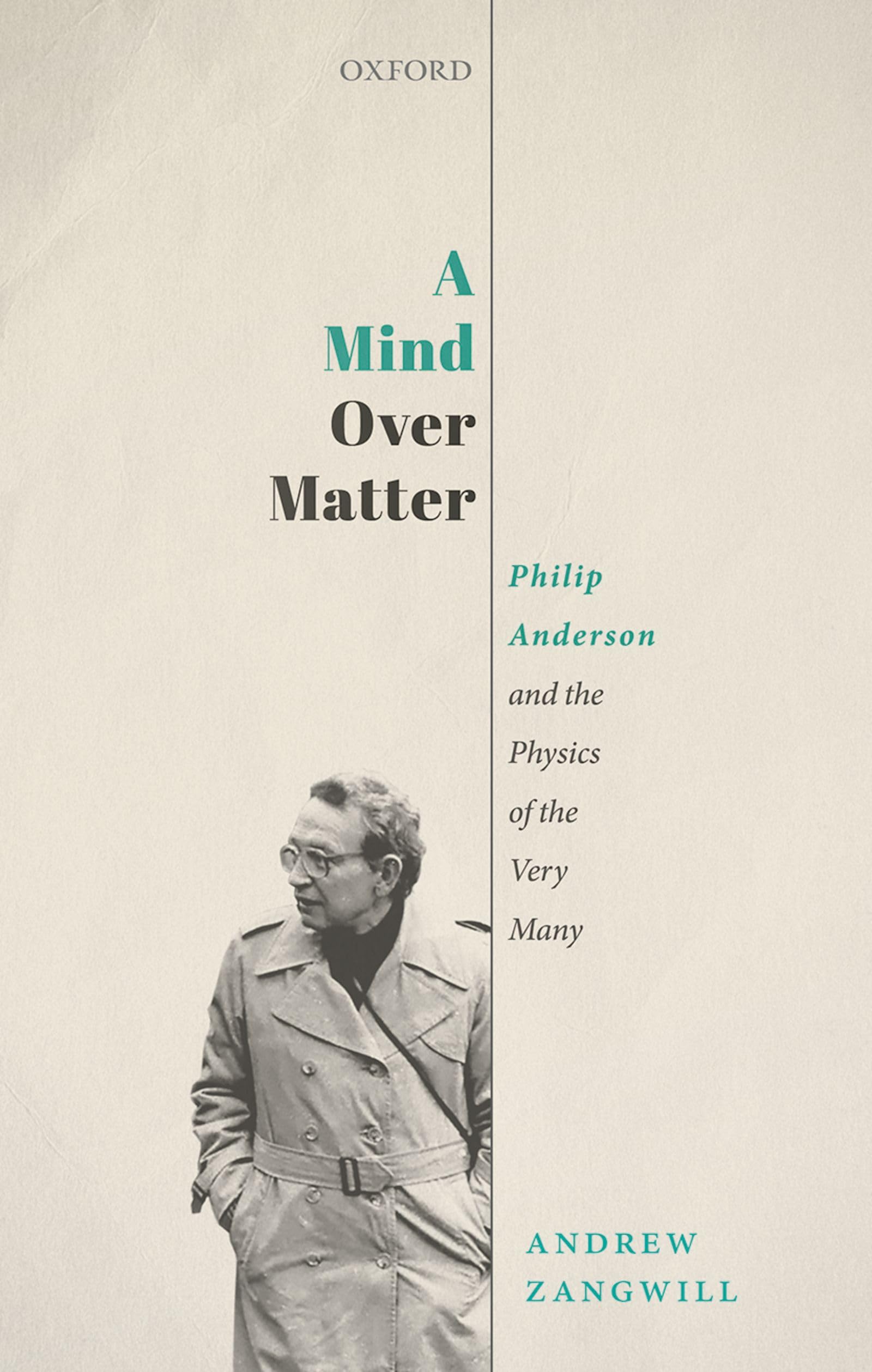
Title
A Mind Over Matter: Philip Anderson and the Physics of the Very Many,New
Sold by Ergodebooks, an authorized reseller.
Returns accepted within 30 days | support@ergodebooks.com
Shipping Information
- Free Standard Shipping — United States only
- Processing Time: 3–5 business days
- Estimated Delivery: 6–10 business days after dispatch
- Double-boxed, fully insured & discreetly packaged
- Tracking number sent via email once dispatched
Returns & Refund
Returns accepted within 30 days of delivery.
Damaged or Defective Item
Free return shipping + replacement or full refund
Wrong Item Received
Free return shipping + replacement or full refund
Change of Mind
Return shipping at customer's expense · 25% restocking fee applies
Payment Option

A Mind Over Matter is a biography of the Nobelprize winner Philip W. Anderson, a person widely regarded as one of the most accomplished and influential physicists of the second half of the twentieth century. Anderson (19232020) was a theoretician who specialized in the physics of matter, including window glass and metals, magnets and semiconductors, liquid crystals and superconductors. More than any other single person, Anderson transformed the patchwork subject of solidstate physics into the deep, subtle, and coherent discipline known today as condensed matter physics. Among his many worldclass research achievements, Anderson discovered an aspect of wave physics that had been missed by all previous scientists going back to Isaac Newton. He became a public figure when he testified before Congress to oppose its funding of an expensive project intended exclusively for particle physics research. Over the years, he published many articles designed to influence a broad audience about issues where science impacted public policy and culture. Anderson grew up in the American midwest, was educated at Harvard, and rose to the pinnacle of his profession during the first decade of his thirtyfive career as a theoretical physicist at Bell Telephone Laboratories. Almost uniquely, he spent many years working halftime as a professor at the University of Cambridge and at Princeton University. The outspoken Anderson enjoyed broad influence outside of physics when he helped develop and champion the concepts of emergence and complexity as organizing principles to help attack very difficult problems in technically challenging disciplines.
⚠️ WARNING (California Proposition 65):
This product may contain chemicals known to the State of California to cause cancer, birth defects, or other reproductive harm.
For more information, please visit www.P65Warnings.ca.gov.