
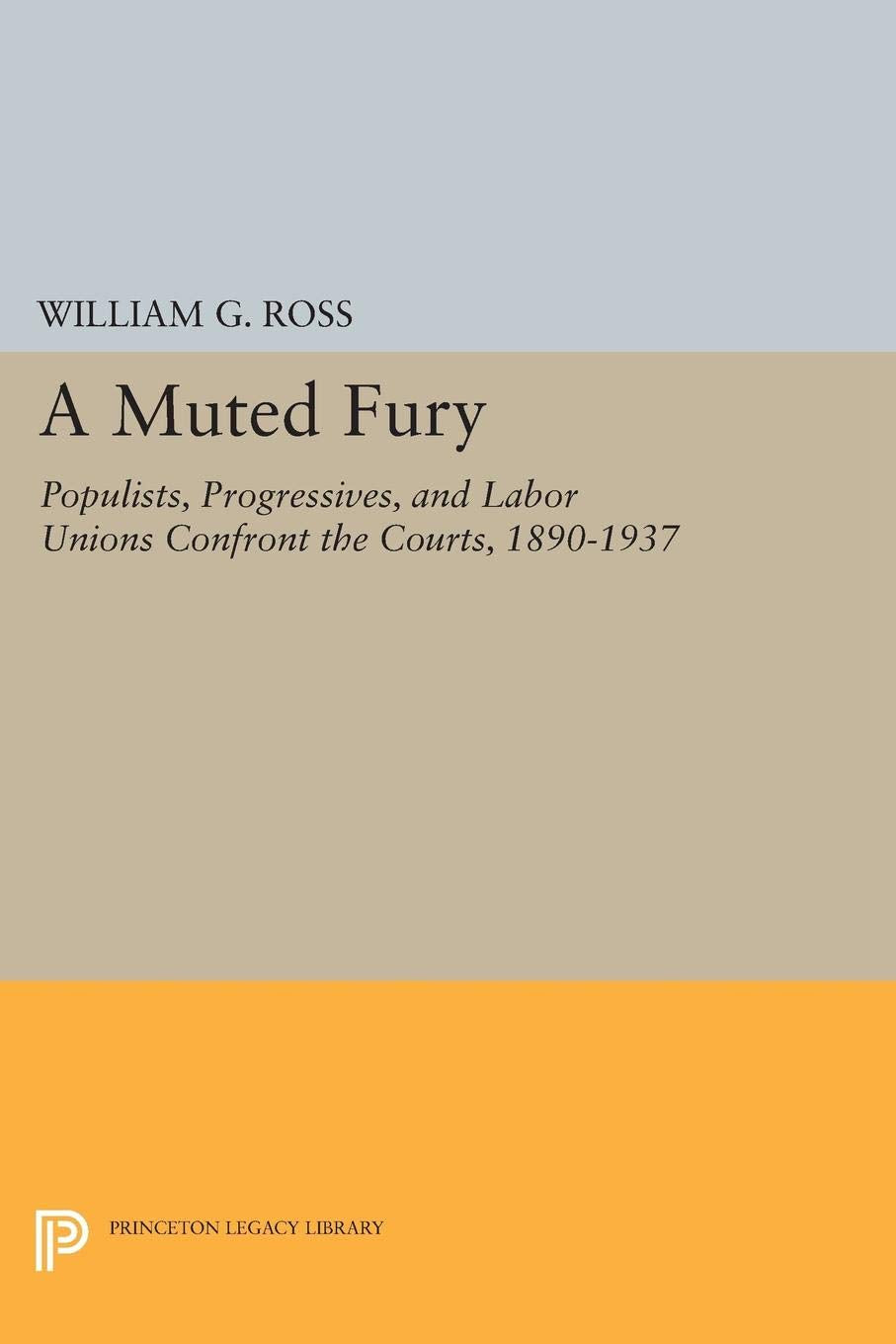
Title
A Muted Fury (Princeton Legacy Library, 229),New
Sold by Ergodebooks, an authorized reseller.
Returns accepted within 30 days | support@ergodebooks.com
Shipping Information
- Free Standard Shipping — United States only
- Processing Time: 3–5 business days
- Estimated Delivery: 6–10 business days after dispatch
- Double-boxed, fully insured & discreetly packaged
- Tracking number sent via email once dispatched
Returns & Refund
Returns accepted within 30 days of delivery.
Damaged or Defective Item
Free return shipping + replacement or full refund
Wrong Item Received
Free return shipping + replacement or full refund
Change of Mind
Return shipping at customer's expense · 25% restocking fee applies
Payment Option

For half a century before 1937, populists, progressives, and labor leaders complained bitterly that a 'judicial oligarchy' impeded social and economic reform by imposing crippling restraints on trade unions and nullifying legislation that regulated business corporations. A Muted Fury, the first study of this neglected chapter in American political and legal history, explains the origins of hostility toward the courts during the Progressive Era, examines in detail the many measures that antagonists of the judiciary proposed for the curtailment of judicial power, and evaluates the successes and failures of the anticourt movements.Tapping a broad array of sources, including popular literature and unpublished manuscripts, William Ross demonstrates that this widespread fury against the judiciary was muted by many factors, including respect for judicial power, internal divisions among the judiciary's critics, institutional obstacles to reform, and the judiciary's own willingness to mitigate its hostility toward progressive legislation and labor. Ross argues that persistent criticism of the courts influenced judicial behavior, even though the antagonists of the courts failed in their many efforts to curb judicial power. The book's interdisciplinary exploration of the complex interactions among politics, public opinion, judicial decisionmaking, the legislative process, and the activities of organized interest groups provides fresh insights into the perennial controversy over the scope of judicial power in America.Originally published in 1994.The Princeton Legacy Library uses the latest printondemand technology to again make available previously outofprint books from the distinguished backlist of Princeton University Press. These editions preserve the original texts of these important books while presenting them in durable paperback and hardcover editions. The goal of the Princeton Legacy Library is to vastly increase access to the rich scholarly heritage found in the thousands of books published by Princeton University Press since its founding in 1905.
⚠️ WARNING (California Proposition 65):
This product may contain chemicals known to the State of California to cause cancer, birth defects, or other reproductive harm.
For more information, please visit www.P65Warnings.ca.gov.