
Title
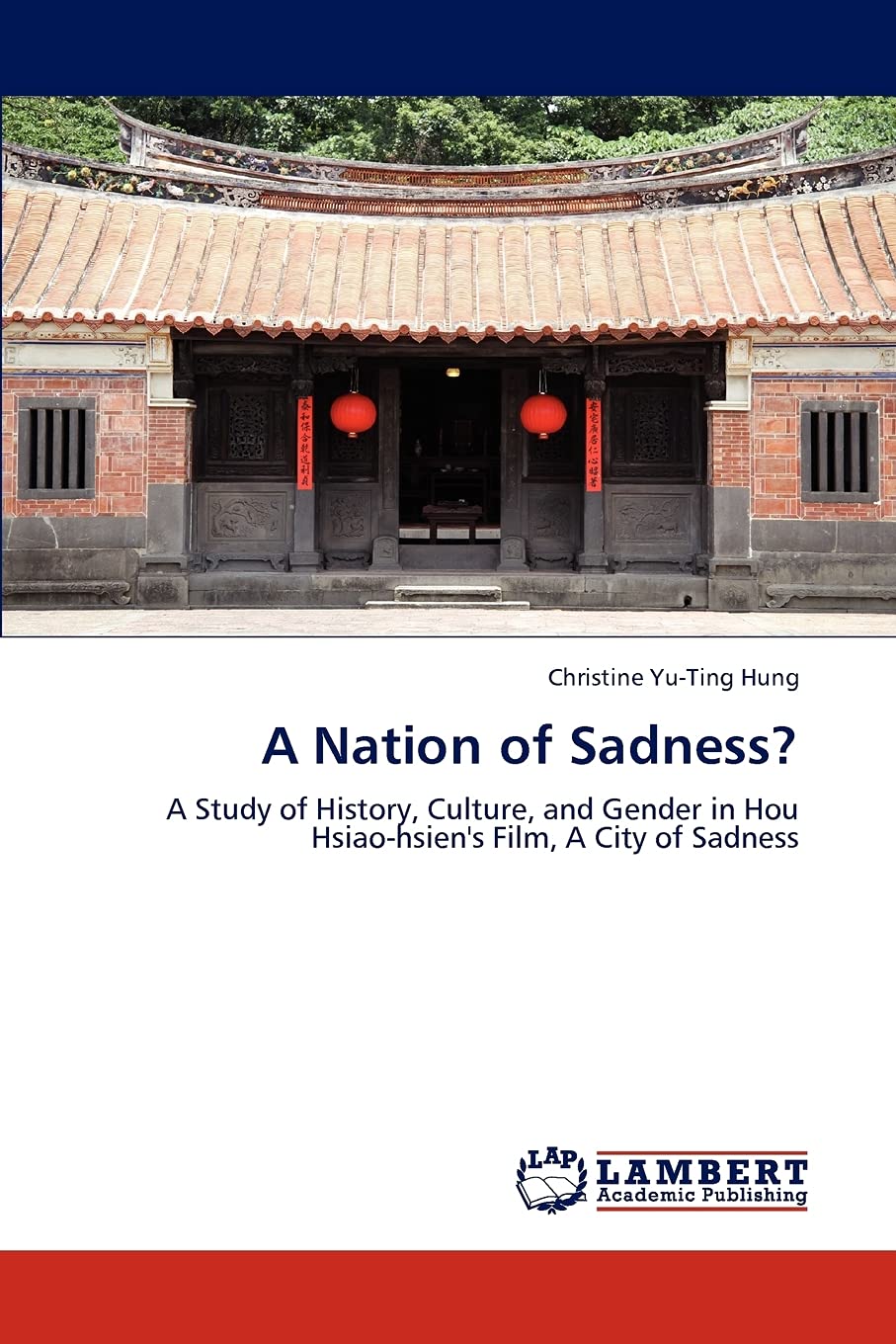
A Nation of Sadness?: A Study of History, Culture, and Gender in Hou Hsiaohsien's Film, A City of Sadness,Used
Sold by Ergodebooks, an authorized reseller.
Returns accepted within 30 days | support@ergodebooks.com
Shipping Information
- Free Standard Shipping — United States only
- Processing Time: 3–5 business days
- Estimated Delivery: 6–10 business days after dispatch
- Double-boxed, fully insured & discreetly packaged
- Tracking number sent via email once dispatched
Returns & Refund
Returns accepted within 30 days of delivery.
Damaged or Defective Item
Free return shipping + replacement or full refund
Wrong Item Received
Free return shipping + replacement or full refund
Change of Mind
Return shipping at customer's expense · 25% restocking fee applies
Payment Option

This book engages with Taiwanese history by offering a reading of Hou Hsiaohsiens A City of Sadness (1989), making reference to the films historical dimensions, cultural representations and gender issues in the period 1945 to 1949. It examines Taiwans indigenous culture and the impact of Japanese and Chinese cultural practices in A City of Sadness through the postcolonial theories of Perry Anderson, Homi Bhabha, and Chris Berry. I draw on their theories of cultural hegemony and my empiricism to investigate Hous representation of the political situation in Taiwan. Finally, the book evaluates gender issues in A City of Sadness, with reference to Julia Kristevas notion of feminine time and the debate between Emilie Yeh and Mizou concerning whether women can really enter history. In evaluating A City of Sadness I argue that Hou Hsiaohsiens use of a familys microhistory to parallel the national macrohistory of the February 28 Incident opens an important historical window through which the audience may reencounter and reflect on Taiwans past, and think positively about its future.
⚠️ WARNING (California Proposition 65):
This product may contain chemicals known to the State of California to cause cancer, birth defects, or other reproductive harm.
For more information, please visit www.P65Warnings.ca.gov.