If you have any questions, you are always welcome to contact us. We'll get back to you as soon as possible, withing 24 hours on weekdays.
Customer service
All questions about your order, return and delivery must be sent to our customer service team by e-mail at yourstore@yourdomain.com
Sale & Press
If you are interested in selling our products, need more information about our brand or wish to make a collaboration, please contact us at press@yourdomain.com
Help
If you have any questions, you are always welcome to contact us. We'll get back to you as soon as possible, withing 24 hours on weekdays.
Customer service
All questions about your order, return and delivery must be sent to our customer service team by e-mail at yourstore@yourdomain.com
Sale & Press
If you are interested in selling our products, need more information about our brand or wish to make a collaboration, please contact us at press@yourdomain.com
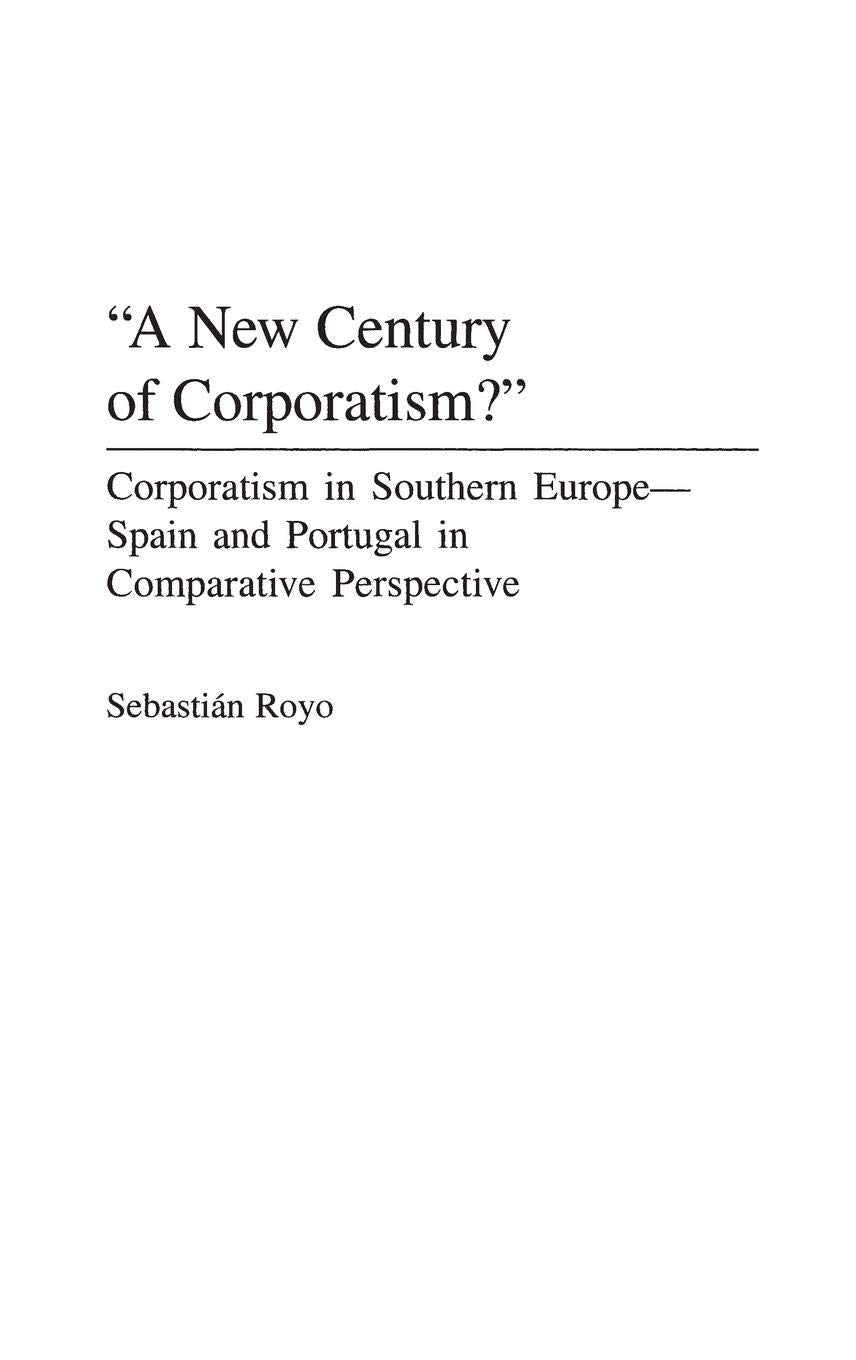
Royo examines how nationallevel social bargaining was established in Portugal and Spain during the last two decades, despite unpropitious institutional and structural conditions. He argues that this development was the result of the reorientation of the strategies of the social actors. With their support for these macroeconomic agreements labor unions sought to participate in labor and economic reforms and avoid the implementation of unilateral policies on the part of governments, while mitigating the decline in their bargaining power at the workplace level.In addition, Royo contends that a process of institutional learning and increasing autonomy by unions from political parties, particularly in Spain, have further enhanced social dialogue and led the social actors to conclude that previous confrontational strategies were detrimental to the interests of their constituencies and threatened their own survival. Royo claims that the emergence of new institutions to promote tripartite social bargaining in both countries resulted in the institutionalization of the bargaining process and contributed to a transformation in the pattern of industrial relations. Of particular interest to scholars and researchers involved with Iberian politics, labor, and political economy.
⚠️ WARNING (California Proposition 65):
This product may contain chemicals known to the State of California to cause cancer,
birth defects, or other reproductive harm.
For MAP (Minimum Advertised Price) violations and Intellectual Property (IP) or Trademark concerns, please contact:
support@ergodebooks.com
⚠️ California Proposition 65 Warning: Some products sold on this website may expose you to chemicals known to the State of California to cause cancer, birth defects, or other reproductive harm. For more information, visit www.P65Warnings.ca.gov.