
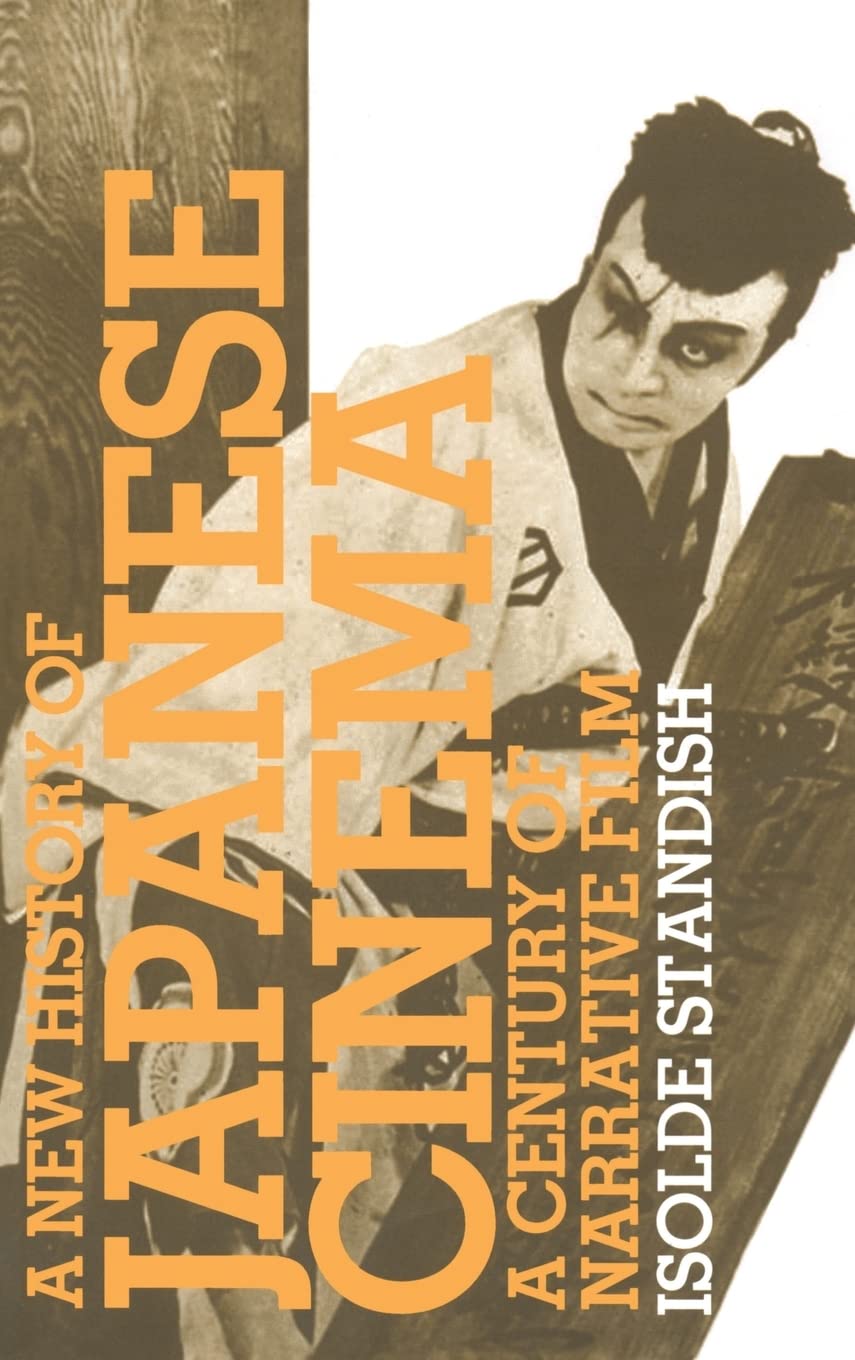
Title
A New History Of Japanese Cinema,New
Sold by Ergodebooks, an authorized reseller.
Returns accepted within 30 days | support@ergodebooks.com
Shipping Information
- Free Standard Shipping — United States only
- Processing Time: 3–5 business days
- Estimated Delivery: 6–10 business days after dispatch
- Double-boxed, fully insured & discreetly packaged
- Tracking number sent via email once dispatched
Returns & Refund
Returns accepted within 30 days of delivery.
Damaged or Defective Item
Free return shipping + replacement or full refund
Wrong Item Received
Free return shipping + replacement or full refund
Change of Mind
Return shipping at customer's expense · 25% restocking fee applies
Payment Option

Cinema, Which First Arrived In Japan In 1896 With The Kinetoscope Prototype, Came At The Very Time That Japan Was Transforming Its Economic Base And Society Into That Of A Major International Power. The First Cinema, The Asakusa Denkikan, Was Opened In Tokyo In 1903 And Within Thirteen Years Three Hundred Cinemas Had Sprung Up Throughout The Country.In A New History Of Japanese Cinema: A Century Of Narrative Film, Isolde Standish Focuses On The Historical Development Of Japanese Film. She Details An Industry And An Art Form Shaped By The Competing And Merging Forces Of Traditional Culture And Of Economic And Technological Innovation. Adopting A Thematic, Exploratory Approach, Standish Links The Concept Of Japanese Cinema As A System Of Communication With Some Of The Central Discourses Of The Twentieth Century: Modernism, Nationalism, Humanism, Resistance, And Gender.After An Introduction Outlining The Earliest Years Of Cinema In Japan, Standish Demonstrates Cinema'S Symbolic Position In Japanese Society In The 1930Sas Both A Metaphor And A Motor Of Modernity. Moving Into The Late Thirties And Early Forties, Standish Analyses Cinema'S Relationship With The Statefocusing In Particular On The War And Occupation Periods. The Book'S Coverage Of The Postoccupation Period Looks At 'Romance' Films In Particular. Avantgarde Directors Came To The Fore During The 1960S And Early Seventies, And Their Work Is Discussed In Depth. The Book Concludes With An Investigation Of Genre And Gender In Mainstream Films Of Recent Years.In Grappling With Japanese Film History And Criticism, Most Western Commentators Have Concentrated On Offering Interpretations Of What Have Come To Be Considered 'Classic' Films. A New History Of Japanese Cinema Takes A Genuinely Innovative Approach To The Subject, And Should Prove An Essential Resource For Many Years To Come.Includes An 8Page Color Plate Section And An 8Page Black And White Plate Section.
⚠️ WARNING (California Proposition 65):
This product may contain chemicals known to the State of California to cause cancer, birth defects, or other reproductive harm.
For more information, please visit www.P65Warnings.ca.gov.
- Q: How many pages does 'A New History of Japanese Cinema' have? A: This book has four hundred thirty-four pages. It provides a comprehensive exploration of Japanese cinema's historical development.
- Q: What is the binding type of this book? A: The book is hardcover. This sturdy binding enhances its durability and makes it suitable for frequent use.
- Q: What are the dimensions of 'A New History of Japanese Cinema'? A: The dimensions are six point three four inches in length, one point zero six inches in width, and nine point two five inches in height. These measurements make it a manageable size for reading.
- Q: Who is the author of 'A New History of Japanese Cinema'? A: The author is Isolde Standish. She focuses on the historical development of the Japanese film industry.
- Q: What genre does this book belong to? A: This book belongs to the Performing Arts genre. It specifically explores the narrative and historical aspects of Japanese cinema.
- Q: How do I read 'A New History of Japanese Cinema'? A: You can read this book by simply opening it and following the text from beginning to end. It provides a narrative exploration of Japanese cinema.
- Q: Is 'A New History of Japanese Cinema' suitable for beginners? A: Yes, it is suitable for beginners. The book adopts a thematic approach that is accessible to readers new to the subject.
- Q: What themes are covered in 'A New History of Japanese Cinema'? A: The book covers themes such as modernism, nationalism, resistance, and gender in the context of Japanese cinema. These themes are interwoven with the historical narrative.
- Q: How do I take care of 'A New History of Japanese Cinema'? A: To keep this book in good condition, store it upright in a dry place and avoid exposure to direct sunlight. Handle it gently to prevent wear and tear.
- Q: What is the safety of the book's content for children? A: The book is not specifically classified for children. It discusses complex themes related to cinema and society that may be more suitable for older readers.
- Q: How do I store 'A New History of Japanese Cinema'? A: Store this book on a shelf or in a bookcase. Ensure it is upright to prevent bending or damage to the spine.
- Q: Can I return 'A New History of Japanese Cinema' if I don't like it? A: Yes, you can return it if it is within the return window specified by the seller. Always check the return policy for specific details.
- Q: What if 'A New History of Japanese Cinema' arrives damaged? A: If the book arrives damaged, contact the seller for a replacement or refund. Document any damage with photos to assist in your claim.
- Q: Is there a warranty for 'A New History of Japanese Cinema'? A: Typically, books do not come with a warranty. However, check with the seller for any specific guarantees or return policies.
- Q: How does 'A New History of Japanese Cinema' compare to other books on film history? A: This book offers an innovative approach by linking Japanese cinema to broader cultural discourses, setting it apart from many Western-focused texts.
- Q: What audience is 'A New History of Japanese Cinema' primarily aimed at? A: The book is primarily aimed at students, scholars, and enthusiasts of film studies, especially those interested in Japanese cinema.