If you have any questions, you are always welcome to contact us. We'll get back to you as soon as possible, withing 24 hours on weekdays.
Customer service
All questions about your order, return and delivery must be sent to our customer service team by e-mail at yourstore@yourdomain.com
Sale & Press
If you are interested in selling our products, need more information about our brand or wish to make a collaboration, please contact us at press@yourdomain.com
Help
If you have any questions, you are always welcome to contact us. We'll get back to you as soon as possible, withing 24 hours on weekdays.
Customer service
All questions about your order, return and delivery must be sent to our customer service team by e-mail at yourstore@yourdomain.com
Sale & Press
If you are interested in selling our products, need more information about our brand or wish to make a collaboration, please contact us at press@yourdomain.com
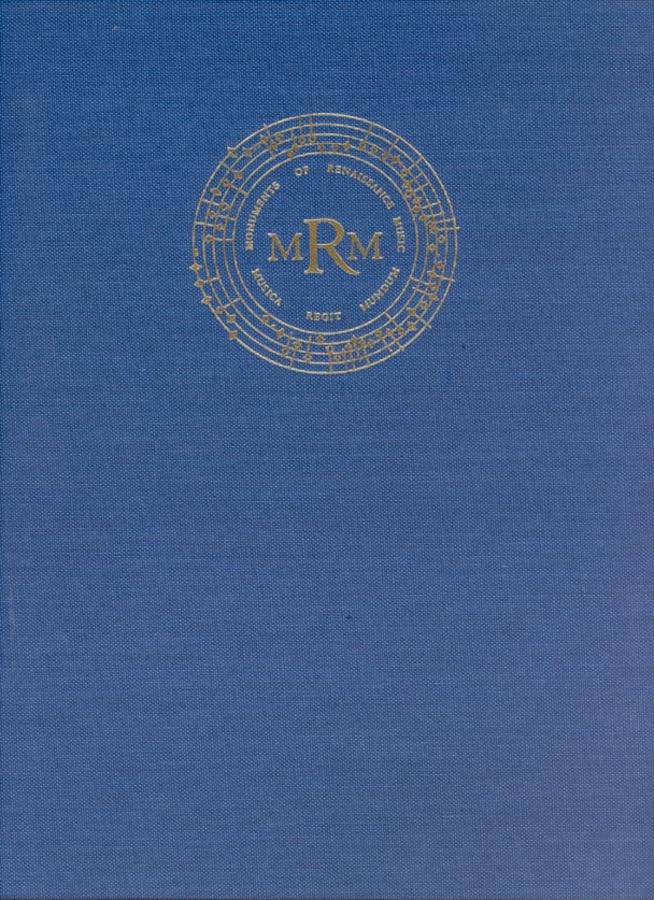
Following the conquest of Mexico by Corts and much of Central America by Alvarado, cathedral churches were established throughout the region, all with Europeanstyle polyphonic choirs. Among the most important of these early centers of Spanish culture was the cathedral of Guatemala City, where polyphony was already in use in the 1540s.Shortly after 1600, the organist and choir director of the cathedral collected, organized, and copied into choirbooks all of the thenextant music used by the choir. The manuscript presented here in modern edition, one of at least five choirbooks prepared at the time, contains a number of otherwise unknown works by such major Old World composers as Francisco Guerrero and Cristbal de Morales. Significant works by Hernando Franco and Pedro Bermdez, choirmasters of the Guatemala City Cathedral, are also included. The manuscript presents a unified repertory for Holy Week and for the Salve services in Lent, including four settings of the Passion, for which the Spanish were famous throughout Christendom. Some of the works predate the sixteenthcentury reform of the Roman Breviary and Missal, among them the original versions of several Vespers hymns and Magnificat settings by Guerrero that are otherwise known only in later versions found in Spanish sources. An extensive historical introduction by Robert J. Snow discusses the formation of the cathedral's musical repertory and illuminates both Old and New World practices of sixteenthcentury Spanish liturgical music.
⚠️ WARNING (California Proposition 65):
This product may contain chemicals known to the State of California to cause cancer,
birth defects, or other reproductive harm.
For MAP (Minimum Advertised Price) violations and Intellectual Property (IP) or Trademark concerns, please contact:
support@ergodebooks.com
⚠️ California Proposition 65 Warning: Some products sold on this website may expose you to chemicals known to the State of California to cause cancer, birth defects, or other reproductive harm. For more information, visit www.P65Warnings.ca.gov.