
Title
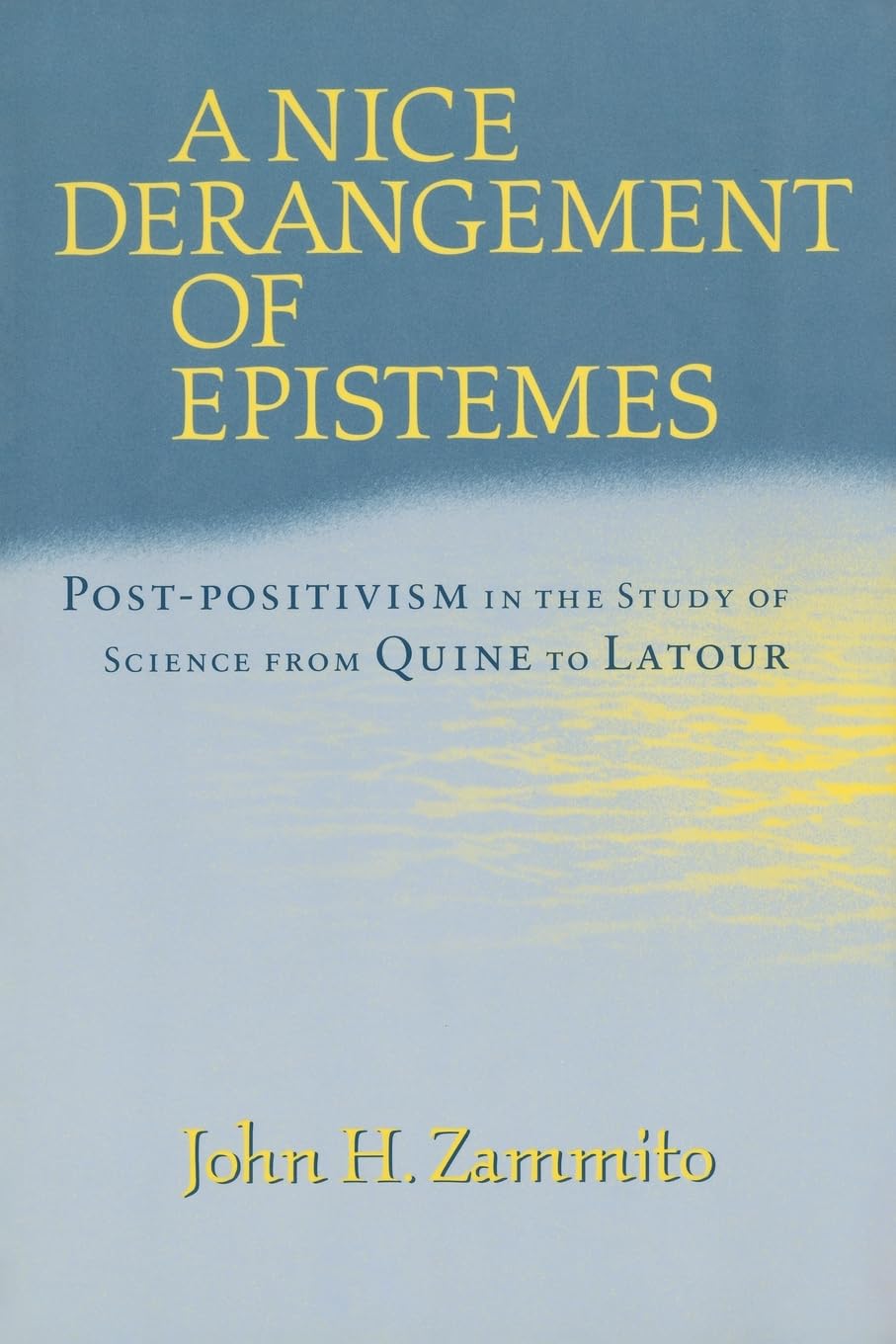
A Nice Derangement Of Epistemes: Postpositivism In The Study Of Science From Quine To Latour,New
Sold by Ergodebooks, an authorized reseller.
Returns accepted within 30 days | support@ergodebooks.com
Shipping Information
- Free Standard Shipping — United States only
- Processing Time: 3–5 business days
- Estimated Delivery: 6–10 business days after dispatch
- Double-boxed, fully insured & discreetly packaged
- Tracking number sent via email once dispatched
Returns & Refund
Returns accepted within 30 days of delivery.
Damaged or Defective Item
Free return shipping + replacement or full refund
Wrong Item Received
Free return shipping + replacement or full refund
Change of Mind
Return shipping at customer's expense · 25% restocking fee applies
Payment Option

Since The 1950S, Many Philosophers Of Science Have Attacked Positivismthe Theory That Scientific Knowledge Is Grounded In Objective Reality. Reconstructing The History Of These Critiques, John H. Zammito Argues That While Socalled Postpositivist Theories Of Science Are Very Often Invoked, They Actually Provide Little Support For Fashionable Postmodern Approaches To Science Studies.Zammito Shows How Problems That Quine And Kuhn Saw In The Philosophy Of The Natural Sciences Inspired A Turn To The Philosophy Of Language For Resolution. This Linguistic Turn Led To Claims That Science Needs To Be Situated In Both Historical And Social Contexts, But The Claims Of Recent 'Science Studies' Only Deepened The Philosophical Quandary. In Essence, Zammito Argues That None Of The Problems With Positivism Provides The Slightest Justification For Denigrating Empirical Inquiry And Scientific Practice, Delivering Quite A Blow To The 'Discipline' Postmodern Science Studies.Filling A Gap In Scholarship To Date, A Nice Derangement Of Epistemes Will Appeal To Historians, Philosophers, Philosophers Of Science, And The Broader Scientific Community.
⚠️ WARNING (California Proposition 65):
This product may contain chemicals known to the State of California to cause cancer, birth defects, or other reproductive harm.
For more information, please visit www.P65Warnings.ca.gov.
- Q: What is the page count of this book? A: This book has four hundred pages. It provides an in-depth analysis of post-positivism in the study of science.
- Q: What type of binding does this book have? A: This book is published in paperback binding. This makes it lightweight and easy to handle.
- Q: Who is the author of this book? A: The author is John H. Zammito. He is known for his work in the philosophy of science.
- Q: What is the main theme of this book? A: The main theme is the critique of positivism in science. It explores how post-positivist theories are often misunderstood.
- Q: Is this book suitable for beginners in philosophy? A: Yes, this book is suitable for beginners. It presents complex ideas in an accessible manner.
- Q: What audience would benefit from this book? A: Historians, philosophers, and the scientific community would benefit. It fills a gap in scholarship on science studies.
- Q: How should I care for this paperback book? A: Keep it in a dry place away from direct sunlight. This will prevent fading and damage.
- Q: Can this book be read by children? A: No, this book is intended for adults. It discusses advanced philosophical concepts that may not be suitable for children.
- Q: Is there a warranty or return policy for this book? A: Yes, there is typically a return policy. Check with the seller for specific details.
- Q: What if the book arrives damaged? A: If the book arrives damaged, contact customer support for a replacement. They will assist you with the return process.
- Q: Are there any specific storage recommendations for this book? A: Store it upright on a shelf. This helps maintain its shape and prevents bending.
- Q: Is this book part of a series? A: No, this book is a standalone title. It focuses specifically on post-positivism.
- Q: How does this book compare to other works in philosophy? A: This book offers a unique perspective on post-positivism. It challenges popular postmodern views in science studies.
- Q: Is this book available in digital format? A: Yes, this book is available in digital formats. Check your preferred ebook platform.
- Q: What type of readers would find this book challenging? A: Readers unfamiliar with philosophical terminology may find it challenging. It requires some background knowledge.