
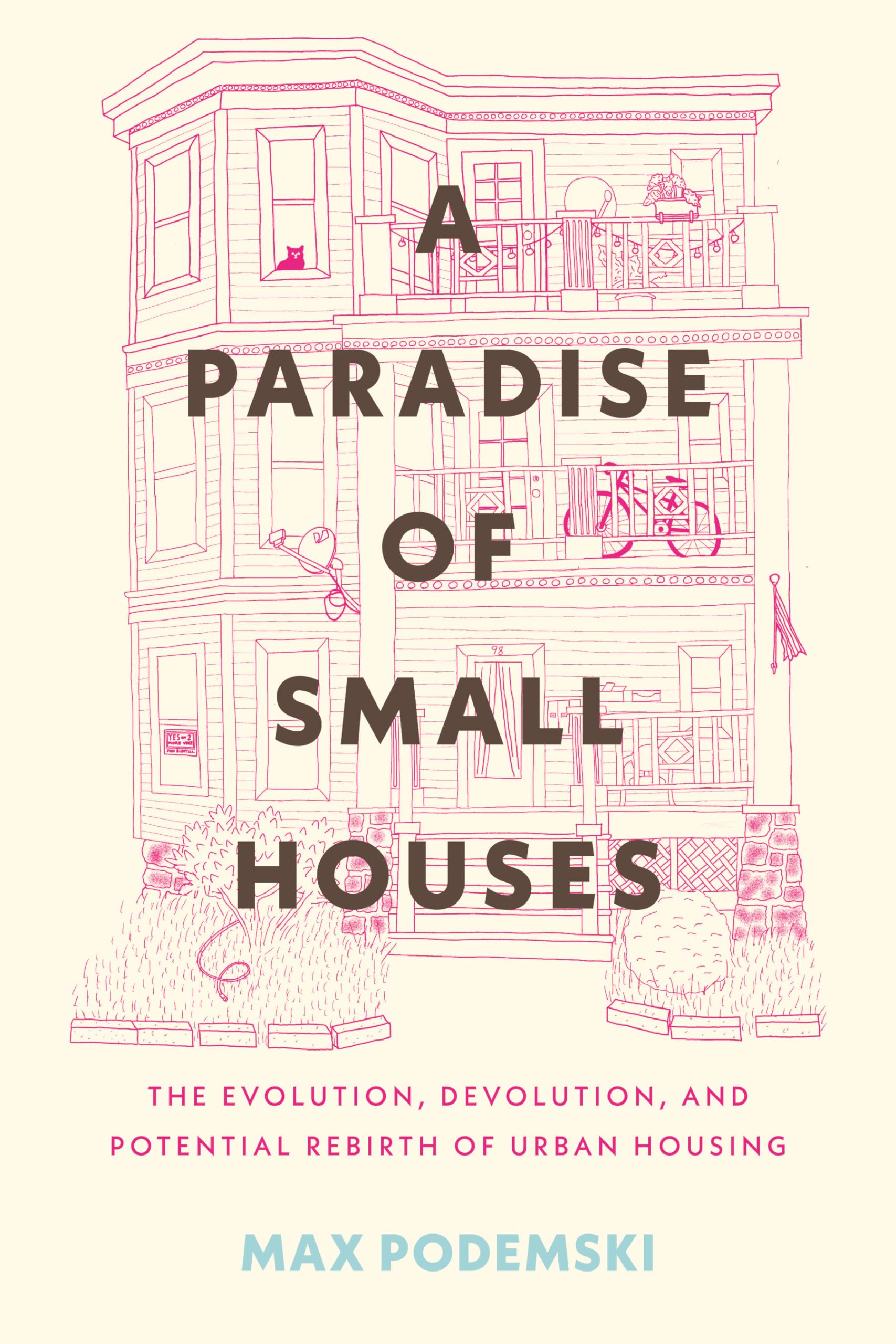
Title
A Paradise Of Small Houses: The Evolution, Devolution, And Potential Rebirth Of Urban Housing,New
Sold by Ergodebooks, an authorized reseller.
Returns accepted within 30 days | support@ergodebooks.com
Shipping Information
- Free Standard Shipping — United States only
- Processing Time: 3–5 business days
- Estimated Delivery: 6–10 business days after dispatch
- Double-boxed, fully insured & discreetly packaged
- Tracking number sent via email once dispatched
Returns & Refund
Returns accepted within 30 days of delivery.
Damaged or Defective Item
Free return shipping + replacement or full refund
Wrong Item Received
Free return shipping + replacement or full refund
Change of Mind
Return shipping at customer's expense · 25% restocking fee applies
Payment Option

From the Haitianstyle shotgun houses of the 19th century to the lavish highrises of the 21st century, a walk through the streets of Americas neighborhoods that reveals the rich historyand futureof urban housingThe Philadelphia row house. The New York tenement. The Boston tripledecker. Every American city has its own iconic housing style, structures that have been home to generations of families and are symbols of identity and pride. Max Podemski, an urban planner for the city of Los Angeles and lifelong architecture buff, has spent his career in and around these buildings. Deftly combining his years of experience with extensive research, Podemski walks the reader through the history of our dwelling spacesand offers a blueprint for how timetested urban planning models can help us build the homes the United States so desperately needs.In A Paradise of Small Houses, Podemski charts how these dwellings have evolved over the centuries according to the geography, climate, population, and culture of each city. He introduces the reader to styles like Chicagos prefabricated workers cottages and LAs carfriendly dingbats, illuminating the human stories behind each citys iconic housing type. Through it all, Podemski interrogates the American values that have equated home ownership with success and led to the US housing crisis, asking, How can we look to the past to build the homes, neighborhoods, and cities of the future that our communities deserve?
⚠️ WARNING (California Proposition 65):
This product may contain chemicals known to the State of California to cause cancer, birth defects, or other reproductive harm.
For more information, please visit www.P65Warnings.ca.gov.
- Q: How many pages does this book have? A: This book has two hundred seventy-two pages. It provides a comprehensive exploration of urban housing history and future prospects.
- Q: What is the size of this book? A: The book measures six point thirty-five inches in length, zero point ninety-five inches in width, and nine point twenty-nine inches in height. Its dimensions make it a convenient read.
- Q: What type of binding does this book have? A: This book is bound in hardcover. This type of binding ensures durability and longevity for regular use.
- Q: Who is the author of this book? A: The author of this book is Max Podemski. He is an urban planner with extensive experience in architecture and urban housing.
- Q: What is the genre of this book? A: This book falls under the category of Urban and Land Use Planning. It discusses various aspects of urban housing development.
- Q: Is this book suitable for beginners in urban planning? A: Yes, this book is suitable for beginners. It provides accessible insights into urban housing evolution and future opportunities.
- Q: What themes does this book explore? A: The book explores themes of urban housing evolution, cultural significance, and future urban planning strategies. It also addresses the American housing crisis.
- Q: Can I read this book if I am not familiar with architecture? A: Yes, you can read this book without prior architecture knowledge. The author explains concepts in an engaging and understandable manner.
- Q: How should I store this book? A: You should store this book in a cool, dry place away from direct sunlight. Proper storage will help maintain its condition over time.
- Q: What is the best way to clean the book? A: To clean the book, gently wipe the cover with a dry cloth. Avoid using moisture directly on the pages to prevent damage.
- Q: What if the book arrives damaged? A: If the book arrives damaged, you should contact the seller immediately for a replacement or return. Most sellers have a standard return policy.
- Q: Is there a warranty for this book? A: No, there is typically no warranty for books. However, check with the retailer for their specific return and exchange policies.
- Q: Can I find similar books on urban planning? A: Yes, there are many similar books available in the Urban and Land Use Planning genre. Look for titles that focus on housing development and urban design.
- Q: Is this book a good resource for urban planners? A: Yes, this book is an excellent resource for urban planners. It combines historical context with practical insights for future developments.
- Q: What age group is this book appropriate for? A: This book is appropriate for adults and older teens interested in urban planning. Its themes are complex and best suited for mature readers.