
Title
A Partisan View,Used
Sold by Ergodebooks, an authorized reseller.
Returns accepted within 30 days | support@ergodebooks.com
Shipping Information
- Free Standard Shipping — United States only
- Processing Time: 3–5 business days
- Estimated Delivery: 6–10 business days after dispatch
- Double-boxed, fully insured & discreetly packaged
- Tracking number sent via email once dispatched
Returns & Refund
Returns accepted within 30 days of delivery.
Damaged or Defective Item
Free return shipping + replacement or full refund
Wrong Item Received
Free return shipping + replacement or full refund
Change of Mind
Return shipping at customer's expense · 25% restocking fee applies
Payment Option

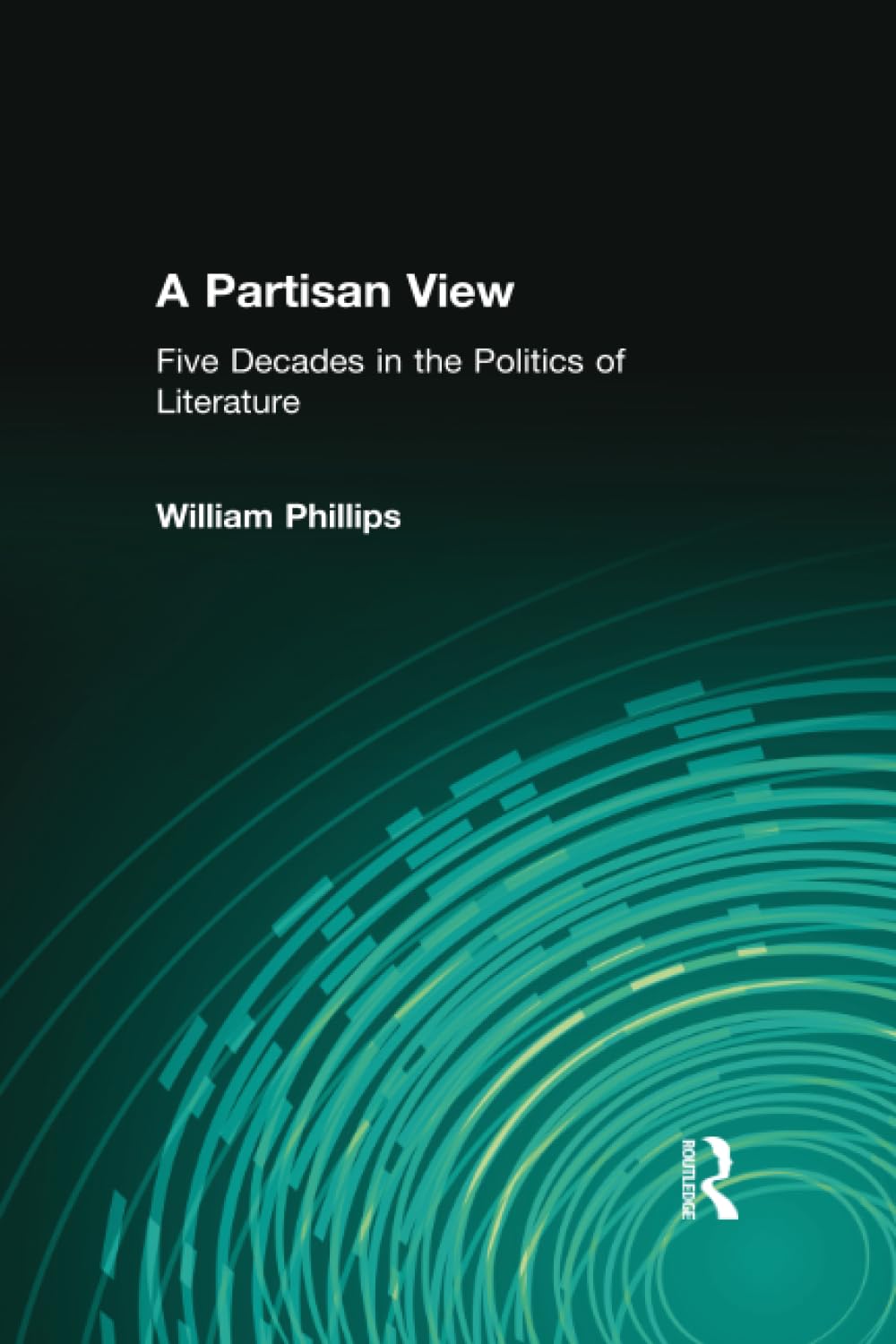
Since its founding in 1937, "Partisan Review" has been one of the most important and culturally influential journals in America. Under the legendary editorship of William Phillips and Philip Rahv, "Partisan Review" began as a publication of the John Reed Club, but soon broke away to establish itself as a free voice of critical dissent. As such, it counteracted the inroads of cultural Stalinism and took up the fight for aesthetic modernism at a time when the latter was fiercely contested by both the political left and right. In this work, William Phillips offers an account of his own part in the magazine's eventful history. As the magazine's editor, Edith Kurzweil, notes in her introduction, many of the literary and political disagreements that famously marked "Partisan Review"'s history originated in the editors' initial adherence to a programme of radical politics and avantgardism. Although this proved increasingly unworkable, Phillips and Rahv, even from the outset, never allowed sectarian narrowness to determine the magazine's contents. Over the decades, "Partisan Review" published work by authors as far from radicalism as T.S. Eliot and Wallace Stevens or from Marxist orthodoxy as Albert Camus and George Orwell. In literature, its contributors were as stylistically and intellectually varied as Saul Bellow, Vladimir Nabokov, Robert Lowell and Isaac Bashevis Singer. In short, "Partisan Review" featured the best fiction, poetry and essays of the 1940s and postwar decades. Beyond its literary preeminence, Partisan Review was famed as the most representative journal of the New York Intellectuals.
⚠️ WARNING (California Proposition 65):
This product may contain chemicals known to the State of California to cause cancer, birth defects, or other reproductive harm.
For more information, please visit www.P65Warnings.ca.gov.