
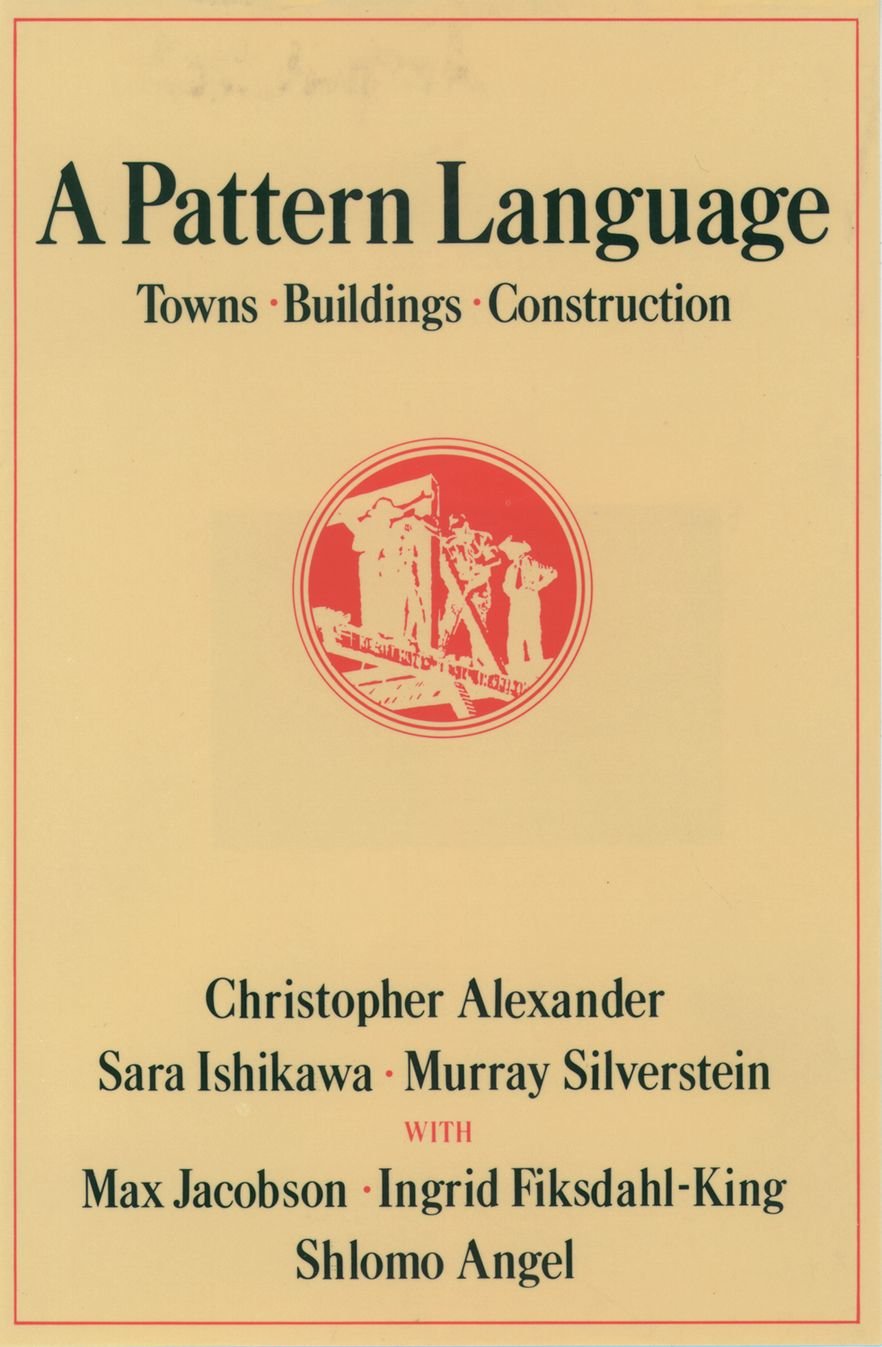
Title


Oxford University Press A Pattern Language: Towns, Buildings, Construction - Essential Guide for Environmental Design
Sold by Ergodebooks, an authorized reseller.
Returns accepted within 30 days | support@ergodebooks.com
Shipping Information
- Free Standard Shipping — United States only
- Processing Time: 3–5 business days
- Estimated Delivery: 6–10 business days after dispatch
- Double-boxed, fully insured & discreetly packaged
- Tracking number sent via email once dispatched
Returns & Refund
Returns accepted within 30 days of delivery.
Damaged or Defective Item
Free return shipping + replacement or full refund
Wrong Item Received
Free return shipping + replacement or full refund
Change of Mind
Return shipping at customer's expense · 25% restocking fee applies
Payment Option

A Pattern Language is a comprehensive guide designed for individuals looking to create functional and aesthetically pleasing spaces, whether for homes, offices, or community buildings. This book empowers readers to design their own environments, making it an invaluable resource for architects, designers, and community planners.
This publication by Oxford University Press, USA, authored by renowned architect Christopher Alexander and his colleagues, presents a fresh approach to architecture and urban planning. It encourages self-design and community involvement, helping readers understand the principles of creating harmonious spaces. The book is structured around the concept of "patterns," which are solutions to common design problems, thereby enabling users to communicate their design ideas effectively.
Key Features:- Comprehensive Framework: Over 250 patterns that address a variety of design challenges, providing clear solutions.
- Expert Insights: Authored by Christopher Alexander, a leading figure in the field of architecture, ensuring credible guidance.
- Practical Applications: Suitable for designing homes, offices, workshops, and public buildings, making it versatile for various needs.
- Community Focus: Encourages collaboration among neighbors and community members to improve local environments.
- Illustrative Examples: Each pattern includes illustrations and discussions to enhance understanding and application.
- Timeless Principles: Based on observations of successful spaces created by people, emphasizing human-centric design.
- Language of Design: Introduces a "language" that allows users to articulate their design visions coherently.
A Pattern Language is ideal for aspiring architects, urban planners, and anyone interested in enhancing their living or working spaces. By using this book, readers gain the tools needed to create environments that are not only functional but also resonate with the community's character and needs. Whether you are designing a new home or revitalizing a neighborhood, this book provides the essential knowledge to make informed decisions and foster better living conditions.
⚠️ WARNING (California Proposition 65):
This product may contain chemicals known to the State of California to cause cancer, birth defects, or other reproductive harm.
For more information, please visit www.P65Warnings.ca.gov.
- Q: How many pages does this book have? A: This book has one thousand one hundred seventy-one pages. It provides extensive insights into architectural design and community planning.
- Q: What are the dimensions of this book? A: The book measures two point zero one inches in length, five point seven one inches in width, and seven point nine one inches in height. These dimensions make it a manageable size for reading and reference.
- Q: What type of binding does this book have? A: This book is bound in hardcover. The durable binding is designed for longevity and regular use.
- Q: Who is the author of this book? A: The author of this book is Christopher Alexander. He is a renowned architect and design theorist known for his influential ideas on architecture and urban planning.
- Q: What genre does this book fall under? A: This book falls under the Criticism genre. It critiques traditional architectural practices and offers a new perspective on community design.
- Q: How can I apply the concepts from this book? A: You can apply the concepts from this book by using the patterns to design your own home or community spaces. It guides you in addressing specific design problems effectively.
- Q: Is this book suitable for beginners in architecture? A: Yes, this book is suitable for beginners. It introduces fundamental concepts and practical design patterns that can be understood by those new to architecture.
- Q: Can this book help in community planning? A: Yes, this book can help in community planning. It provides insights and patterns that facilitate collaboration with neighbors for improving shared spaces.
- Q: What kind of design problems does this book address? A: This book addresses various design problems such as window heights, building stories, and space allocation for greenery. It offers solutions through established patterns.
- Q: How should I store this book? A: Store this book upright in a cool, dry place to maintain its condition. Avoid exposure to direct sunlight to prevent fading of the cover and pages.
- Q: Can I clean the cover of this book? A: Yes, you can clean the cover of this book. Use a soft, dry cloth to gently wipe the surface, avoiding any moisture that could damage the binding.
- Q: What if the book arrives damaged? A: If the book arrives damaged, you should contact the seller for a return or exchange. Most sellers have policies in place for damaged items.
- Q: Is there a warranty on this book? A: No, there is typically no warranty on books. However, check with the seller for their return policy regarding defective copies.
- Q: Are there illustrations in this book? A: Yes, the book includes illustrations alongside the patterns. These visuals help clarify design concepts and solutions.
- Q: What makes this book different from other architecture books? A: This book is different because it focuses on patterns created by people for people. It emphasizes self-design and community involvement in planning.
- Q: Is this book suitable for professional architects? A: Yes, this book is suitable for professional architects. It challenges conventional practices and encourages innovative, community-focused design thinking.