If you have any questions, you are always welcome to contact us. We'll get back to you as soon as possible, withing 24 hours on weekdays.
Customer service
All questions about your order, return and delivery must be sent to our customer service team by e-mail at yourstore@yourdomain.com
Sale & Press
If you are interested in selling our products, need more information about our brand or wish to make a collaboration, please contact us at press@yourdomain.com
Help
If you have any questions, you are always welcome to contact us. We'll get back to you as soon as possible, withing 24 hours on weekdays.
Customer service
All questions about your order, return and delivery must be sent to our customer service team by e-mail at yourstore@yourdomain.com
Sale & Press
If you are interested in selling our products, need more information about our brand or wish to make a collaboration, please contact us at press@yourdomain.com
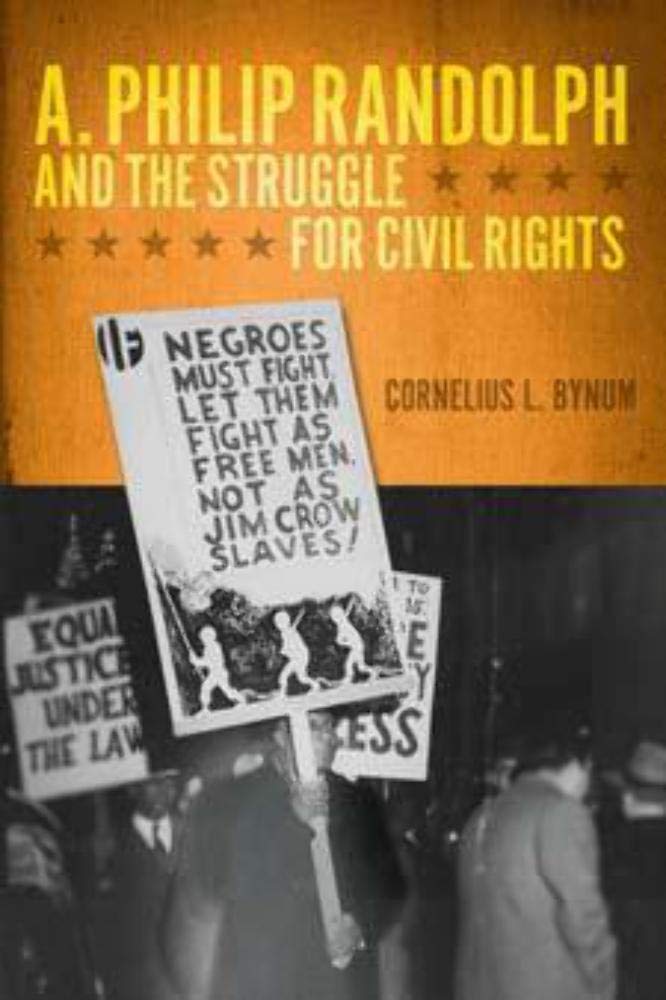
A. Philip Randolph's career as a trade unionist and civil rights activist fundamentally shaped the course of black protest in the midtwentieth century. Standing alongside W. E. B. Du Bois, Marcus Garvey, and others at the center of the cultural renaissance and political radicalism that shaped communities such as Harlem in the 1920s and into the 1930s, Randolph fashioned an understanding of social justice that reflected a deep awareness of how race complicated class concerns, especially among black laborers. Examining Randolph's work in lobbying for the Brotherhood of Sleeping Car Porters, threatening to lead a march on Washington in 1941, and establishing the Fair Employment Practice Committee, Cornelius L. Bynum shows that Randolph's push for African American equality took place within a broader progressive program of industrial reform. Some of Randolph's pioneering plans for engineering changewhich served as foundational strategies in the civil rights movement of the 1950s and 1960sincluded direct mass action, nonviolent civil disobedience, and purposeful coalitions between black and white workers. Bynum interweaves biographical information on Randolph with details on how he gradually shifted his thinking about race and class, full citizenship rights, industrial organization, trade unionism, and civil rights protest throughout his activist career.
⚠️ WARNING (California Proposition 65):
This product may contain chemicals known to the State of California to cause cancer,
birth defects, or other reproductive harm.
For MAP (Minimum Advertised Price) violations and Intellectual Property (IP) or Trademark concerns, please contact:
support@ergodebooks.com
⚠️ California Proposition 65 Warning: Some products sold on this website may expose you to chemicals known to the State of California to cause cancer, birth defects, or other reproductive harm. For more information, visit www.P65Warnings.ca.gov.