
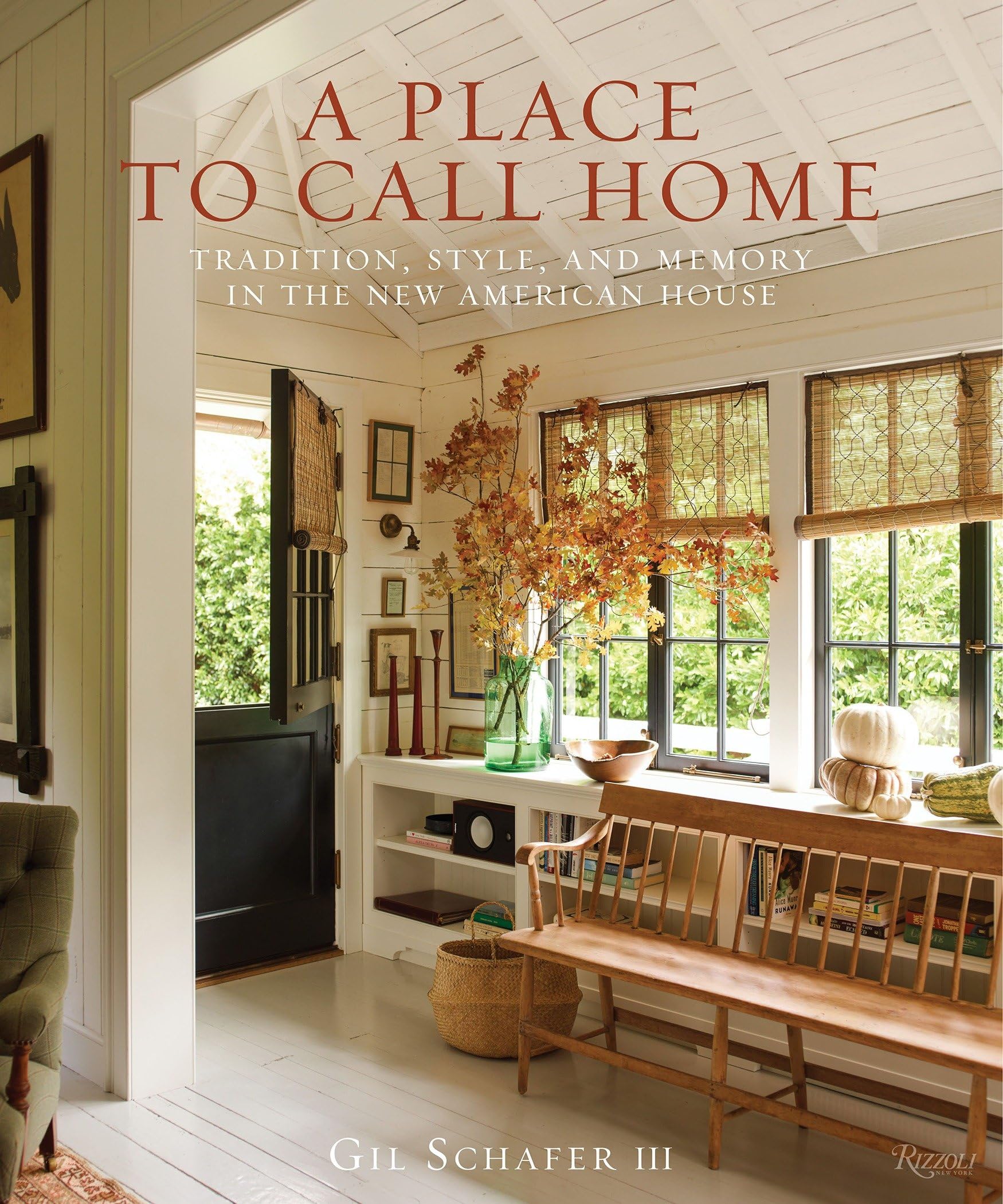
Title
A Place To Call Home: Tradition, Style, And Memory In The New American House,New
Sold by Ergodebooks, an authorized reseller.
Returns accepted within 30 days | support@ergodebooks.com
Shipping Information
- Free Standard Shipping — United States only
- Processing Time: 3–5 business days
- Estimated Delivery: 6–10 business days after dispatch
- Double-boxed, fully insured & discreetly packaged
- Tracking number sent via email once dispatched
Returns & Refund
Returns accepted within 30 days of delivery.
Damaged or Defective Item
Free return shipping + replacement or full refund
Wrong Item Received
Free return shipping + replacement or full refund
Change of Mind
Return shipping at customer's expense · 25% restocking fee applies
Payment Option

For Awardwinning Architect Gil Schafer, The Most Successful Houses Are The Ones That Celebrate The Small Moments Of Lifehouses With Timeless Charm That Are Imbued With Memory And Anchored In A Distinct Sense Of Place. Essentially, Schafer Believes A House Is Truly Successful When The People Who Live There Consider It Home. Its This Beliefand Schafers Rare Ability To Translate His Clients Deeply Personal Visions Of How They Want To Live Into A Physical Home That Reflects Those Dreamsthat Has Established Him As One Of The Most Soughtafter, Highlyregarded Architects Of Our Time.In His New Book, A Place To Call Home Schafer Follows Up His Bestselling The Great American House, By Pulling The Curtain Back On His Distinctive Approach, Sharing His Process (Complete With Unexpected, Accessible Ideas Readers Can Work Into Their Own Projects) And Taking Readers On A Detailed Tour Of Seven Beautifully Realized Houses In A Range Of Styles Located Around The Countryeach In A Unique Place, And Each With A Character All Its Own. 250 Lush, Full Color Photographs Of These Seven Houses And Other Neverbeforeseen Projects, Including Exterior, Interior, And Landscape Details, Invite Readers Into Schafers World Of Comfortable Classicism.Opening With Memories Of The Childhood Homes And Experiences That Have Shaped Schafers Own History, A Place To Call Home Gives The Reader The Sense That For Schafer, Architecture Is Not Just A Career But A Way Of Life, A Calling. He Describes How The Many Varied Houses Of His Youth Were Informed As Much By Their Style As By Their Sense Of Place, And How These Experiences Of Home Informed His Idea Of Classicism As A Set Of Values That He Applies To Many Different Kinds Of Architecture In Places As Varied As The Ones He Grew Up In. Because While Schafer Is Absolutely A Classical Architect, He Is In Fact A Modern Traditionalist, And A Place To Call Home Showcases How He Effortlessly Interprets Traditional Principles For A Multiplicity Of Architectural Styles Within Contemporary Ways Of Living.Sections In Part I Include The Delicate Balance Of Modern And Traditional Aesthetics, The Juxtaposition Of Fancy And Simple, And The Details That Make Each Project Special And Livable. Schafer Also Delves Into What He Refers To As The Spaces In Between, Those Often Overlooked Spaces Like Closets, Mudrooms, And Laundry Rooms, Explaining Their Underappreciated Value In The Broader Context Of A Home. Part Of Schafers Skill Lies In The Way He Gives The Minutiae Of A Project As Much Attention As The Grand Aesthetic Gestures, And Ultimately, Its This Combination That Brings His Homes To Life.Part Ii Of The Book Is The Story Of Seven Houses And The Places They Inhabiteach With A Completely Different Character And Soul: A Charming Cottage Completely Rebuilt Into A Casual But Gracious House For A Young Family In Bucolic Mill Valley, California; A Reconstructed Historic 1930S Colonial House And Gardens Set In Lush Woodlands In Connecticut; A New, Adirondack Campinspired House For An Active Family Perched On The Edge Of Lake Placid With Stunning Views Of Nearby Whiteface Mountain; An Elegant But Familyfriendly Fifth Avenue Apartment With A Panoramic View Of Central Park; A New Timber Frame And Stone Barn Situated To Take Advantage Of The Summer Sun On A Lovely, Rambling Property In New England; A New Residence And Outbuildings On A 6,000 Acre Hunting Preserve In Georgia, Inspired By The Historic 1920S And 1930S Hunting Plantation Houses In The Region; And Schafers Own, Deeply Personal, Newlyrenovated And Surprisingly Modern House Located Just A Few Feet From The Atlantic Ocean In Coastal Maine. In Schafers Hands, The Stories Of These Houses Are Irresistibly Readable. He Guides The Reader Through Each Of The Design Decisions, Sharing Anecdotes About The Process And Fascinating Historical Background And Contextual Influences Of The Settings. Ultimately, The Houses Featured In A Place To Call Home Are More Than Just Beautiful Buildings In Beautiful Places. In Each Of Them, Schafer Has Created A Dialogue Between Past And Present, A Personalized World That People Can Inhabit Gracefully, In Sync With Their Own Notions Of Home. Because, As Schafer Writes In The Book, He Designs Houses Not For An Architects Ego, But [For] The Beauty Of Life, The Joys Of Family, And, Not Least, A Heartfelt Celebration Of Place.
⚠️ WARNING (California Proposition 65):
This product may contain chemicals known to the State of California to cause cancer, birth defects, or other reproductive harm.
For more information, please visit www.P65Warnings.ca.gov.
- Q: What is the page count of 'A Place to Call Home'? A: The book contains two hundred eighty-eight pages. It's a hardcover edition filled with rich content and visuals.
- Q: What are the dimensions of 'A Place to Call Home'? A: The book measures ten point thirty-nine inches in length, one point twenty-two inches in width, and twelve point thirty-six inches in height.
- Q: Who is the author of 'A Place to Call Home'? A: The author is Gil Schafer III, an award-winning architect known for his engaging writing and architectural expertise.
- Q: What is the binding type of 'A Place to Call Home'? A: This book is bound in hardcover, providing durability and a premium feel.
- Q: What is the main theme of 'A Place to Call Home'? A: The main theme revolves around creating homes that embrace personal memories and a sense of place through architecture.
- Q: How do I use 'A Place to Call Home' for inspiration? A: You can read it to gain insights into architectural design and apply the ideas to your own living spaces.
- Q: Is 'A Place to Call Home' suitable for beginners in architecture? A: Yes, the book is suitable for beginners. It contains accessible ideas and explanations that anyone can understand.
- Q: Can I use 'A Place to Call Home' for learning about home design? A: Absolutely, it provides valuable insights into home design principles and showcases various architectural styles.
- Q: How should I store 'A Place to Call Home'? A: Store the book upright on a shelf to maintain its shape and protect it from dust and damage.
- Q: Is 'A Place to Call Home' safe for children? A: Yes, the book is appropriate for older children interested in architecture and design themes.
- Q: What if 'A Place to Call Home' arrives damaged? A: If the book arrives damaged, you should contact the seller for a return or replacement policy.
- Q: Does 'A Place to Call Home' include photographs? A: Yes, it features two hundred fifty lush, full-color photographs showcasing various houses and design details.
- Q: What types of houses are featured in 'A Place to Call Home'? A: The book features a range of houses, including cottages, Colonial houses, and modern residences.
- Q: Can 'A Place to Call Home' help with renovation ideas? A: Yes, it provides practical ideas and inspiration for home renovations and improvements.
- Q: What is the writing style of 'A Place to Call Home'? A: The writing style is engaging and personal, making it accessible to readers while exploring architectural themes.
- Q: Is 'A Place to Call Home' focused on traditional architecture? A: Yes, it combines traditional principles with modern traditionalism in its architectural discussions.