If you have any questions, you are always welcome to contact us. We'll get back to you as soon as possible, withing 24 hours on weekdays.
Customer service
All questions about your order, return and delivery must be sent to our customer service team by e-mail at yourstore@yourdomain.com
Sale & Press
If you are interested in selling our products, need more information about our brand or wish to make a collaboration, please contact us at press@yourdomain.com
Help
If you have any questions, you are always welcome to contact us. We'll get back to you as soon as possible, withing 24 hours on weekdays.
Customer service
All questions about your order, return and delivery must be sent to our customer service team by e-mail at yourstore@yourdomain.com
Sale & Press
If you are interested in selling our products, need more information about our brand or wish to make a collaboration, please contact us at press@yourdomain.com
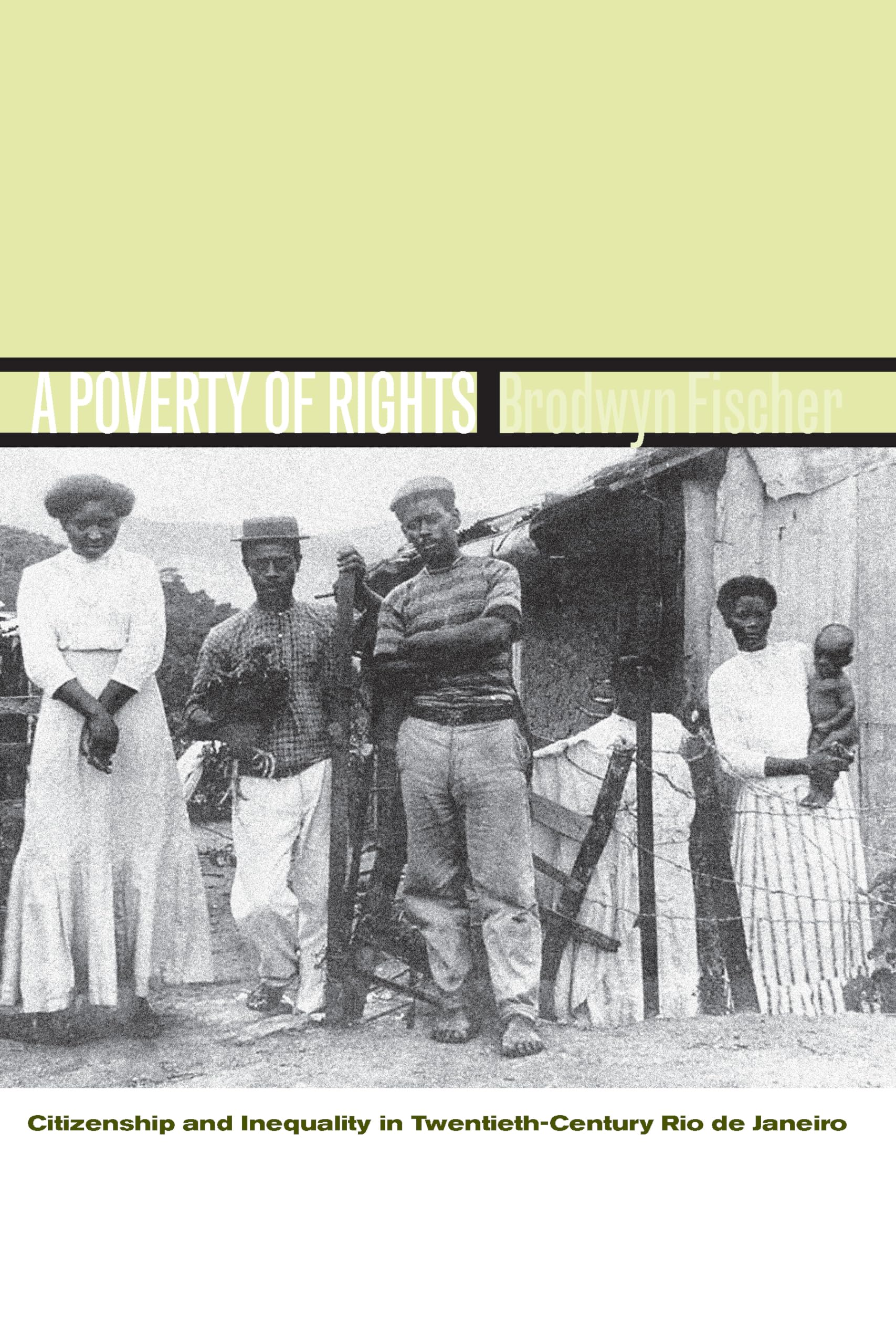
A Poverty of Rights is an investigation of the knotty ties between citizenship and inequality during the years when the legal and institutional bases for modern Brazilian citizenship originated. Between 1930 and 1964, Brazilian law dramatically extended its range and power, and citizenship began to signify real political, economic, and civil rights for common people. And yet, even in Rio de JaneiroBrazil's national capital until 1960this process did not include everyone. Rio's poorest residents sought with hope, imagination, and will to claim myriad forms of citizenship as their own. Yet, blocked by bureaucratic obstacles or ignored by unrealistic laws, they found that their poverty remained one of rights as well as resources. At the end of a period most notable for citizenship's expansion, Rio's poor still found themselves akin to illegal immigrants in their own land, negotiating important components of their lives outside of the boundaries and protections of laws and rights, their vulnerability increasingly critical to important networks of profit and political power. In exploring this process, Brodwyn Fischer offers a critical reinterpretation not only of Brazil's Vargas regime, but also of Rio's twentiethcentury urban history and of the broader significance of law, rights, and informality in the lives of the very poor.
⚠️ WARNING (California Proposition 65):
This product may contain chemicals known to the State of California to cause cancer,
birth defects, or other reproductive harm.
For MAP (Minimum Advertised Price) violations and Intellectual Property (IP) or Trademark concerns, please contact:
support@ergodebooks.com
⚠️ California Proposition 65 Warning: Some products sold on this website may expose you to chemicals known to the State of California to cause cancer, birth defects, or other reproductive harm. For more information, visit www.P65Warnings.ca.gov.