If you have any questions, you are always welcome to contact us. We'll get back to you as soon as possible, withing 24 hours on weekdays.
Customer service
All questions about your order, return and delivery must be sent to our customer service team by e-mail at yourstore@yourdomain.com
Sale & Press
If you are interested in selling our products, need more information about our brand or wish to make a collaboration, please contact us at press@yourdomain.com
Help
If you have any questions, you are always welcome to contact us. We'll get back to you as soon as possible, withing 24 hours on weekdays.
Customer service
All questions about your order, return and delivery must be sent to our customer service team by e-mail at yourstore@yourdomain.com
Sale & Press
If you are interested in selling our products, need more information about our brand or wish to make a collaboration, please contact us at press@yourdomain.com
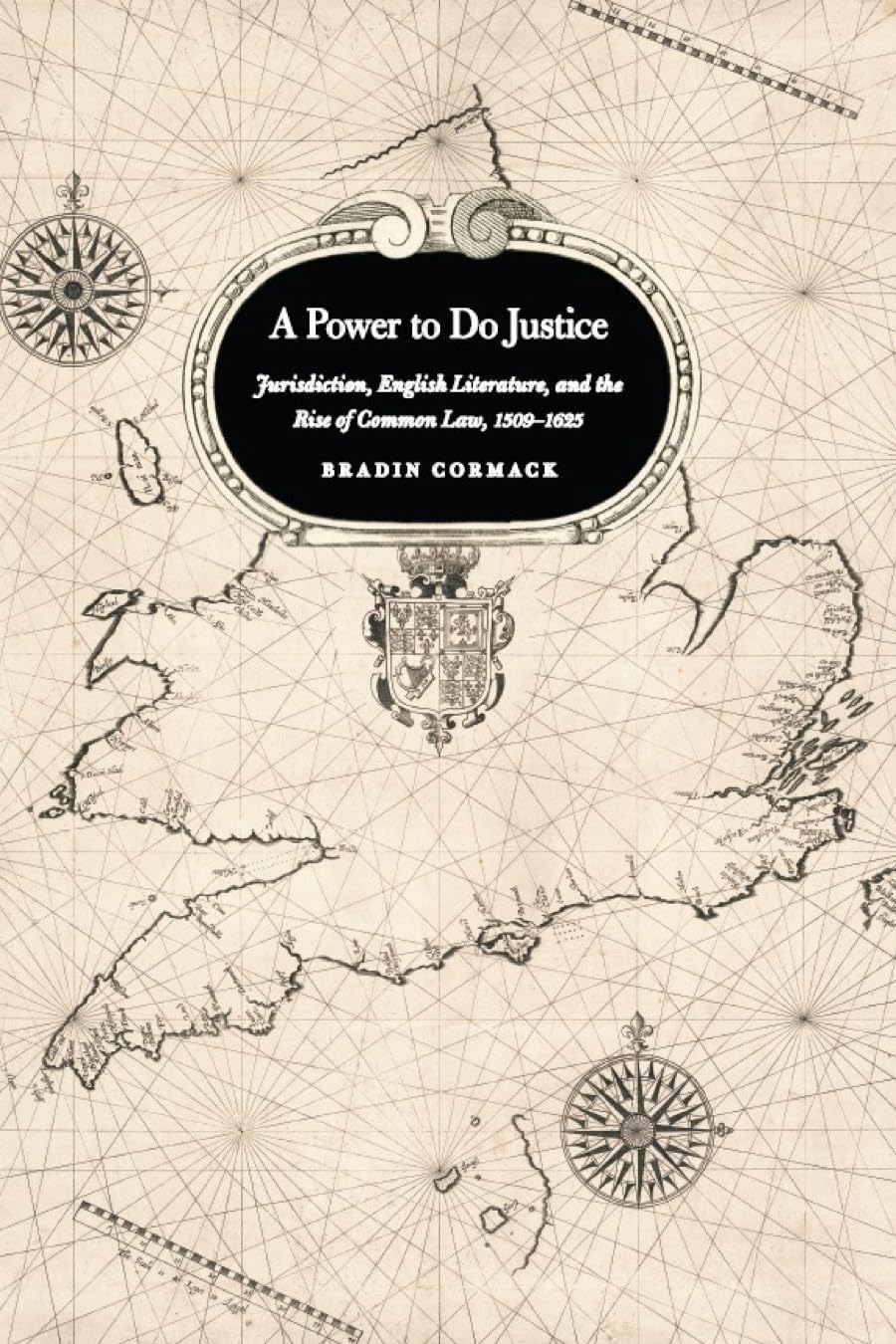
English law underwent rapid transformation in the sixteenth century, in response to the Reformation and also to heightened litigation and legal professionalization. As the common law became more comprehensive and systematic, the principle of jurisdiction came under particular strain. When the common law engaged with other court systems in England, when it encountered territories like Ireland and France, or when it confronted the ocean as a juridical space, the law revealed its qualities of ingenuity and improvisation. In other words, as Bradin Cormack argues, jurisdictional crisis made visible the laws resemblance to the literary arts.A Power to Do Justice shows how Renaissance writers engaged the practical and conceptual dynamics of jurisdiction, both as a subject for critical investigation and as a frame for articulating literatures sense of itself. Reassessing the relation between English literature and law from More to Shakespeare, Cormack argues that where literary texts attend to jurisdiction, they dramatize how boundaries and limits are the very precondition of laws power, even as they clarify the forms of intensification that make literary space a reality.Tracking cultural responses to Renaissance jurisdictional thinking and legal centralization, A Power to Do Justice makes theoretical, literaryhistorical, and methodological contributions that set a new standard for law and the humanities and for the cultural history of early modern law and literature.
⚠️ WARNING (California Proposition 65):
This product may contain chemicals known to the State of California to cause cancer,
birth defects, or other reproductive harm.
For MAP (Minimum Advertised Price) violations and Intellectual Property (IP) or Trademark concerns, please contact:
support@ergodebooks.com
⚠️ California Proposition 65 Warning: Some products sold on this website may expose you to chemicals known to the State of California to cause cancer, birth defects, or other reproductive harm. For more information, visit www.P65Warnings.ca.gov.