
Title
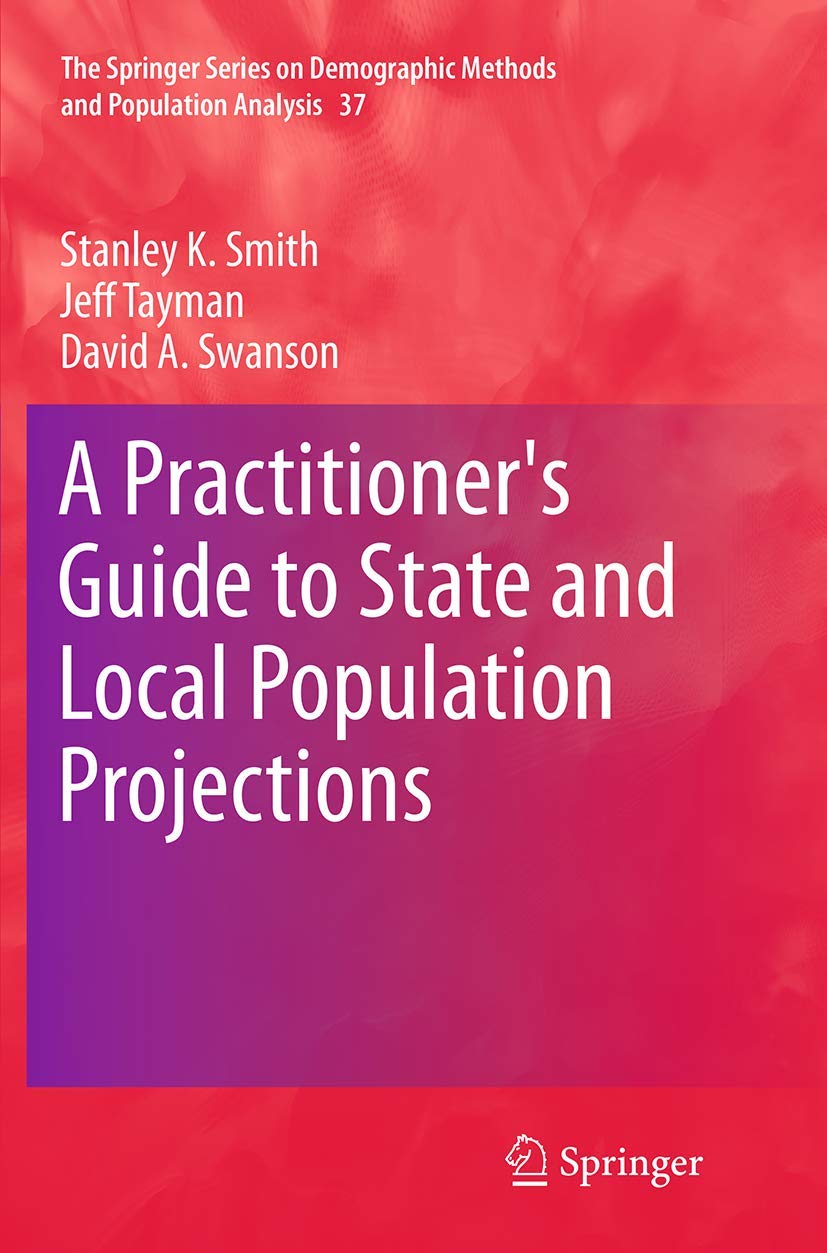
A Practitioner's Guide to State and Local Population Projections (The Springer Series on Demographic Methods and Population Anal,Used
Sold by Ergodebooks, an authorized reseller.
Returns accepted within 30 days | support@ergodebooks.com
Shipping Information
- Free Standard Shipping — United States only
- Processing Time: 3–5 business days
- Estimated Delivery: 6–10 business days after dispatch
- Double-boxed, fully insured & discreetly packaged
- Tracking number sent via email once dispatched
Returns & Refund
Returns accepted within 30 days of delivery.
Damaged or Defective Item
Free return shipping + replacement or full refund
Wrong Item Received
Free return shipping + replacement or full refund
Change of Mind
Return shipping at customer's expense · 25% restocking fee applies
Payment Option

This book focuses on the methodology and analysis of state and local population projections. It describes the most commonly used data sources and application techniques for four types of projection methods: cohortcomponent, trend extrapolation, structural models, and microsimulation. It covers the components of population growth, sources of data, the formation of assumptions, the development of evaluation criteria, and the determinants of forecast accuracy. It considers the strengths and weaknesses of various projection methods and pays special attention to the unique problems that characterize smallarea projections. The authors provide practical guidance to demographers, planners, market analysts, and others called on to construct state and local population projections. They use many examples and illustrations and present suggestions for dealing with special populations, unique circumstances, and inadequate or unreliable data. They describe techniques for controlling one set of projections to another, for interpolating between time points, for subdividing age groups, and for constructing projections of populationrelated variables (e.g., school enrollment, households). They discuss the role of judgment and the importance of the political context in which projections are made. They emphasize the utility of projections, or their usefulness for decision making in a world of competing demands and limited resources. This comprehensive book will provide readers with an understanding not only of the mechanics of the most commonly used population projection methods, but also of the many complex issues affecting their construction, interpretation, evaluation, and use.
⚠️ WARNING (California Proposition 65):
This product may contain chemicals known to the State of California to cause cancer, birth defects, or other reproductive harm.
For more information, please visit www.P65Warnings.ca.gov.