
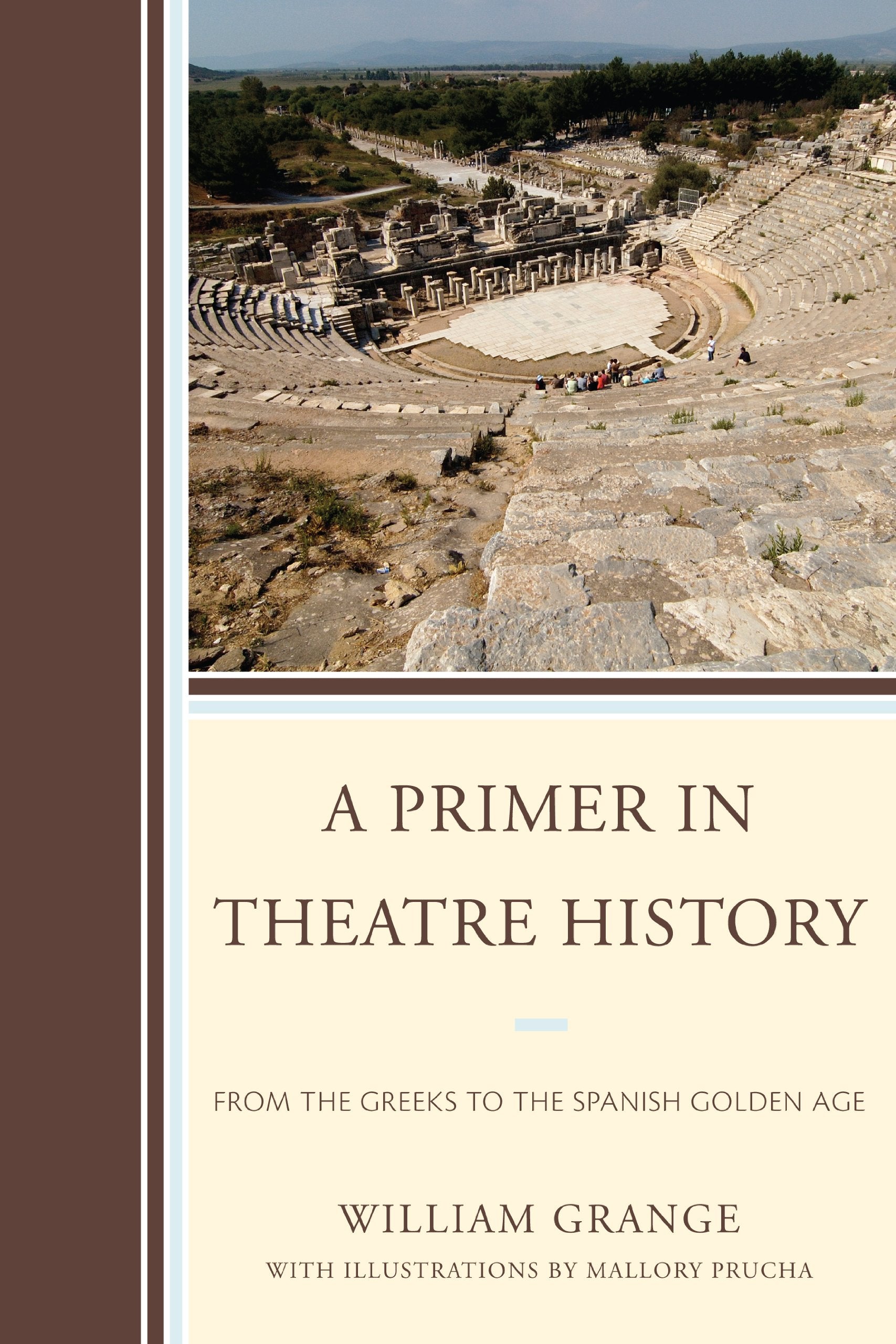
Title
A Primer in Theatre History: From the Greeks to the Spanish Golden Age,Used
Sold by Ergodebooks, an authorized reseller.
Returns accepted within 30 days | support@ergodebooks.com
Shipping Information
- Free Standard Shipping — United States only
- Processing Time: 3–5 business days
- Estimated Delivery: 6–10 business days after dispatch
- Double-boxed, fully insured & discreetly packaged
- Tracking number sent via email once dispatched
Returns & Refund
Returns accepted within 30 days of delivery.
Damaged or Defective Item
Free return shipping + replacement or full refund
Wrong Item Received
Free return shipping + replacement or full refund
Change of Mind
Return shipping at customer's expense · 25% restocking fee applies
Payment Option

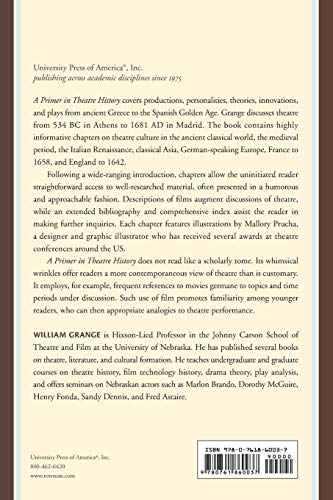
A Primer in Theatre History covers productions, personalities, theories, innovations, and plays from ancient Greece to the Spanish Golden Age. Grange discusses theatre from 534 BC in Athens to 1681 AD in Madrid. The book contains highly informative chapters on theatre culture in the ancient classical world, the medieval period, the Italian Renaissance, classical Asia, Germanspeaking Europe, France to 1658, and England to 1642.Following a wideranging introduction, chapters allow the uninitiated reader straightforward access to wellresearched material, often presented in a humorous and approachable fashion. Descriptions of films augment discussions of theatre, while an extended bibliography and comprehensive index assist the reader in making further inquiries. Each chapter features illustrations by Mallory Prucha, a designer and graphic illustrator who has received several awards at theatre conferences around the US.A Primer in Theatre History does not read like a scholarly tome. Its whimsical wrinkles offer readers a more contemporaneous view of theatre than is customary. It employs, for example, frequent references to movies germane to topics and time periods under discussion. Such use of film promotes familiarity among younger readers, who can then appropriate analogies to theatre performance.
⚠️ WARNING (California Proposition 65):
This product may contain chemicals known to the State of California to cause cancer, birth defects, or other reproductive harm.
For more information, please visit www.P65Warnings.ca.gov.
- Q: What is the page count of the book? A: The book has one hundred seventy-six pages. It provides a comprehensive overview of theatre history, making it suitable for readers interested in the subject.
- Q: What type of binding does the book have? A: The book is available in paperback binding. This makes it lightweight and easy to handle, perfect for casual reading.
- Q: Who is the author of this book? A: The author is William Grange. He focuses on theatre history from ancient Greece to the Spanish Golden Age.
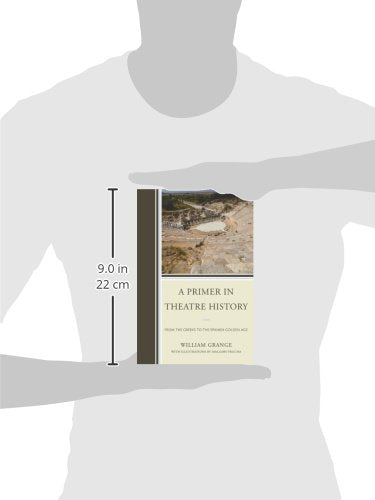
- Q: What are the dimensions of the book? A: The book measures six point eleven inches in length, zero point fifty-six inches in width, and nine point zero two inches in height. These dimensions make it portable and convenient for reading.
- Q: What genre does this book belong to? A: This book falls under the genre of History and Criticism. It explores various theatrical productions and personalities throughout history.
- Q: How should I read this book for the best understanding? A: To get the most out of this book, read it chapter by chapter, as each one covers distinct aspects of theatre history. This approach will help you grasp the material thoroughly.
- Q: Is this book suitable for beginners in theatre studies? A: Yes, the book is suitable for beginners. It presents information in a straightforward and approachable manner, making it accessible to those new to theatre.
- Q: What age group is this book appropriate for? A: The book is appropriate for readers aged twelve and older. Its engaging style and relevant references to films also appeal to a younger audience.
- Q: How do I care for this paperback book? A: To care for the book, keep it away from direct sunlight and moisture. Store it upright on a shelf to maintain its shape and condition.
- Q: Can I clean the book if it gets dirty? A: Yes, you can clean the book gently. Use a soft, dry cloth to wipe any dust or smudges from the cover.
- Q: What if the book arrives damaged? A: If the book arrives damaged, you should contact the seller for a return or exchange. Most sellers have a policy in place for such situations.
- Q: Is there a warranty for this book? A: No, books typically do not come with a warranty. However, you can inquire about return policies when purchasing.
- Q: How does this book compare to others in theatre studies? A: This book is unique in its humorous and accessible approach, making it more engaging than many traditional scholarly texts in theatre studies.
- Q: Is this book more focused on historical facts or analysis? A: The book balances both historical facts and analysis. It covers productions and personalities while also discussing theories and innovations in theatre.
- Q: Can this book be used for academic study? A: Yes, this book can be used for academic study. It includes a comprehensive bibliography and index for further research.
- Q: Are there illustrations in the book? A: Yes, the book features illustrations by Mallory Prucha. These visuals enhance the reading experience and help clarify the content.