
Title
A Queer Chivalry: The Homoerotic Asceticism of Gerard Manley Hopkins (Victorian Literature and Culture Series),Used
Sold by Ergodebooks, an authorized reseller.
Returns accepted within 30 days | support@ergodebooks.com
Shipping Information
- Free Standard Shipping — United States only
- Processing Time: 3–5 business days
- Estimated Delivery: 6–10 business days after dispatch
- Double-boxed, fully insured & discreetly packaged
- Tracking number sent via email once dispatched
Returns & Refund
Returns accepted within 30 days of delivery.
Damaged or Defective Item
Free return shipping + replacement or full refund
Wrong Item Received
Free return shipping + replacement or full refund
Change of Mind
Return shipping at customer's expense · 25% restocking fee applies
Payment Option

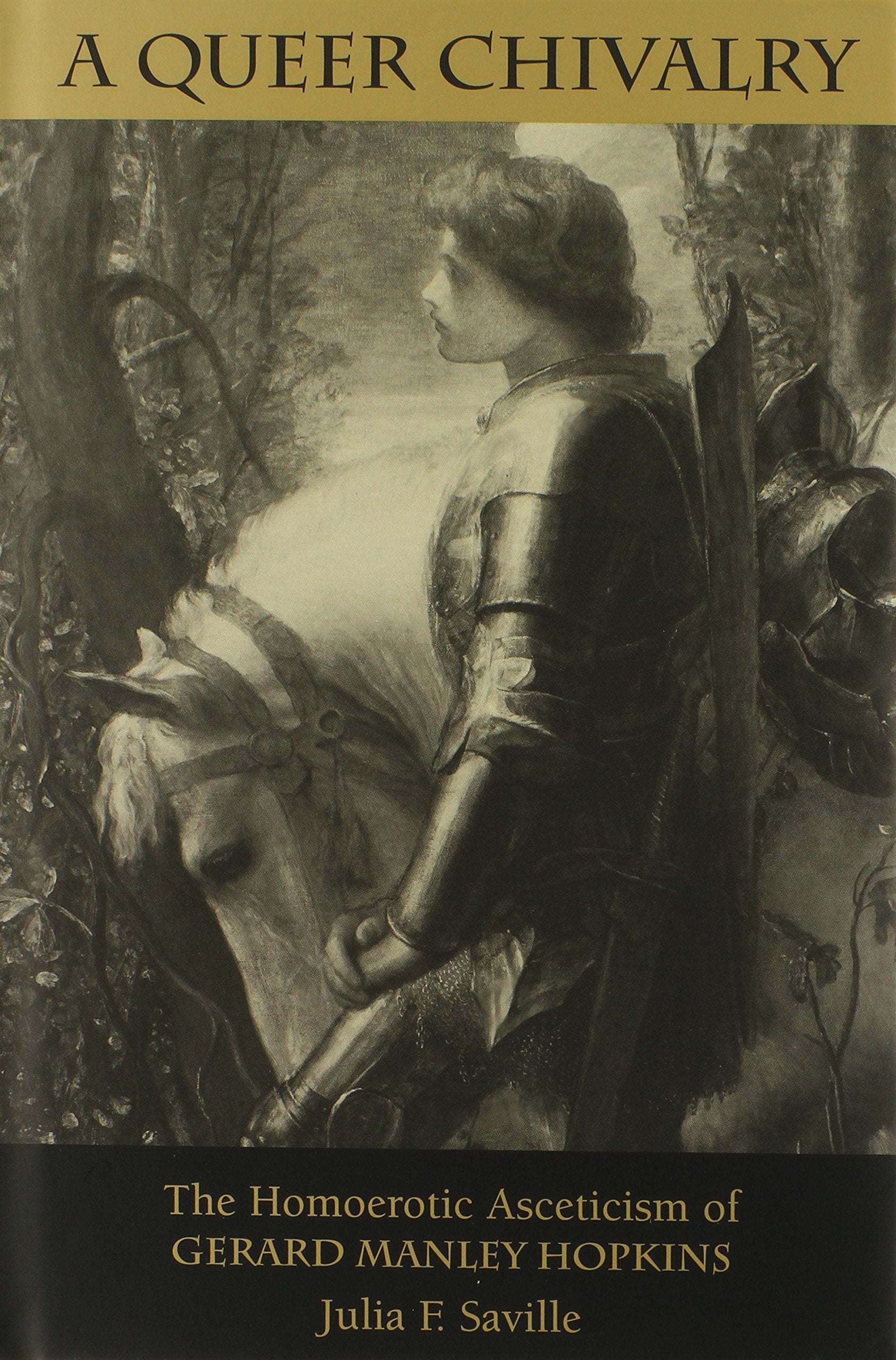
The Jesuit poet Gerard Manley Hopkins was a practitioner of strict asceticism in its broadest definitionthe refusal of physical pleasure or comfort in the interests of moral or spiritual gain. As a result, his commentators have felt obliged to take a stand approving or disapproving of this rigorous selfdiscipline: Many idealize his allegiance to the Society of Jesus as motivated by his determination to conquer his attraction to other men, and thus as the source of the spiritual strength from which his eucharistic and Christological verse derived. Others decry his monasticism as the regrettably oppressive regimen from which he was able to escape only occasionally through his sensuous, sometimes overtly homoerotic verse.Julia F. Saville uses Lacanian theories of sublimation and courtly love to reconfigure this longstanding rift in the field of Hopkins criticism. Her book displaces hagiographic interpretations of the poet's life, arguing that Hopkins's poetics of homoerotic asceticism shaped his work in such a way that his career should be viewed not as a steady linear progression but as an ongoing process of negotiating his desire. It also constitutes a map tracing the alternating practices of selfdiscipline and selfindulgence, selfexpression and selfsilencing performed by Hopkins's verse.Saville presents a new reading of asceticism that does not advocate or condemn its practice. What is needed, she argues, is a reading that explains first the dialectical capacity of asceticism both to constrain and to liberate, to cause discomfort and to give satisfaction, and second, the ethical value of recognizing and encouraging this dialectical operation.A Queer Chivalry highlights the strange blending of sensual delight and strict selfdenial in Hopkins's courtly verse, initiating a new trend in criticism that celebrates the poet's queer status as the Victorian troubadourpriest.
⚠️ WARNING (California Proposition 65):
This product may contain chemicals known to the State of California to cause cancer, birth defects, or other reproductive harm.
For more information, please visit www.P65Warnings.ca.gov.