
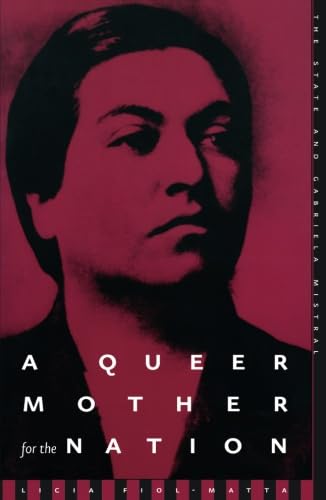
Title
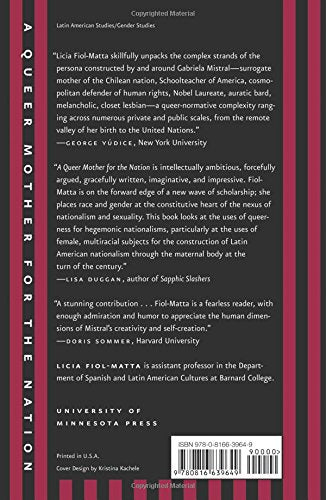
A Queer Mother For The Nation: The State And Gabriela Mistral,New
Sold by Ergodebooks, an authorized reseller.
Returns accepted within 30 days | support@ergodebooks.com
Shipping Information
- Free Standard Shipping — United States only
- Processing Time: 3–5 business days
- Estimated Delivery: 6–10 business days after dispatch
- Double-boxed, fully insured & discreetly packaged
- Tracking number sent via email once dispatched
Returns & Refund
Returns accepted within 30 days of delivery.
Damaged or Defective Item
Free return shipping + replacement or full refund
Wrong Item Received
Free return shipping + replacement or full refund
Change of Mind
Return shipping at customer's expense · 25% restocking fee applies
Payment Option

Chilean Writer Gabriela Mistral (18891957), The First Latin American To Win Thenobel Prize For Literature, Was A Poetic Idol For Generations Of Latin Americans Who Viewed Her As Womanhood Incarnate, The National Schoolteachermother. How This Distinctly Masculine Woman Who Never Gave Birth Came To Occupy This Role, And What Mistrals Image, Poetry, And Life Have To Say About The Relationsand Realitiesof Race, Gender, And Sexual Politics In Her Time, Are The Questions Licia Fiolmatta Pursues In This Book, Recreating The Story Of A Woman Whose Misrepresentation Is At Least As Intriguing, And As Instructive, As Her Fame.A Queer Mother For The Nation Weaves A Nuanced Understanding Of How Mistral Cooperated With Authority And Fashioned Herself As The Figure Of Motherhood In Collaboration With The State. Drawing On Mistrals Littleknown Political And Social Essays, Her Correspondence And Photographs, Fiolmatta Reconstructs Mistrals Relationship To State Politics. Her Work Questions The Notion Of Queer Bodies As Outlaws, And Insists On The Many Ways In Which Queer Subjects Have Participated In And Sustained The Normative Discourses They Seem To Rebel Against
⚠️ WARNING (California Proposition 65):
This product may contain chemicals known to the State of California to cause cancer, birth defects, or other reproductive harm.
For more information, please visit www.P65Warnings.ca.gov.
- Q: How many pages does the book have? A: The book has three hundred four pages. This length allows for an in-depth exploration of Gabriela Mistral's life and work.
- Q: What is the binding type of this book? A: This book is paperback bound. This means it is flexible and lightweight, making it easy to carry.
- Q: What are the dimensions of the book? A: The dimensions are five point eight eight inches by zero point seven one inches by nine point zero two inches. These measurements make it a standard-sized paperback.
- Q: Who is the author of this book? A: The author is Licia Fiol-Matta. She provides valuable insights into Gabriela Mistral's identity and contributions.
- Q: What is the main subject of this book? A: The main subject is Gabriela Mistral's role in literature and politics. It explores themes of motherhood, gender, and queerness.
- Q: Is this book suitable for academic use? A: Yes, this book is suitable for academic use. It includes scholarly analysis and references that can support research on Mistral.
- Q: What themes are explored in this book? A: The book explores themes of race, gender, and sexual politics. It also examines the complexities of Mistral's identity.
- Q: How does this book portray Gabriela Mistral? A: This book portrays Mistral as a complex figure of motherhood and authority. It challenges traditional narratives about her life.
- Q: Can this book be used for teaching purposes? A: Yes, this book can be used for teaching purposes. Its exploration of Mistral's work makes it a valuable resource in gender studies.
- Q: What is the condition of the book? A: The book is a used copy in good condition. This indicates that it has been previously owned but remains readable.
- Q: Is there any adult content in this book? A: No, there is no adult content in this book. It is suitable for a general audience interested in literature.
- Q: What makes this book unique? A: This book is unique for its queer perspective on Gabriela Mistral. It provides a fresh look at her legacy and impact.
- Q: Are there illustrations or photographs in the book? A: Yes, the book includes photographs. These visuals enhance the understanding of Mistral's life and context.
- Q: What is the publisher of this book? A: The book is published by the University of Minnesota Press. This publisher is known for academic and literary works.
- Q: Is there a specific audience for this book? A: Yes, the book is aimed at readers interested in literature, gender studies, and Latin American history. It appeals to scholars and general readers alike.