
Title
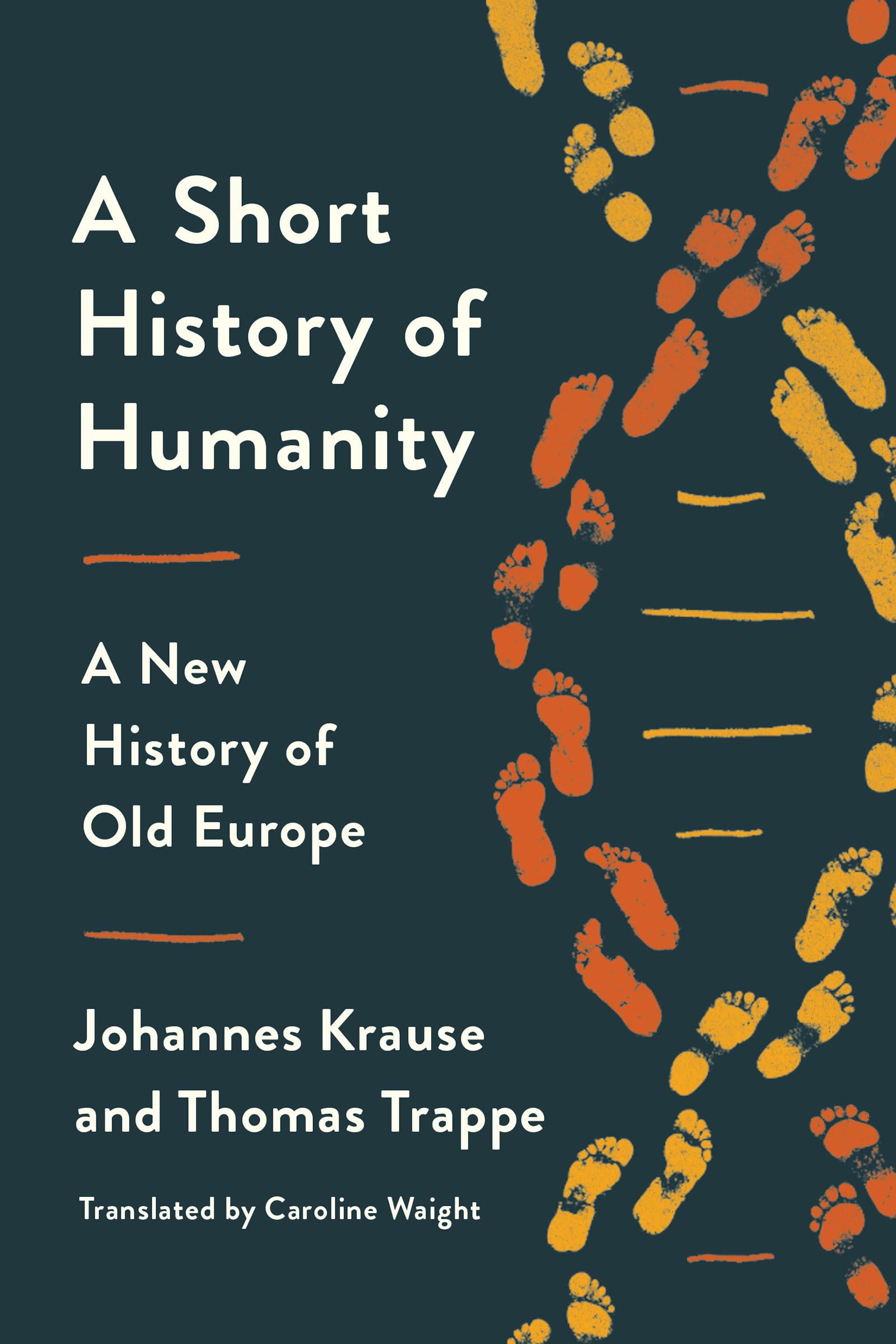
A Short History of Humanity: A New History of Old Europe,Used
Sold by Ergodebooks, an authorized reseller.
Returns accepted within 30 days | support@ergodebooks.com
Shipping Information
- Free Standard Shipping — United States only
- Processing Time: 3–5 business days
- Estimated Delivery: 6–10 business days after dispatch
- Double-boxed, fully insured & discreetly packaged
- Tracking number sent via email once dispatched
Returns & Refund
Returns accepted within 30 days of delivery.
Damaged or Defective Item
Free return shipping + replacement or full refund
Wrong Item Received
Free return shipping + replacement or full refund
Change of Mind
Return shipping at customer's expense · 25% restocking fee applies
Payment Option

Thrilling . . . a bracing summary of what we have learned [from] archaeogeneticsthe study of ancient DNA . . . Krause and Trappe capture the excitement of this young field.Kyle Harper, The Wall Street JournalJohannes Krause is the director of the Max Planck Institute for Evolutionary Anthropology and a brilliant pioneer in the field of archaeogeneticsarchaeology augmented by DNA sequencing technologywhich has allowed scientists to reconstruct human history reaching back hundreds of thousands of years before recorded time.In this surprising account, Krause and journalist Thomas Trappe rewrite a fascinating chapter of this history, the peopling of Europe, that takes us from the Neanderthals and Denisovans to the present. We know now that a wave of farmers from Anatolia migrated into Europe 8,000 years ago, essentially displacing the darkskinned, blueeyed huntergatherers who preceded them. This Anatolian farmer DNA is one of the core genetic components of people with contemporary European ancestry. Archaeogenetics has also revealed that indigenous North and South Americans, though long thought to have been East Asian, also share DNA with contemporary Europeans.Krause and Trappe vividly introduce us to the prehistoric cultures of the ancient Europeans: the Aurignacians, innovative artisans who carved flutes and animal and human forms from bird bones more than 40,000 years ago; the Varna, who buried their loved ones with gold long before the Pharaohs of Egypt; and the Gravettians, biggame hunters who were Europes most successful early settlers until they perished in the ice age.Genetics has earned a reputation for smuggling racist ideologies into science, but cuttingedge science makes nonsense of eugenics and pure bloodlines. Immigration and genetic exchanges have always defined our species; who we are is a question of culture, not biological inheritance. This revelatory book offers us an entirely new way to understand ourselves, both past and present.
⚠️ WARNING (California Proposition 65):
This product may contain chemicals known to the State of California to cause cancer, birth defects, or other reproductive harm.
For more information, please visit www.P65Warnings.ca.gov.
- Q: What is 'A Short History of Humanity' about? A: 'A Short History of Humanity' by Johannes Krause and Thomas Trappe explores the peopling of Europe through the lens of archaeogenetics, covering the migration of ancient populations and their genetic legacy.
- Q: Who is the author of this book? A: The book is authored by Johannes Krause, a director at the Max Planck Institute for Evolutionary Anthropology, and journalist Thomas Trappe.
- Q: What is the main theme of the book? A: The main theme revolves around how ancient DNA research reshapes our understanding of human history, particularly the migrations and interactions of early Europeans.
- Q: How many pages does the book have? A: The book contains 288 pages.
- Q: When was 'A Short History of Humanity' published? A: 'A Short History of Humanity' was published on April 13, 2021.
- Q: What type of binding does this book have? A: The book is available in hardcover binding.
- Q: Is there any specific audience this book is targeted towards? A: This book is suitable for readers interested in anthropology, genetics, history, and archaeology, as well as anyone curious about human ancestry.
- Q: What unique insights does the book provide regarding genetics? A: The book discusses how genetics can debunk racist ideologies and emphasizes that our identities are shaped more by culture than by biological inheritance.
- Q: Are there any notable prehistoric cultures mentioned in the book? A: Yes, the book highlights several prehistoric cultures, including the Aurignacians, Varna, and Gravettians, detailing their contributions to early European civilization.
- Q: What makes this book different from other history books? A: This book uniquely combines archaeology with cutting-edge DNA analysis, offering a fresh perspective on human history and the genetic connections between ancient and contemporary populations.