
Title
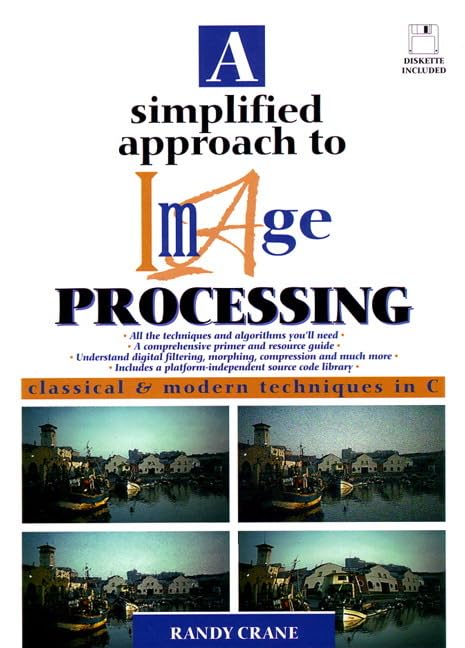
A Simplified Approach to Image Processing: Classical and Modern Techniques in C,Used
Sold by Ergodebooks, an authorized reseller.
Returns accepted within 30 days | support@ergodebooks.com
Shipping Information
- Free Standard Shipping — United States only
- Processing Time: 3–5 business days
- Estimated Delivery: 6–10 business days after dispatch
- Double-boxed, fully insured & discreetly packaged
- Tracking number sent via email once dispatched
Returns & Refund
Returns accepted within 30 days of delivery.
Damaged or Defective Item
Free return shipping + replacement or full refund
Wrong Item Received
Free return shipping + replacement or full refund
Change of Mind
Return shipping at customer's expense · 25% restocking fee applies
Payment Option

Image processing, the use of computers to process pictures, has revolutionized the fields of medicine, space exploration, geology, and oceanography, and has become the hottest area in digital signal processing. This book provides a comprehensive introduction to the most popular image processing techniques used today, without getting bogged down in the complex mathematical presentations found in most image processing books and journals. The book covers the hottes t topics in image proessing, including whole chapters on the processing of color images, image warping and morphing techniques, and image compression. The diskette, written in portable C code, provides a 'handson' introduction to image processing techniques that can be incorporated into the user's applications. For computer programmers and electrical engineers who need to enhance image processing applications.
⚠️ WARNING (California Proposition 65):
This product may contain chemicals known to the State of California to cause cancer, birth defects, or other reproductive harm.
For more information, please visit www.P65Warnings.ca.gov.
- Q: How many pages does the book have? A: The book has three hundred seventeen pages. This length provides a comprehensive introduction to image processing techniques.
- Q: What are the dimensions of the book? A: The book measures seven point twenty-five inches in length, zero point seventy-five inches in width, and nine point seventy-six inches in height. These dimensions make it easy to handle and read.
- Q: What type of binding does the book have? A: The book is paperback bound. This makes it lightweight and portable for readers.
- Q: How do I apply the techniques in this book? A: You can apply the techniques through practical coding exercises included on the accompanying diskette. It provides hands-on experience for programmers and engineers.
- Q: Is this book suitable for beginners? A: Yes, the book is suitable for beginners. It simplifies complex concepts in image processing without heavy mathematical jargon.
- Q: What programming language is used in the book? A: The book uses portable C code for its examples. This makes it accessible for those familiar with C programming.
- Q: How should I store the book to keep it in good condition? A: Store the book in a cool, dry place away from direct sunlight. This helps preserve its physical condition over time.
- Q: Are there any safety concerns with this book? A: No, there are no safety concerns with this book. It is a standard educational resource for image processing techniques.
- Q: Can I return the book if I'm not satisfied? A: Yes, you can return the book if you're not satisfied. Check the seller’s return policy for specific details.
- Q: What should I do if the book arrives damaged? A: If the book arrives damaged, contact the seller immediately for a replacement or refund. Most sellers have policies for such situations.
- Q: Is the book recommended for electrical engineers? A: Yes, the book is highly recommended for electrical engineers. It provides valuable insights into enhancing image processing applications.
- Q: Does the book cover modern image processing techniques? A: Yes, the book covers both classical and modern techniques in image processing. This includes topics like color image processing and image compression.
- Q: Who is the author of the book? A: The author of the book is Randy Crane. He is known for his expertise in image processing.
- Q: Does the book include practical examples? A: Yes, the book includes practical examples through a diskette with C code. This allows readers to implement what they learn.
- Q: Is this book useful for medical applications? A: Yes, the book discusses image processing techniques applicable in medical fields. It highlights how these techniques can be revolutionary in healthcare.