If you have any questions, you are always welcome to contact us. We'll get back to you as soon as possible, withing 24 hours on weekdays.
Customer service
All questions about your order, return and delivery must be sent to our customer service team by e-mail at yourstore@yourdomain.com
Sale & Press
If you are interested in selling our products, need more information about our brand or wish to make a collaboration, please contact us at press@yourdomain.com
Help
If you have any questions, you are always welcome to contact us. We'll get back to you as soon as possible, withing 24 hours on weekdays.
Customer service
All questions about your order, return and delivery must be sent to our customer service team by e-mail at yourstore@yourdomain.com
Sale & Press
If you are interested in selling our products, need more information about our brand or wish to make a collaboration, please contact us at press@yourdomain.com
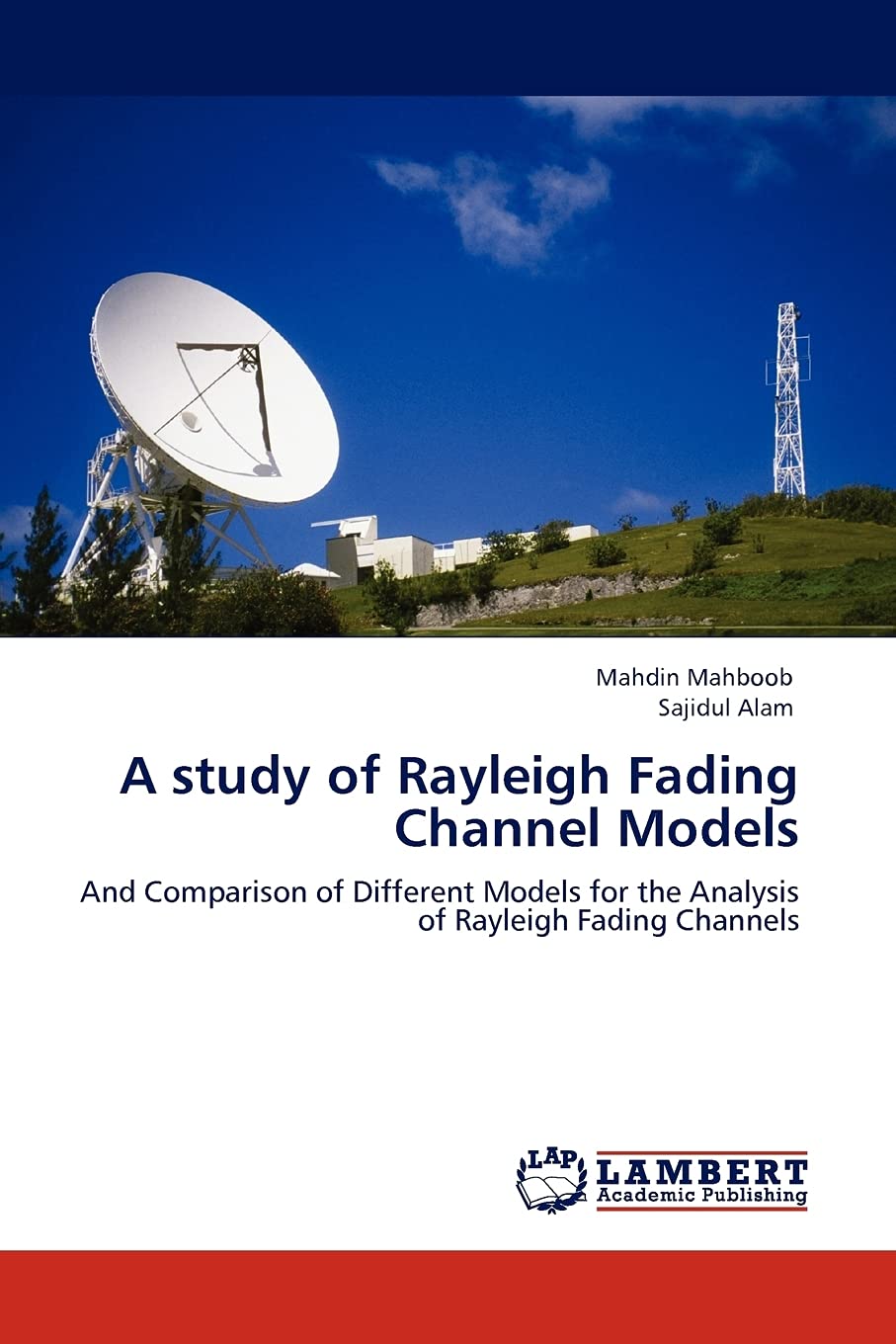
These days, computer simulation is increasingly being used for design and performance evaluation of communication systems. When simulating a mobile wireless channel for such systems, it is usually assumed that the fading process is a random variate with Rayleigh distribution. In this paper, we have tried to understand Rayleigh Fading (which best describes the scenario inan urban or macrocell environment) better by comparing different models and observing the changes that are caused by varying different parameters. At present, there are a number of methods to generate the Rayleigh fadingprocess, some of them quite recently proposed. Due to the use of different Rayleigh fading generators, different simulations of the same communication system yield different results. Two methods, viz., the Jakes method and the Dent(Modified Jakes) method have been studied, simulated and compared based on the Rayleigh fading process properties. Various communication systems have been simulated using the Rayleigh fading generators and the differences in theresults, if any, have been analyzed. It was seen that the Dent method is usually seen to better describe a Rayleigh fading process.
⚠️ WARNING (California Proposition 65):
This product may contain chemicals known to the State of California to cause cancer,
birth defects, or other reproductive harm.
For MAP (Minimum Advertised Price) violations and Intellectual Property (IP) or Trademark concerns, please contact:
support@ergodebooks.com
⚠️ California Proposition 65 Warning: Some products sold on this website may expose you to chemicals known to the State of California to cause cancer, birth defects, or other reproductive harm. For more information, visit www.P65Warnings.ca.gov.