
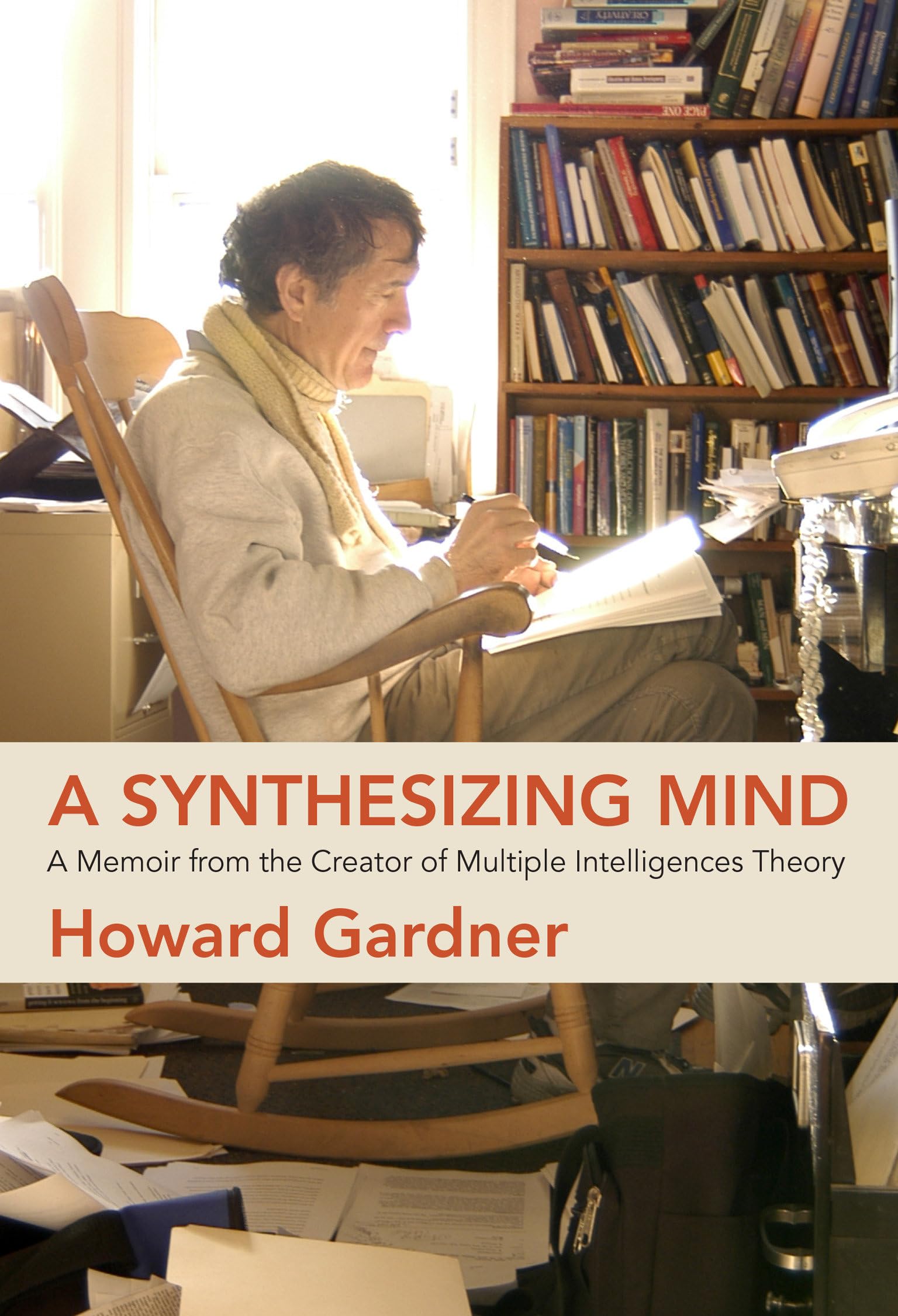
Title
A Synthesizing Mind: A Memoir from the Creator of Multiple Intelligences Theory,Used
Sold by Ergodebooks, an authorized reseller.
Returns accepted within 30 days | support@ergodebooks.com
Shipping Information
- Free Standard Shipping — United States only
- Processing Time: 3–5 business days
- Estimated Delivery: 6–10 business days after dispatch
- Double-boxed, fully insured & discreetly packaged
- Tracking number sent via email once dispatched
Returns & Refund
Returns accepted within 30 days of delivery.
Damaged or Defective Item
Free return shipping + replacement or full refund
Wrong Item Received
Free return shipping + replacement or full refund
Change of Mind
Return shipping at customer's expense · 25% restocking fee applies
Payment Option

An authority on the human mind reflects on his intellectual development, his groundbreaking work, and different types of intelligencesincluding his own.Howard Gardner's Frames of Mind was that rare publishing phenomenona mindchanger. Widely read by the general public as well as by educators, this influential book laid out Gardner's theory of multiple intelligences. It debunked the primacy of the IQ test and inspired new approaches to education; entire curricula, schools, museums, and parents' guides were dedicated to the nurturing of the several intelligences. In his new book, A Synthesizing Mind, Gardner reflects on his intellectual development and his groundbreaking work, tracing his evolution from bookish child to eager college student to disengaged graduate student to Harvard professor.Gardner discusses his mentors (including Erik Erikson and Jerome Bruner) and his collaborators (Mihaly Csikszentmihalyi, William Damon, and others). Comedian Groucho Marx makes a surprise (non)appearance, declining Gardner's invitation to chat with Harvard College students, in favor of making a living.Throughout his career, Gardner has focused on human minds in general, or on the minds of particular creators and leaders. Reflecting now on his own mind, he concludes that his is a synthesizing mindwith the ability to survey experiences and data across a wide range of disciplines and perspectives. The thinkers he most admiresincluding historian Richard Hofstadter, biologist Charles Darwin, and literary critic Edmund Wilsonare exemplary synthesizers. Gardner contends that the synthesizing mind is particularly valuable at this time and proposes ways to cultivate a possibly unique human capacity.
⚠️ WARNING (California Proposition 65):
This product may contain chemicals known to the State of California to cause cancer, birth defects, or other reproductive harm.
For more information, please visit www.P65Warnings.ca.gov.