
Title
A Theory of Forest Dynamics: The Ecological Implications of Forest Succession Models,New
Sold by Ergodebooks, an authorized reseller.
Returns accepted within 30 days | support@ergodebooks.com
Shipping Information
- Free Standard Shipping — United States only
- Processing Time: 3–5 business days
- Estimated Delivery: 6–10 business days after dispatch
- Double-boxed, fully insured & discreetly packaged
- Tracking number sent via email once dispatched
Returns & Refund
Returns accepted within 30 days of delivery.
Damaged or Defective Item
Free return shipping + replacement or full refund
Wrong Item Received
Free return shipping + replacement or full refund
Change of Mind
Return shipping at customer's expense · 25% restocking fee applies
Payment Option

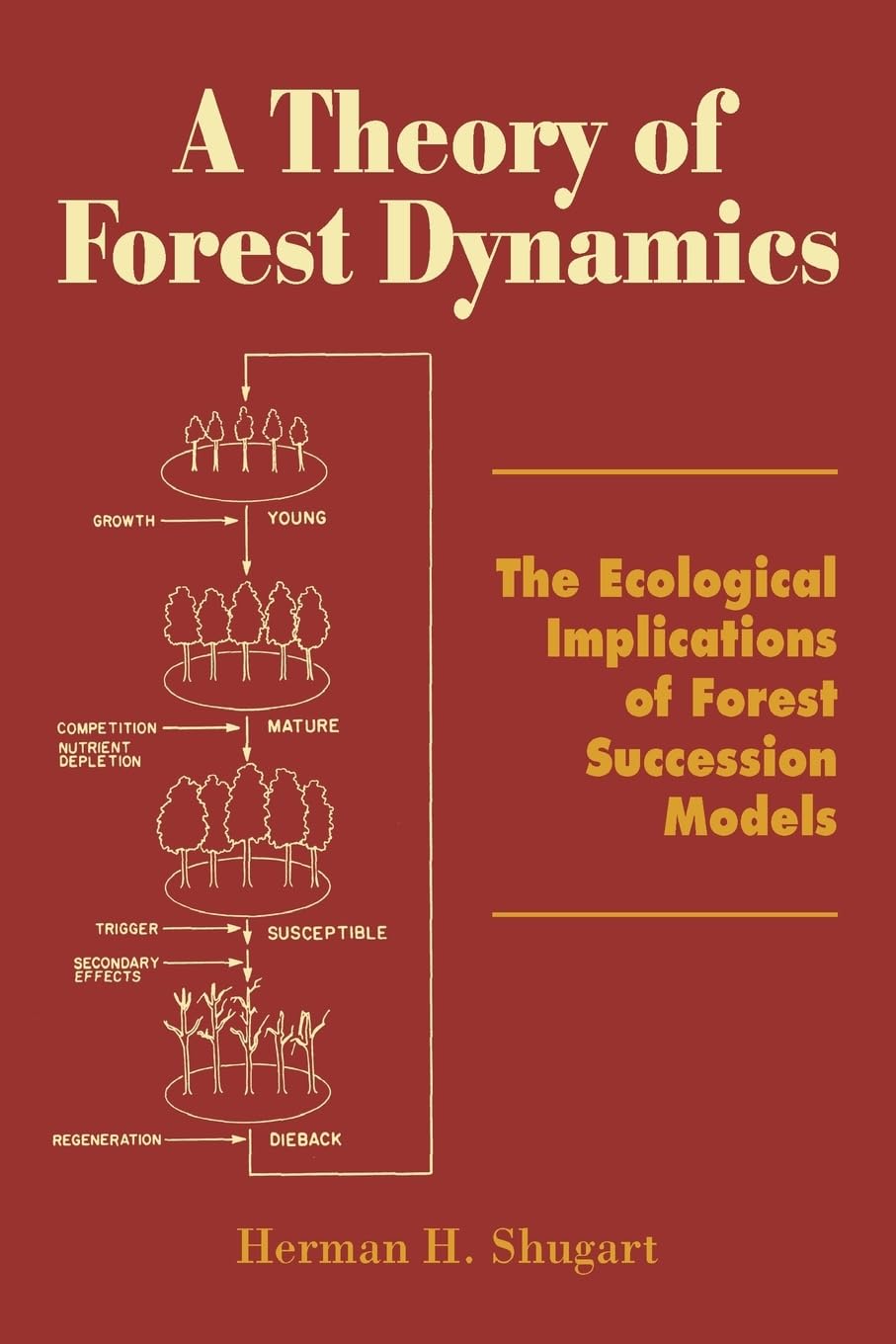
To the human eye, a forest is a slowly changing ecosystem that, superficially, looks alike from one year to the next. This seeming quiet though is a balance between the tremendous progenerative potential of trees and an equally tremendous mortality rate. The intrinsic nature of the trees that comprise a forest make it all but impossible to collect complete data sets on the dynamics of natural forests and our understanding of the longterm dynamics of forests is based largely on scientific inference. Because of this reliance on inference, mathematical models of forest dynamics offer a valuable formalization of what we believe to be the important mechanisms involved in forest succession. Originally published in 1984, A Theory of Forest Dynamics is intended for scientists and graduate students in ecology and forestry. The book includes: a review of ecologic succession; coverage of forest dynamics models and detailed analysis of several models of forest succession. Mathematic models of forest dynamics are inspected and evaluated. The models are applied to ecologic problems on scales ranging from small forest gaps to entire landscapes and over years to millennia. 'Almost twenty years after its first publication, this book continues to be a highly valuable resource for forest ecologists, whether they are engaged in dynamic modeling or not. It provides a thorough, mathematically underpinned theory of forest succession with a large array of application examples. I am thrilled that this volume is available again.' Dr. Harald Bugmann, Professor of Mountain Forest Ecology, ETH Zurich, Switzerland 'Since this book was first published in 1984, it has been a seminal publication describing the ecological processes controlling the dynamics of forest ecosystems. The scientific relevance and importance of the book have only increased over time. In particular, as climate modelers now realize that terrestrial ecosystems are an important feedback in the climate system they are including dynamic vegetation models in their climate models. This allows vegetation to change as climate changes, feeding back to affect climate. Hank Shugart's book outlines the theory of forest dynamics needed to successfully include dynamic vegetation within climate models.' Dr. Gordon Bonan, National Center for Atmospheric Research, Boulder, Colorado 'Hank Shugart's book A Theory of Forest Dynamics has served as a 'bible' in the field of forestry and ecology since its original publication in 1984. It made the forest gap model known worldwide, which led to the application of a large number of forest gap models to almost all forest types and continents. It has become a classic in forest science. Traditionally, forest science was regarded as a statistical and experienced science because trees could not be observed by a single person for an entire life span, making it impossible to predict the consequences of forest management, disturbances and environmental changes. The invention of the forest gap model quickly changed that situation because forest gap models can record, simulate and forecast the past, present and future in an understandable scale so that long term dynamics of forests may be understood based on a small group of hypothesis related succession factors: birth, mortality, growth under competition of light, water and space, parameterized by simple forestry inventory in forestry and forest ecology. A Theory of Forest Dynamics can be used both for research and teaching in forest science. It was written for scientists interested in forest science, but it has also been used as a textbook in computer modeling and forest ecology.' Yan Xiaodong, Deputy Director, START TEA RRC, Institute of Atmospheric Physics, Chinese Academy of Sciences, Beijing
⚠️ WARNING (California Proposition 65):
This product may contain chemicals known to the State of California to cause cancer, birth defects, or other reproductive harm.
For more information, please visit www.P65Warnings.ca.gov.