
Title
A Theory of Intergenerational Justice,Used
Sold by Ergodebooks, an authorized reseller.
Returns accepted within 30 days | support@ergodebooks.com
Shipping Information
- Free Standard Shipping — United States only
- Processing Time: 3–5 business days
- Estimated Delivery: 6–10 business days after dispatch
- Double-boxed, fully insured & discreetly packaged
- Tracking number sent via email once dispatched
Returns & Refund
Returns accepted within 30 days of delivery.
Damaged or Defective Item
Free return shipping + replacement or full refund
Wrong Item Received
Free return shipping + replacement or full refund
Change of Mind
Return shipping at customer's expense · 25% restocking fee applies
Payment Option

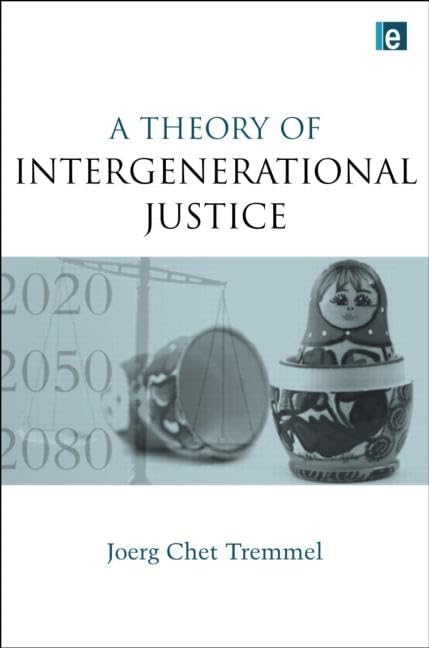
The appeal to 'our obligations to future generations' is one of the most forceful, emotional and effective arguments available to politicians and citizens and is the cornerstone of all modern policies aimed at sustainable development. Yet, the exact nature and extent of these obligations are unclear who owes what to whom, exactly, and why?This highly accessible book provides an extensive and comprehensive overview of current research and theory about why and how we should protect future generations. It exposes how and why the interests of people today and those of future generations are often in conflict and what can be done. It rebuts critical concepts such as Parfits' 'nonidentity' paradox and Beckerman's denial of any possibility of intergenerational justice. The core of the book is the lucid application of a 'veil of ignorance' to derive principles of intergenerational justice which show that our duties to posterity are stronger than is often supposed. Tremmel's approach demands that each generation both consider and improve the wellbeing of future generations. To measure the wellbeing of future generations Tremmel employs the Human Development Index rather than the metrics of utilitarian subjective happiness. The book thus answers in detailed, concrete terms the two most important questions of every theory of intergenerational justice: 'what to sustain' and 'how much to sustain?'Ultimately this book provides a theory of intergenerational justice that is both intellectually robust and practical with wide applicability to law, policy, economics, climate change and all other contexts that affect future generations.
⚠️ WARNING (California Proposition 65):
This product may contain chemicals known to the State of California to cause cancer, birth defects, or other reproductive harm.
For more information, please visit www.P65Warnings.ca.gov.