
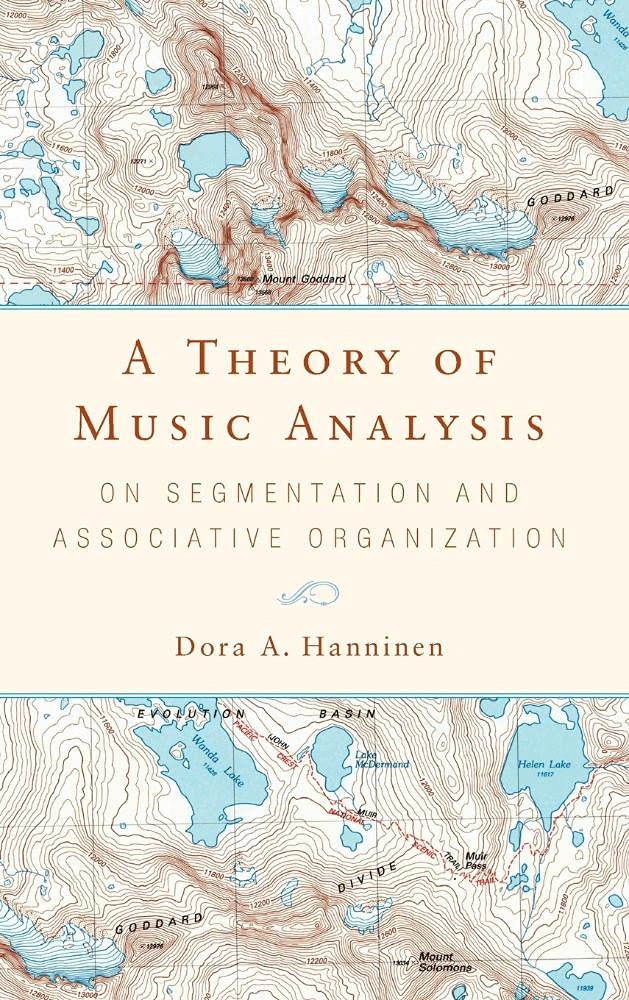
Title
A Theory of Music Analysis: On Segmentation and Associative Organization (Eastman Studies in Music) (Volume 92),Used
Sold by Ergodebooks, an authorized reseller.
Returns accepted within 30 days | support@ergodebooks.com
Shipping Information
- Free Standard Shipping — United States only
- Processing Time: 1–3 business days
- Estimated Delivery: 3–5 business days after dispatch
- Double-boxed, fully insured & discreetly packaged
- Tracking number sent via email once dispatched
- Orders over $250 require signature upon delivery. Taxes calculated at checkout.
Returns & Refund
Returns accepted within 30 days of delivery.
Damaged or Defective Item
Free return shipping + replacement or full refund
Wrong Item Received
Free return shipping + replacement or full refund
Change of Mind
Return shipping at customer's expense · 25% restocking fee applies
Payment Option

This book introduces a theory of music analysis that one can use to explore aspects of segmentation and associative organization in a wide range of repertoire including Western classical music from the Baroque to the present, with potential applications to jazz and popular music, and some nonWestern musics. Rather than a methodology, the theory provides analysts with precise language and a broad, flexible conceptual framework through which they can formulate and investigate questions of interest and develop their own interpretations of individual pieces and passages. The theory begins with a basic distinction among three domains of musical experience and discourse about it: the sonic (psychoacoustic); the contextual (or associative, sparked by varying degrees of repetition); and the structural (guided by a specific theory of musical structure or syntax invoked by the analyst). A comprehensive presentation of the theory, with copious musical illustrations, is balanced with close analyses of works by Beethoven, Debussy, Nancarrow, Riley, Feldman, and Morris. Dora A. Hanninen is professor of music theory at the University of Maryland. She received the 2010 Outstanding Publication Award from the Society for Music Theory.Table of ContentsA Theory of Music AnalysisOrientations, Criteria, SegmentsAssociative Sets and Associative OrganizationBeethoven, Piano Sonata No. 2 in A Major, Op. 2, No. 2, IDebussy, 'Harmonie du soir,' Cinq pomes de Baudelaire, No. 2Nancarrow, Study No. 37: Calibrated Canons, Changeable LandscapesRiley, In C: Configurations and Landscape Studies of Select PlotsFeldman, Palais de Mari: Pattern and Design in a Changing LandscapeMorris, Nine Piano Pieces: Between Moment and MemoryReflectionson and among the NineFurther Considerations and Extended ApplicationsNotesGlossaryBibliographyIndex
⚠️ WARNING (California Proposition 65):
This product may contain chemicals known to the State of California to cause cancer, birth defects, or other reproductive harm.
For more information, please visit www.P65Warnings.ca.gov.