
Title
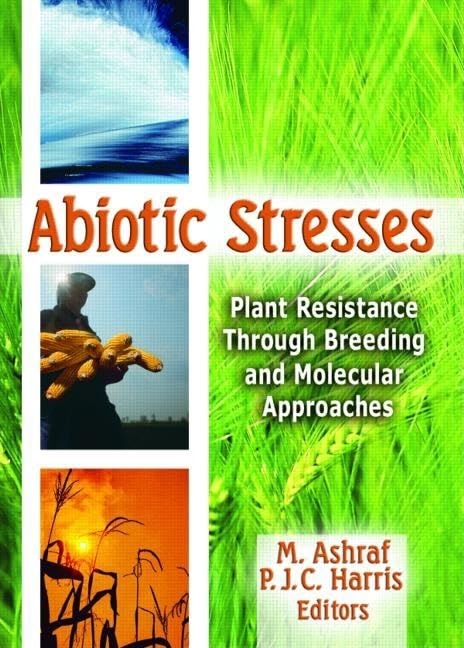
Abiotic Stresses: Plant Resistance Through Breeding and Molecular Approaches (Crop Science),Used
Sold by Ergodebooks, an authorized reseller.
Returns accepted within 30 days | support@ergodebooks.com
Shipping Information
- Free Standard Shipping — United States only
- Processing Time: 3–5 business days
- Estimated Delivery: 6–10 business days after dispatch
- Double-boxed, fully insured & discreetly packaged
- Tracking number sent via email once dispatched
Returns & Refund
Returns accepted within 30 days of delivery.
Damaged or Defective Item
Free return shipping + replacement or full refund
Wrong Item Received
Free return shipping + replacement or full refund
Change of Mind
Return shipping at customer's expense · 25% restocking fee applies
Payment Option

Gain a better understanding of the genetic and physiological bases of stress response and stress tolerance as part of crop improvement programsAbiotic Stresses: Plant Resistance Through Breeding and Molecular Approaches explores innovative methods for breeding new varieties of major crops with resistance to environmental stresses that limit crop production worldwide. Experts provide you with basic principles and techniques of plant breeding as well as work done in relation to improving resistance in specific important world food crops. This book supplies extensive bibliographies at the end of each chapter, as well as tables and figures that illustrate the research findings.Abiotic Stresses is divided into two sections. In the first section, you will find: the general principles of breeding crops for stress resistancegenetic engineering and molecular biology procedures for crop improvement for stress environmentsdata on genome mapping and its implications for improving stress resistance in plantsinformation about breeding for resistance/tolerance to salinity, drought, flooding, metals, low nutrient availability, high/low temperaturesThe second section of this timely resource focuses on the efforts of acknowledged specialists who concentrated their efforts on important individual crops, such as: wheatbarleyricemaizeoilseed cropscottontomatoThis book fills a niche and interface in the available literature as it deals with all of the major stresses from a perspective of crop breeding, covering the latest advances in molecular breeding technology. Abiotic Stresses will help scientists and academics in botany, plant breeding, plant environmental stress studies, agriculture, and horticulture modify and improve breeding programs globally.
⚠️ WARNING (California Proposition 65):
This product may contain chemicals known to the State of California to cause cancer, birth defects, or other reproductive harm.
For more information, please visit www.P65Warnings.ca.gov.
- Q: What topics are covered in 'Abiotic Stresses: Plant Resistance Through Breeding and Molecular Approaches'? A: The book covers genetic and physiological bases of stress response, techniques for breeding crops resistant to abiotic stresses, and specific case studies on crops like wheat, rice, and cotton.
- Q: Who is the author of this book? A: The author of 'Abiotic Stresses: Plant Resistance Through Breeding and Molecular Approaches' is M. Ashraf.
- Q: What is the publication date of this book? A: The book was published on April 1, 2005.
- Q: How many pages does this book have? A: The book contains 756 pages.
- Q: Is this book suitable for beginners in plant breeding? A: Yes, the book provides basic principles of plant breeding and is designed to support both novices and experts in the field.
- Q: What type of binding does this book have? A: This book is available in paperback binding.
- Q: Does the book include visual aids to support the content? A: Yes, it includes tables and figures that illustrate the research findings.
- Q: Can this book help with understanding environmental stresses in crops? A: Yes, it explores methods for breeding crops that are resistant to various environmental stresses affecting crop production.
- Q: Is there a bibliography included in the book? A: Yes, extensive bibliographies are provided at the end of each chapter.
- Q: What edition of the book is available? A: The book is currently available in its first edition.