
Title
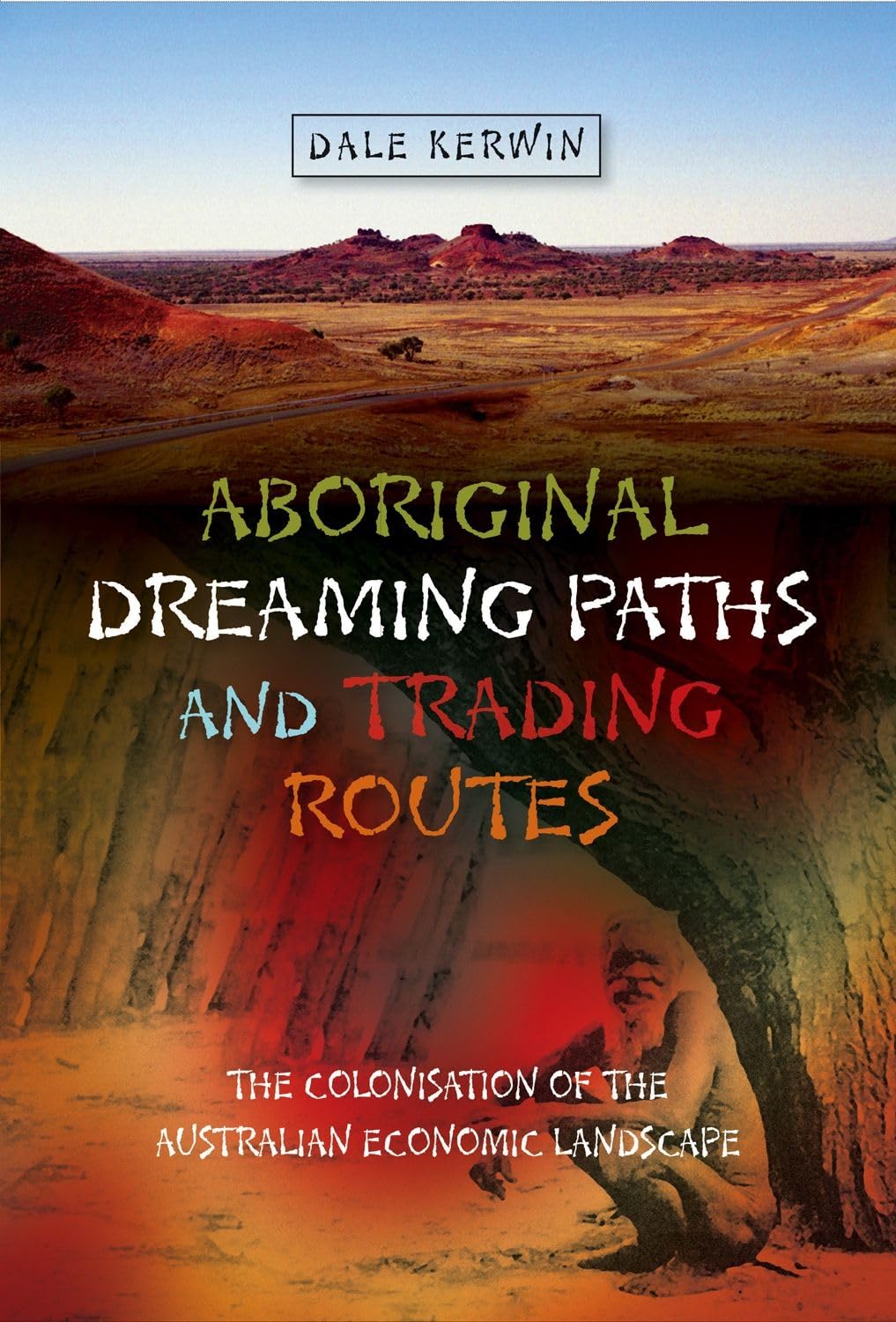
Aboriginal Dreaming Paths and Trading Routes: The Colonisation of the Australian Economic Landscape (First Nations and the Colon,Used
Sold by Ergodebooks, an authorized reseller.
Returns accepted within 30 days | support@ergodebooks.com
Shipping Information
- Free Standard Shipping — United States only
- Processing Time: 3–5 business days
- Estimated Delivery: 6–10 business days after dispatch
- Double-boxed, fully insured & discreetly packaged
- Tracking number sent via email once dispatched
Returns & Refund
Returns accepted within 30 days of delivery.
Damaged or Defective Item
Free return shipping + replacement or full refund
Wrong Item Received
Free return shipping + replacement or full refund
Change of Mind
Return shipping at customer's expense · 25% restocking fee applies
Payment Option

The dreaming paths of Aboriginal nations across Australia formed major ceremonial routes along which goods and knowledge flowed. These became the trade routes that crisscrossed Australia and transported religion and cultural values. This book highlights the valuable contribution Aboriginal people made in assisting European explorers, surveyors and stockmen to open the country for colonisation, and explores the interface between Aboriginal possession of the Australian continent and European colonisation and appropriation. Instead of positing a radical disjunction between cultural competencies, Dale Kerwin considers how European colonisation of Australia appropriated Aboriginal competence in terms of the landscape: by tapping into culinary and medicinal knowledge, water and resource knowledge, hunting, food collecting and pathfinding. As a consequence of this assistance, Aboriginal dreaming paths and trading routes also became the routes and roads of colonisers. Indeed, the European colonisation of Australia owes much of its success to the deliberate process of Aboriginal land management practices. Dale Kerwin provides a social science context for the broader study of Aboriginal trading routes by setting out an historic interpretation of the Aboriginal/European contact period. His book scrutinises arguments about nomadic and primitive societies, as well as Romantic views of culture and affluence. These circumstances and outcomes are juxtaposed with evidence that indicates that Aboriginal societies are substantially sedentary and highly developed, capable of functional differentiation and foresight attributes previously only granted to the European settlers. The huntergatherer image of Aboriginal society is rejected by providing evidence of crop cultivation and land management, as well as social arrangements that made best use of a hostile environment. This book is essential reading for all those who seek to have a better knowledge of Australia and its first people: it inscribes Aboriginal people firmly in the body of Australian history.
⚠️ WARNING (California Proposition 65):
This product may contain chemicals known to the State of California to cause cancer, birth defects, or other reproductive harm.
For more information, please visit www.P65Warnings.ca.gov.