
Title
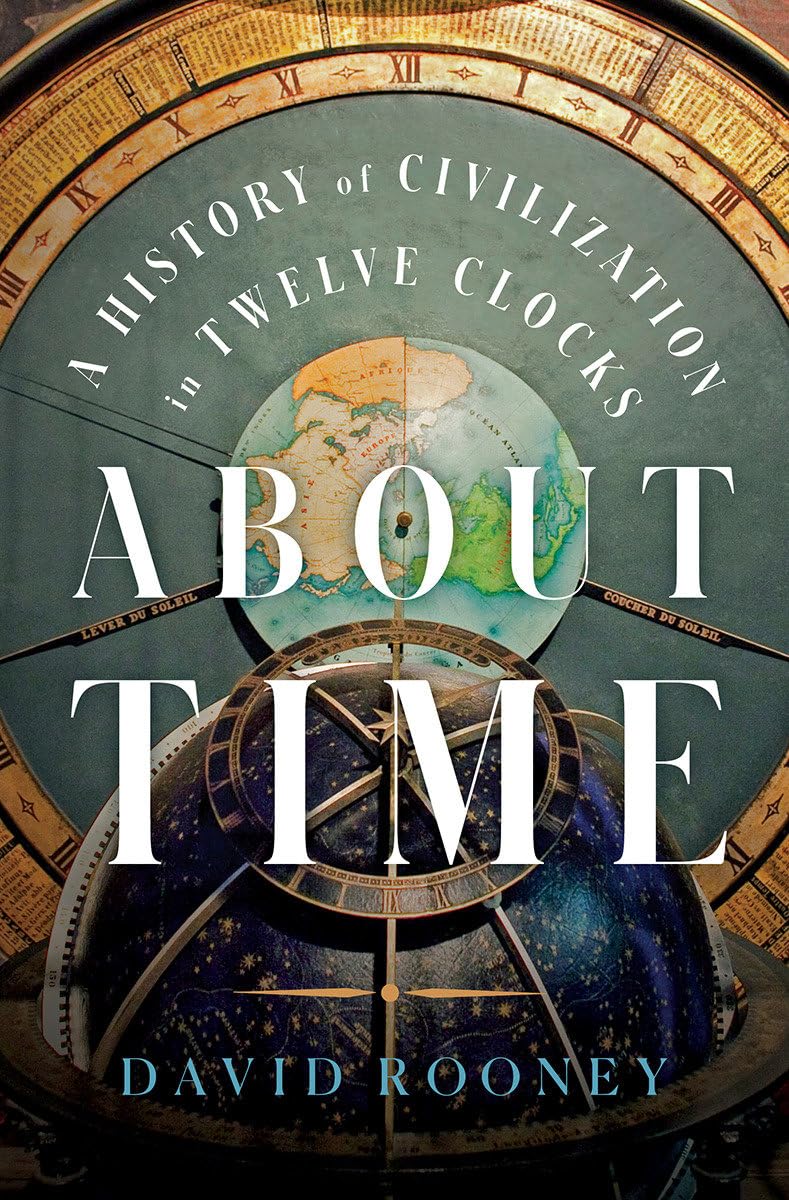
About Time: A History Of Civilization In Twelve Clocks
Sold by Ergodebooks, an authorized reseller.
Returns accepted within 30 days | support@ergodebooks.com
Shipping Information
- Free Standard Shipping — United States only
- Processing Time: 3–5 business days
- Estimated Delivery: 6–10 business days after dispatch
- Double-boxed, fully insured & discreetly packaged
- Tracking number sent via email once dispatched
Returns & Refund
Returns accepted within 30 days of delivery.
Damaged or Defective Item
Free return shipping + replacement or full refund
Wrong Item Received
Free return shipping + replacement or full refund
Change of Mind
Return shipping at customer's expense · 25% restocking fee applies
Payment Option

One Of Smithsonian Magazine'S Ten Best History Books Of 2021A Captivating, Surprising History Of Timekeeping And How It Has Shaped Our World.For Thousands Of Years, People Of All Cultures Have Made And Used Clocks, From The City Sundials Of Ancient Rome To The Medieval Water Clocks Of Imperial China, Hourglasses Fomenting Revolution In The Middle Ages, The Stock Exchange Clock Of Amsterdam In 1611, Enlightenment Observatories In India, And The Highprecision Clocks Circling The Earth On A Fleet Of Gps Satellites That Have Been Launched Since 1978. Clocks Have Helped Us Navigate The World And Build Empires, And Have Even Taken Us To The Brink Of Destruction. Elites Have Used Them To Wield Power, Make Money, Govern Citizens, And Control Livesand Sometimes The People Have Used Them To Fight Back.Through The Stories Of Twelve Clocks, About Time Brings Pivotal Moments From The Past Vividly To Life. Historian And Lifelong Clock Enthusiast David Rooney Takes Us From The Unveiling Of Aljazaris Castle Clock In 1206, In Presentday Turkey; To The Cape Of Good Hope Observatory At The Southern Tip Of Africa, Where Nineteenthcentury British Government Astronomers Moved The Gears Of Empire With A Time Ball And A Gun; To The Burial Of A Plutonium Clock Now Sealed Beneath A Public Park In Osaka, Where It Will Keep Time For 5,000 Years.Rooney Shows, Through These Artifacts, How Time Has Been Imagined, Politicized, And Weaponized Over The Centuriesand How It Might Bring Peace. Ultimately, He Writes, The Technical History Of Horology Is Only The Start Of The Story. A History Of Clocks Is A History Of Civilization. 25 Illustrations
⚠️ WARNING (California Proposition 65):
This product may contain chemicals known to the State of California to cause cancer, birth defects, or other reproductive harm.
For more information, please visit www.P65Warnings.ca.gov.
- Q: What is the size of 'About Time: A History of Civilization in Twelve Clocks'? A: The book measures six point three inches in length, one inch in width, and nine point three inches in height.
- Q: How many pages does this book have? A: The book has two hundred eighty-eight pages, providing an in-depth exploration of timekeeping throughout history.
- Q: What type of binding does this book have? A: The book is bound in hardcover, ensuring durability and a high-quality feel.
- Q: Who is the author of 'About Time'? A: The author of this book is David Rooney, a historian and clock enthusiast.
- Q: What genre does this book fall under? A: The book is categorized under Civilization and Culture, focusing on historical narratives.
- Q: Is 'About Time' suitable for young readers? A: Yes, the book is suitable for a general audience, but it is recommended for ages twelve and up due to its historical content.
- Q: How can I best read 'About Time'? A: You can read this book at your own pace, as it is structured to be engaging for both casual readers and history enthusiasts.
- Q: Does this book contain illustrations? A: Yes, 'About Time' includes twenty-five illustrations that complement the text and enhance the storytelling.
- Q: What is the main theme of 'About Time'? A: The main theme explores how timekeeping has influenced civilization, politics, and society through twelve significant clocks.
- Q: Can 'About Time' be used as a reference book? A: Yes, it can serve as a reference for historical research about timekeeping and its cultural implications.
- Q: How should I store 'About Time' to keep it in good condition? A: Store the book upright in a cool, dry place away from direct sunlight to prevent damage to the cover and pages.
- Q: Is there a warranty or return policy for this book? A: Typically, books come with a standard return policy, allowing returns within thirty days if unopened or defective.
- Q: What if the book arrives damaged? A: If the book arrives damaged, you should contact the seller within thirty days for a replacement or refund.
- Q: How do I clean the cover of 'About Time'? A: Wipe the cover gently with a dry cloth to remove dust and avoid using water or cleaners that might harm the finish.
- Q: Are there any additional resources related to 'About Time'? A: Yes, readers can explore additional historical texts or documentaries on timekeeping and horology for further learning.
- Q: Is 'About Time' considered a scholarly work? A: While it is well-researched, it is written in an accessible style suitable for general audiences rather than strictly academic.