If you have any questions, you are always welcome to contact us. We'll get back to you as soon as possible, withing 24 hours on weekdays.
Customer service
All questions about your order, return and delivery must be sent to our customer service team by e-mail at yourstore@yourdomain.com
Sale & Press
If you are interested in selling our products, need more information about our brand or wish to make a collaboration, please contact us at press@yourdomain.com
Help
If you have any questions, you are always welcome to contact us. We'll get back to you as soon as possible, withing 24 hours on weekdays.
Customer service
All questions about your order, return and delivery must be sent to our customer service team by e-mail at yourstore@yourdomain.com
Sale & Press
If you are interested in selling our products, need more information about our brand or wish to make a collaboration, please contact us at press@yourdomain.com
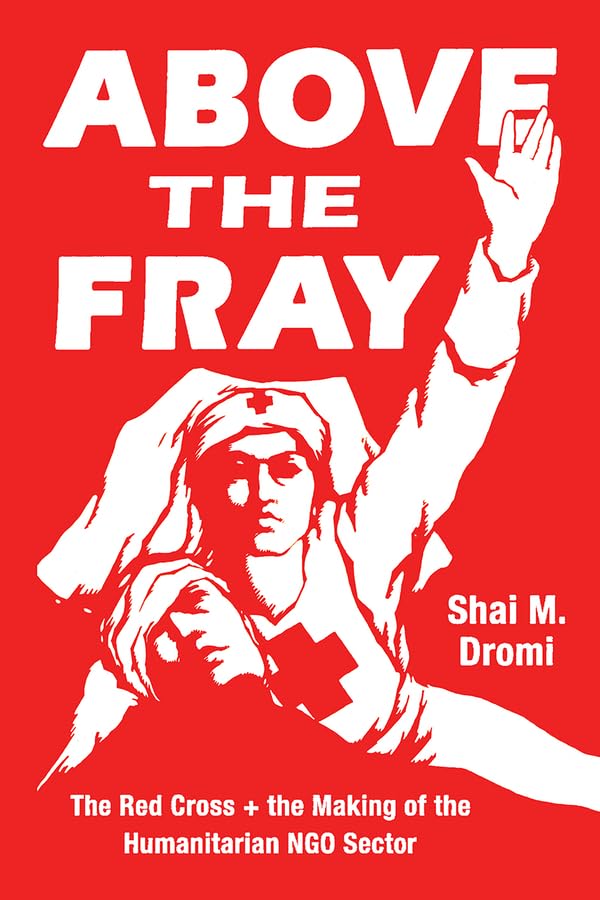
From Lake Chad to Iraq, nongovernmental organizations (NGOs) provide relief around the globe, and their scope is growing every year. Policy makers and activists often assume that humanitarian aid is best provided by these organizations, which are generally seen as impartial and neutral. In Above the Fray, Shai M. Dromi investigates why the international community overwhelmingly trusts humanitarian NGOs by looking at the historical development of their culture. With a particular focus on the Red Cross, Dromi reveals that NGOs arose because of the efforts of orthodox Calvinists, demonstrating for the first time the origins of the unusual moral culture that has supported NGOs for the past 150 years.Drawing on archival research, Dromi traces the genesis of the Red Cross to a Calvinist movement working in midnineteenthcentury Geneva. He shows how global humanitarian policies emerged from the Red Cross founding members faith that an international volunteer program not beholden to the state was the only ethical way to provide relief to victims of armed conflict. By illustrating how Calvinism shaped the humanitarian field, Dromi argues for the key role belief systems play in establishing social fields and institutions. Ultimately, Dromi shows the immeasurable social good that NGOs have achieved, but also points to their limitations and suggests that alternative models of humanitarian relief need to be considered.
⚠️ WARNING (California Proposition 65):
This product may contain chemicals known to the State of California to cause cancer,
birth defects, or other reproductive harm.
For MAP (Minimum Advertised Price) violations and Intellectual Property (IP) or Trademark concerns, please contact:
support@ergodebooks.com
⚠️ California Proposition 65 Warning: Some products sold on this website may expose you to chemicals known to the State of California to cause cancer, birth defects, or other reproductive harm. For more information, visit www.P65Warnings.ca.gov.