
Title
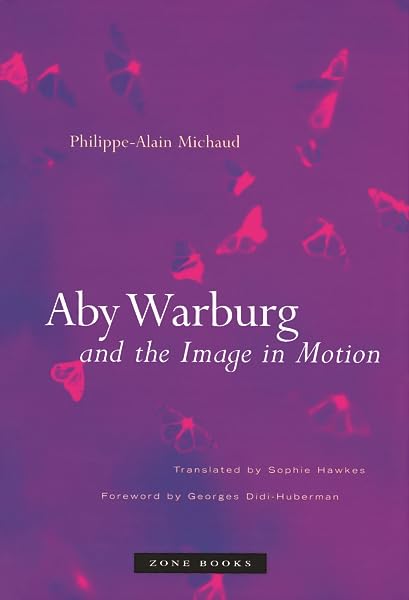
Aby Warburg and the Image in Motion (Mit Press),Used
Sold by Ergodebooks, an authorized reseller.
Returns accepted within 30 days | support@ergodebooks.com
Shipping Information
- Free Standard Shipping — United States only
- Processing Time: 3–5 business days
- Estimated Delivery: 6–10 business days after dispatch
- Double-boxed, fully insured & discreetly packaged
- Tracking number sent via email once dispatched
Returns & Refund
Returns accepted within 30 days of delivery.
Damaged or Defective Item
Free return shipping + replacement or full refund
Wrong Item Received
Free return shipping + replacement or full refund
Change of Mind
Return shipping at customer's expense · 25% restocking fee applies
Payment Option

Aby Warburg (18661929) is best known as the originator of the discipline of iconology and as the founder of the institute that bears his name. His followers included some of the celebrated art historians of the twentieth century such as Erwin Panofsky, Edgar Wind, and Fritz Saxl. But his heirs developed, for the most part, a domesticated iconology based on the decipherment and interpretation of symbolic material. As PhilippeAlain Michaud demonstrates in this important book, Warburgs project was remote from any positivist or neoKantian ambitions. Nourished on the work of Friedrich Nietzsche and Jacob Burckhardt, Warburg fashioned a critical iconology to reveal the irrationality of the image in Western culture.Opposing the grand teleological narratives of art inaugurated by Giorgio Vasari, Warburgs method operated through historical anachronisms and discontinuities. Using procedures of montagecollision he brought together pagan artifacts with masterpieces of Florentine Renaissance art, the astrology of the ancient Near East with the Lutheran Reformation, Mannerist festivals with the sacred dances of Native Americans. Michaud insists that for Warburg, the practice of art history was not only the recognition of the radical heterogeneity of objects but the discovery within the art work itself of lines of fracture, contradictions, tensions, and the energies of magic, empathy, totemism, and animism.Michaud provides us with a book that not only is about Warburg but also extends his intuitions and discoveries into analyses of other categories of imagery like the daguerreotype, the chronophotography of EtienneJules Marey, early cinema, and the dances of Loe Fuller. This edition also includes a foreword by Georges DidiHuberman and texts by Warburg not previously translated into English.
⚠️ WARNING (California Proposition 65):
This product may contain chemicals known to the State of California to cause cancer, birth defects, or other reproductive harm.
For more information, please visit www.P65Warnings.ca.gov.