
Title
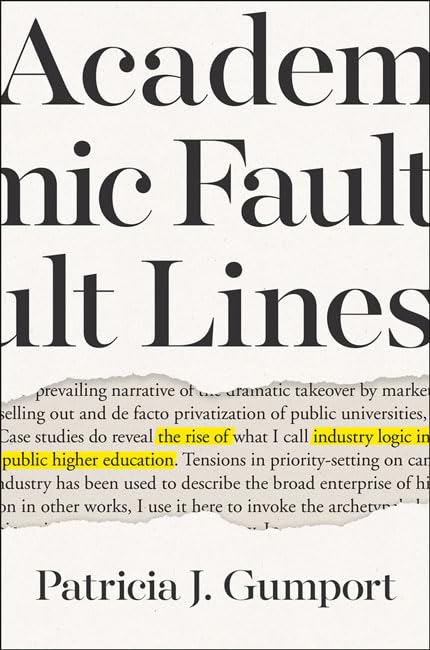
Academic Fault Lines: The Rise of Industry Logic in Public Higher Education,Used
Sold by Ergodebooks, an authorized reseller.
Returns accepted within 30 days | support@ergodebooks.com
Shipping Information
- Free Standard Shipping — United States only
- Processing Time: 3–5 business days
- Estimated Delivery: 6–10 business days after dispatch
- Double-boxed, fully insured & discreetly packaged
- Tracking number sent via email once dispatched
Returns & Refund
Returns accepted within 30 days of delivery.
Damaged or Defective Item
Free return shipping + replacement or full refund
Wrong Item Received
Free return shipping + replacement or full refund
Change of Mind
Return shipping at customer's expense · 25% restocking fee applies
Payment Option

How did public higher education become an industry? This unprecedented account reveals how campus leaders and faculty preserved the vitality and core values of public higher education despite changing resources and expectations.American public higher education is in crisis. After decades of public scrutiny over affordability, access, and quality, indictments of the institution as a whole abound. Campus leaders and faculty report a loss of public respect resulting from their alleged unresponsiveness to demands for change. But is this loss of confidence warranted? And how did we get to this point?In Academic Fault Lines, Patricia J. Gumport offers a compelling account of the profound shift in societal expectations for what public colleges and universities should be and do. She attributes these new attitudes to the ascendance of "industry logic"the notion that higher education must prioritize serving the economy. Arguing that industry logic has had farreaching effects, Gumport shows how this businessoriented mandate has prompted colleges to restructure for efficiency gains, adopt more corporate forms, develop deeper ties with industry, and mold academic programs in the interest of enhancing students' future employment prospects. She also explains how industry logic gained traction and momentum, altering what constitutes legitimacy for public higher education.Yet Gumport's narrative is by no means defeatist. Drawing on case studies of nine public colleges and universities, as well as more than 200 stakeholder interviews, Gumport's nuanced account conveys the successful efforts of leaders and educators to preserve and even strengthen fundamental public values such as educational access, knowledge advancement regardless of currency, and civic responsibility. Ultimately, Academic Fault Lines demonstrates how intrepid faculty and administrators engaged their communities both on and off campus, collaborating and inventing winwin scenarios to further public higher education's expanding legacy of service to all citizens while preserving its centrality to society and the world.
⚠️ WARNING (California Proposition 65):
This product may contain chemicals known to the State of California to cause cancer, birth defects, or other reproductive harm.
For more information, please visit www.P65Warnings.ca.gov.