
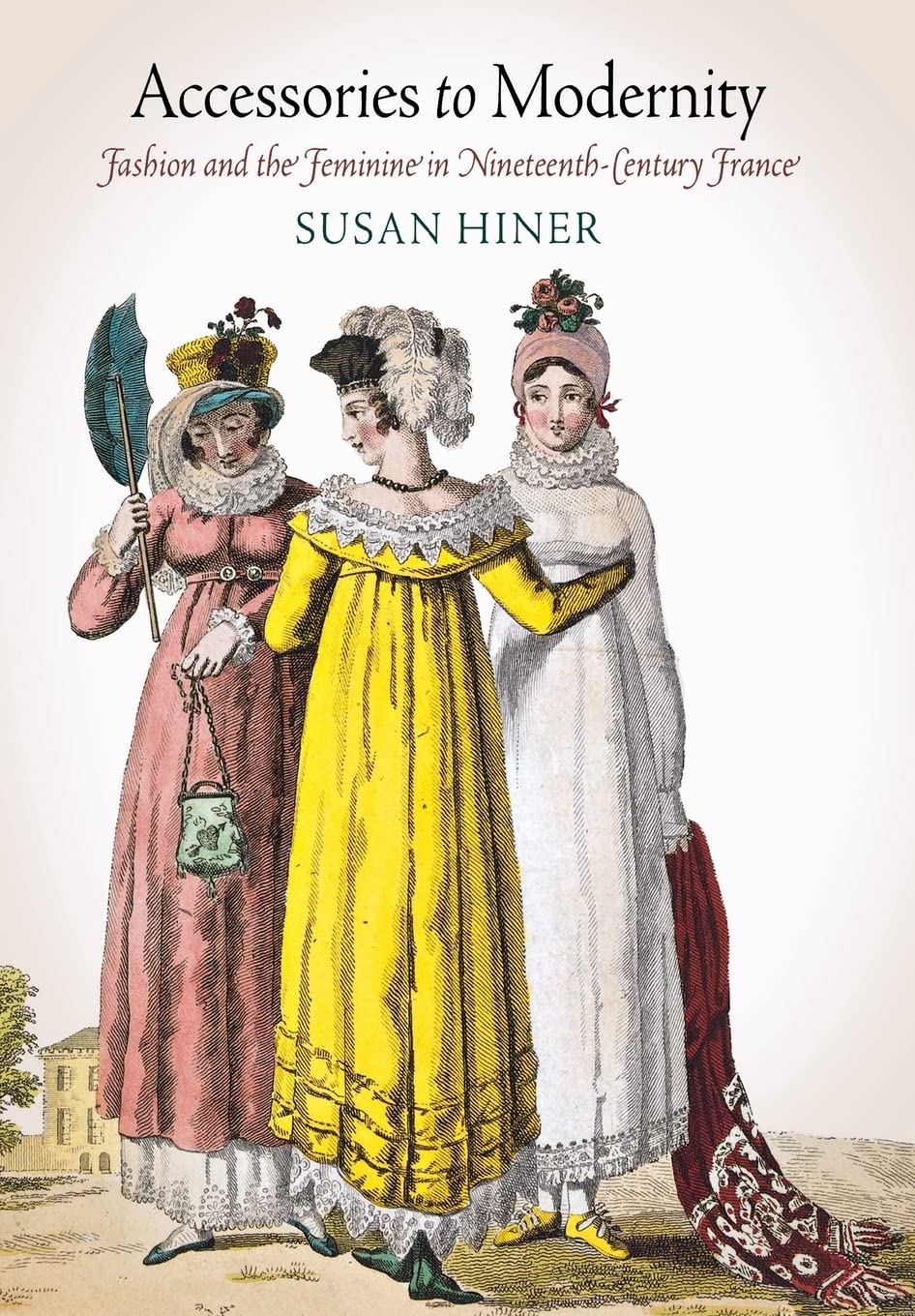
Title
Accessories to Modernity: Fashion and the Feminine in NineteenthCentury France,New
Sold by Ergodebooks, an authorized reseller.
Returns accepted within 30 days | support@ergodebooks.com
Shipping Information
- Free Standard Shipping — United States only
- Processing Time: 3–5 business days
- Estimated Delivery: 6–10 business days after dispatch
- Double-boxed, fully insured & discreetly packaged
- Tracking number sent via email once dispatched
Returns & Refund
Returns accepted within 30 days of delivery.
Damaged or Defective Item
Free return shipping + replacement or full refund
Wrong Item Received
Free return shipping + replacement or full refund
Change of Mind
Return shipping at customer's expense · 25% restocking fee applies
Payment Option

Winner of the 2011 Millia Davenport Publication Award of the Costume Society of AmericaAccessories to Modernity explores the ways in which feminine fashion accessories, such as cashmere shawls, parasols, fans, and handbags, became essential instruments in the bourgeois idealization of womanhood in nineteenthcentury France. Considering how these fashionable objects were portrayed in fashion journals and illustrations, as well as fiction, the book explores the histories and cultural weight of the objects themselves and offers fresh readings of works by Balzac, Flaubert, and Zola, some of the most widely read novels of the period.As social boundaries were becoming more and more fluid in the nineteenth century, one effort to impose order over the looming confusion came, in the case of women, through fashion, and the fashion accessory thus became an ever more crucial tool through which social distinction could be created, projected, and maintained. Looking through the lens of fashion, Susan Hiner explores the interplay of imperialist expansion and domestic rituals, the assertion of privilege in the face of increasing social mobility, gendering practices and their relation to social hierarchies, and the rise of commodity culture and woman's paradoxical status as both consumer and object within it.Through her close focus on these luxury objects, Hiner reframes the feminine fashion accessory as a key symbol of modernity that bridges the erotic and proper, the domestic and exotic, and mass production and the work of art while making a larger claim about the 'accessory' statusin terms of both complicity and subordinationof bourgeois women in nineteenthcentury France. Women were not simply passive bystanders but rather were themselves accessories to the work of modernity from which they were ostensibly excluded.
⚠️ WARNING (California Proposition 65):
This product may contain chemicals known to the State of California to cause cancer, birth defects, or other reproductive harm.
For more information, please visit www.P65Warnings.ca.gov.