
Title
Accessright: The Future Of Digital Copyright Law
Sold by Ergodebooks, an authorized reseller.
Returns accepted within 30 days | support@ergodebooks.com
Shipping Information
- Free Standard Shipping — United States only
- Processing Time: 3–5 business days
- Estimated Delivery: 6–10 business days after dispatch
- Double-boxed, fully insured & discreetly packaged
- Tracking number sent via email once dispatched
Returns & Refund
Returns accepted within 30 days of delivery.
Damaged or Defective Item
Free return shipping + replacement or full refund
Wrong Item Received
Free return shipping + replacement or full refund
Change of Mind
Return shipping at customer's expense · 25% restocking fee applies
Payment Option

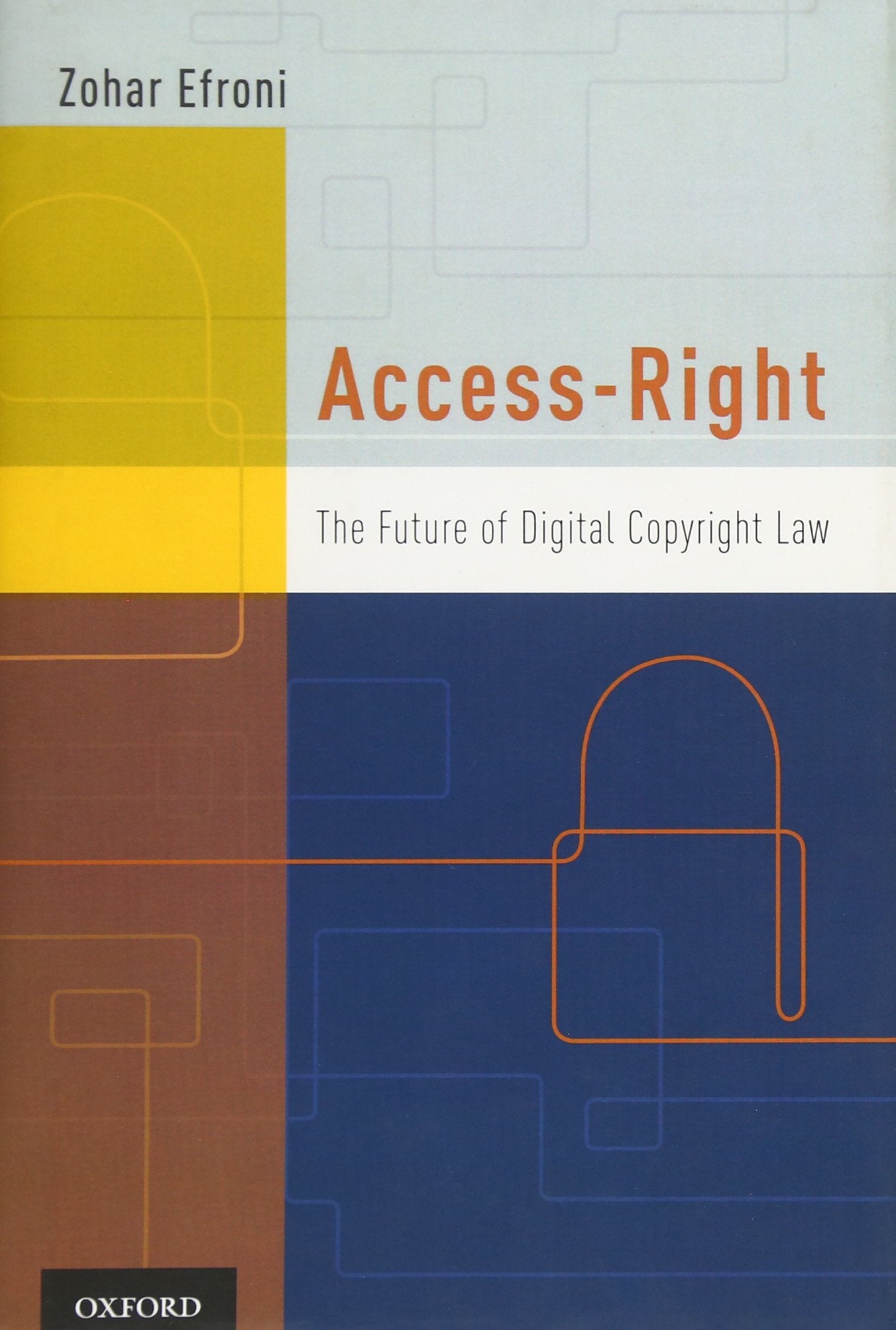
Copyright law has become the subject of general concerns that reach beyond the limited circles of specialists and prototypical rightsholders. The role, scope and effect of copyright mechanisms involve genuinely complex questions. Digitization trends and the legal changes that followed drew those complex matters to the center of an ongoing public debate. In AccessRight: The Future of Digital Copyright Law, Zohar Efroni explores theoretical, normative and practical aspects of premising copyright on the principle of access to works. The impetus to this approach has been the emergence of technology that many consider a threat to the intended operation, and perhaps even to the very integrity, of copyright protection in the digital setting: It is the ability to control digital works already at the stage of accessing them by means of technological protection measures.The pervasive shift toward the use of digital technology for the creation, dissemination, exploitation and consumption of copyrighted material warrants a shift also in the way we perceive the structure of copyright rules. Premising the copyright order on the concept of digital access first calls for explaining the basic components of proprietary access control over information in the abstract. The book then surveys recent developments in the positive law, while showing how the theoretical accessright construct could explain the logic behind them. Finally, the book critically analyzes existing approaches to curbing the resulting problems of imbalance and overprotection, which are said to disadvantage users. In conclusion, the book advocates for a structural overhaul of our current regulative apparatus. The proposed reform involves a series of changes in the way we define copyright entitlements, and in the way in which those entitlements may interrelate within a single, coherent scheme.
⚠️ WARNING (California Proposition 65):
This product may contain chemicals known to the State of California to cause cancer, birth defects, or other reproductive harm.
For more information, please visit www.P65Warnings.ca.gov.