
Title

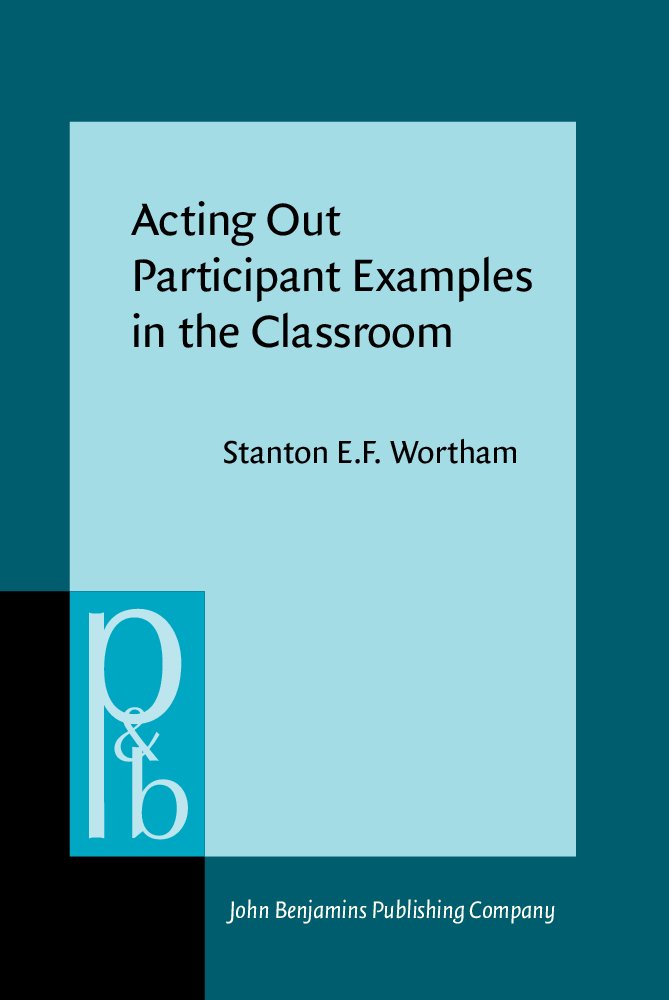
Acting Out Participant Examples in the Classroom (Pragmatics & Beyond New Series),Used
Sold by Ergodebooks, an authorized reseller.
Returns accepted within 30 days | support@ergodebooks.com
Shipping Information
- Free Standard Shipping — United States only
- Processing Time: 3–5 business days
- Estimated Delivery: 6–10 business days after dispatch
- Double-boxed, fully insured & discreetly packaged
- Tracking number sent via email once dispatched
Returns & Refund
Returns accepted within 30 days of delivery.
Damaged or Defective Item
Free return shipping + replacement or full refund
Wrong Item Received
Free return shipping + replacement or full refund
Change of Mind
Return shipping at customer's expense · 25% restocking fee applies
Payment Option

This volume explores a relational pattern that occurs during one type of speech event classroom participant examples. A participant example describes, as an example of something, an event that includes at least one person also participating in the conversation. Participants with a role in the example have two relevant identities as a student or teacher in the classroom, and as a character in whatever event is described as the example. This study reports that in some cases speakers not only discuss, but also act out the roles assigned to them in participant examples. That is, speakers do, with each other, what they are talking about as the content of the example. Participants act as if events described as the example provide a script for their interaction. Drawing on linguistic pragmatics and interactional sociolinguistics, the author describes the linguistic mechanisms that speakers use to act out participant examples. He focuses on the role of deictics, and personal pronouns in particular, in establishing and organizing relationships. The volume also presents a new methodological technique deictic mapping that can be used to uncover interactional organization in all sorts of speech events. Drawing on the philosophy and sociology of education, the volume discusses the social and educational implications of enacted participant examples. Educational theorists generally find participant examples to be cognitively useful, as devices to help students understand pedagogical content. But enacted participant examples have systematic relational consequences as well. The volume presents and discusses enacted participant examples that have clear, and sometimes undesirable, social consequences. It also discusses how we might adjust educational theory and practice, given the relational implications of classroom participant examples.
⚠️ WARNING (California Proposition 65):
This product may contain chemicals known to the State of California to cause cancer, birth defects, or other reproductive harm.
For more information, please visit www.P65Warnings.ca.gov.