
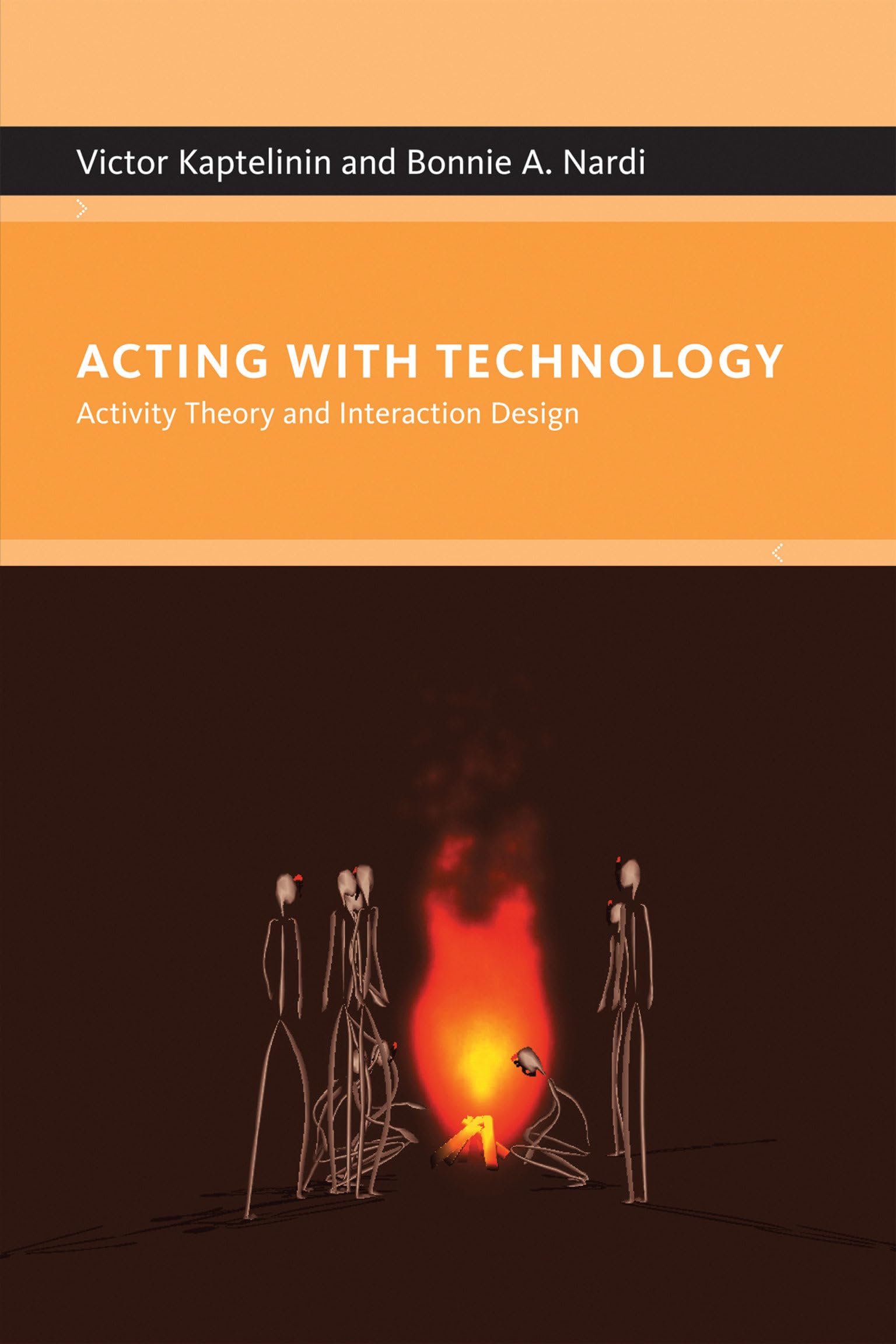
Title
Acting With Technology: Activity Theory And Interaction Design
Sold by Ergodebooks, an authorized reseller.
Returns accepted within 30 days | support@ergodebooks.com
Shipping Information
- Free Standard Shipping — United States only
- Processing Time: 3–5 business days
- Estimated Delivery: 6–10 business days after dispatch
- Double-boxed, fully insured & discreetly packaged
- Tracking number sent via email once dispatched
Returns & Refund
Returns accepted within 30 days of delivery.
Damaged or Defective Item
Free return shipping + replacement or full refund
Wrong Item Received
Free return shipping + replacement or full refund
Change of Mind
Return shipping at customer's expense · 25% restocking fee applies
Payment Option

A Systematic Presentation Of Activity Theory, Its Application To Interaction Design, And An Argument For The Development Of Activity Theory As A Basis For Understanding How People Interact With Technology.Activity Theory Holds That The Human Mind Is The Product Of Our Interaction With People And Artifacts In The Context Of Everyday Activity. Acting With Technology Makes The Case For Activity Theory As A Basis For Understanding Our Relationship With Technology. Victor Kaptelinin And Bonnie Nardi Describe Activity Theory'S Principles, History, Relationship To Other Theoretical Approaches, And Application To The Analysis And Design Of Technologies. The Book Provides The First Systematic Entrylevel Introduction To The Major Principles Of Activity Theory. It Describes The Accumulating Body Of Work In Interaction Design Informed By Activity Theory, Drawing On Work From An International Community Of Scholars And Designers. Kaptelinin And Nardi Examine The Notion Of The Object Of Activity, Describe Its Use In An Empirical Study, And Discuss Key Debates In The Development Of Activity Theory. Finally, They Outline Current And Future Issues In Activity Theory, Providing A Comparative Analysis Of The Theory And Its Leading Theoretical Competitors Within Interaction Design: Distributed Cognition, Actornetwork Theory, And Phenomenologically Inspired Approaches.
⚠️ WARNING (California Proposition 65):
This product may contain chemicals known to the State of California to cause cancer, birth defects, or other reproductive harm.
For more information, please visit www.P65Warnings.ca.gov.
- Q: How many pages does this book have? A: The book has three hundred fifty-two pages. This length provides a comprehensive exploration of activity theory and its applications.
- Q: What are the dimensions of the book? A: The book measures six inches in length, zero point six four inches in width, and nine inches in height. These dimensions make it a convenient size for reading and reference.
- Q: What binding type does this book have? A: The book is published in paperback binding. This type of binding is lightweight and flexible, making it easy to handle.
- Q: Who are the authors of this book? A: The authors are Victor Kaptelinin and Bonnie Nardi. They are both recognized experts in activity theory and interaction design.
- Q: What is the main subject of this book? A: The main subject is Human-Computer Interaction. It focuses on the principles of activity theory in the context of technology.
- Q: Is this book suitable for beginners? A: Yes, the book provides a systematic entry-level introduction to activity theory. It is designed to be accessible for readers new to the subject.
- Q: What topics are covered in this book? A: The book covers activity theory principles, history, and its application to interaction design. It also discusses key debates and future issues in the field.
- Q: Can this book help with understanding technology interactions? A: Yes, it makes the case for activity theory as a basis for understanding human interactions with technology. It provides insights into how people engage with artifacts.
- Q: Is the book intended for academic use? A: Yes, it is suitable for academic settings. The content is informed by a body of work from an international community of scholars.
- Q: How should I store this book? A: Store the book in a dry, cool place away from direct sunlight. Proper storage will help maintain its condition over time.
- Q: What if I receive a damaged book? A: If the book arrives damaged, you can return it for a full refund. Always check the return policy for specific instructions.
- Q: Are there any special care instructions for this book? A: No special care instructions are needed. Just keep it clean and dry to preserve its condition.
- Q: Is there a return policy for this book? A: Yes, there is a return policy in place. Ensure you check the terms for details on returns and exchanges.
- Q: How can I contact support for this book? A: You can contact customer support through the retailer's website. They are available to assist with any inquiries or issues.
- Q: Is this book a good resource for designers? A: Yes, it is a valuable resource for designers. It discusses design principles informed by activity theory, which is relevant to many design practices.