
Title
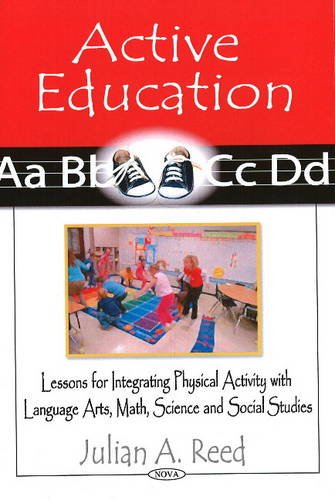
Active Education: Lessons for Integrating Physical Activity With Language Arts, Math, Science and Social Studies,Used
Sold by Ergodebooks, an authorized reseller.
Returns accepted within 30 days | support@ergodebooks.com
Shipping Information
- Free Standard Shipping — United States only
- Processing Time: 3–5 business days
- Estimated Delivery: 6–10 business days after dispatch
- Double-boxed, fully insured & discreetly packaged
- Tracking number sent via email once dispatched
Returns & Refund
Returns accepted within 30 days of delivery.
Damaged or Defective Item
Free return shipping + replacement or full refund
Wrong Item Received
Free return shipping + replacement or full refund
Change of Mind
Return shipping at customer's expense · 25% restocking fee applies
Payment Option

The belief that physical activity plays a pivotal role in the public health of our nation's children is no longer a minority opinion, but rather, a steadfast belief. The health benefits associated with leading an active healthy lifestyle are well documented, yet America's youth remain inactive and overweight, if not obese. Data suggests that about 25 million adolescents are pushing the scales towards obesity. Close to half of American youth do not participate regularly in physical activity and many kids report no participation in activity during an average week. There is an abundance of empirical research findings illustrating how regular physical activity provides an array of physiological health benefits, but what is frequently overlooked is the link between movement and the enhanced cognition of children. Brain research suggests that increasing movement time has the potential to foster academic performance simultaneously, positively influencing the health of our nation's children. Empirical evidence from leading scientists' reveal strong associations between the cerebellum and memory, spatial perception, language attention, emotion, nonverbal cues and the decision making ability among children who are active while learning content in the classroom. Regular physical activity combined with teaching traditional elementary school curricula has also been found to improve concentration, along with reading and mathematic performance and academic achievement measured by standardized tests. Furthermore, positive benefits linked to using movement as a reinforcer to enhance learning by decreasing behavioral episodes of children suffering from ADD and ADHD has also been found. The current emphasis on performance pedagogy and standardized testing related to No Child Left Behind has caused many States and school districts to reduce physical education offerings, and in some instances reduce the amount of daily recess time to increase classroom contact hours to boost test scores. What most teachers and principals often ignore is that teaching current elementary school curricula (i.e., Language Arts, Math, Science and Social Studies) with movement can improve academic performance and achievement while improving the wellness of future generations of children. "Active Education: Lessons for Integrating Physical Activity with Language Arts, Math, Science and Social Studies" provides teachers with standardbased activities to teach required elementary school curricula with movement to make teaching and learning more enjoyable!
⚠️ WARNING (California Proposition 65):
This product may contain chemicals known to the State of California to cause cancer, birth defects, or other reproductive harm.
For more information, please visit www.P65Warnings.ca.gov.