If you have any questions, you are always welcome to contact us. We'll get back to you as soon as possible, withing 24 hours on weekdays.
Customer service
All questions about your order, return and delivery must be sent to our customer service team by e-mail at yourstore@yourdomain.com
Sale & Press
If you are interested in selling our products, need more information about our brand or wish to make a collaboration, please contact us at press@yourdomain.com
Help
If you have any questions, you are always welcome to contact us. We'll get back to you as soon as possible, withing 24 hours on weekdays.
Customer service
All questions about your order, return and delivery must be sent to our customer service team by e-mail at yourstore@yourdomain.com
Sale & Press
If you are interested in selling our products, need more information about our brand or wish to make a collaboration, please contact us at press@yourdomain.com
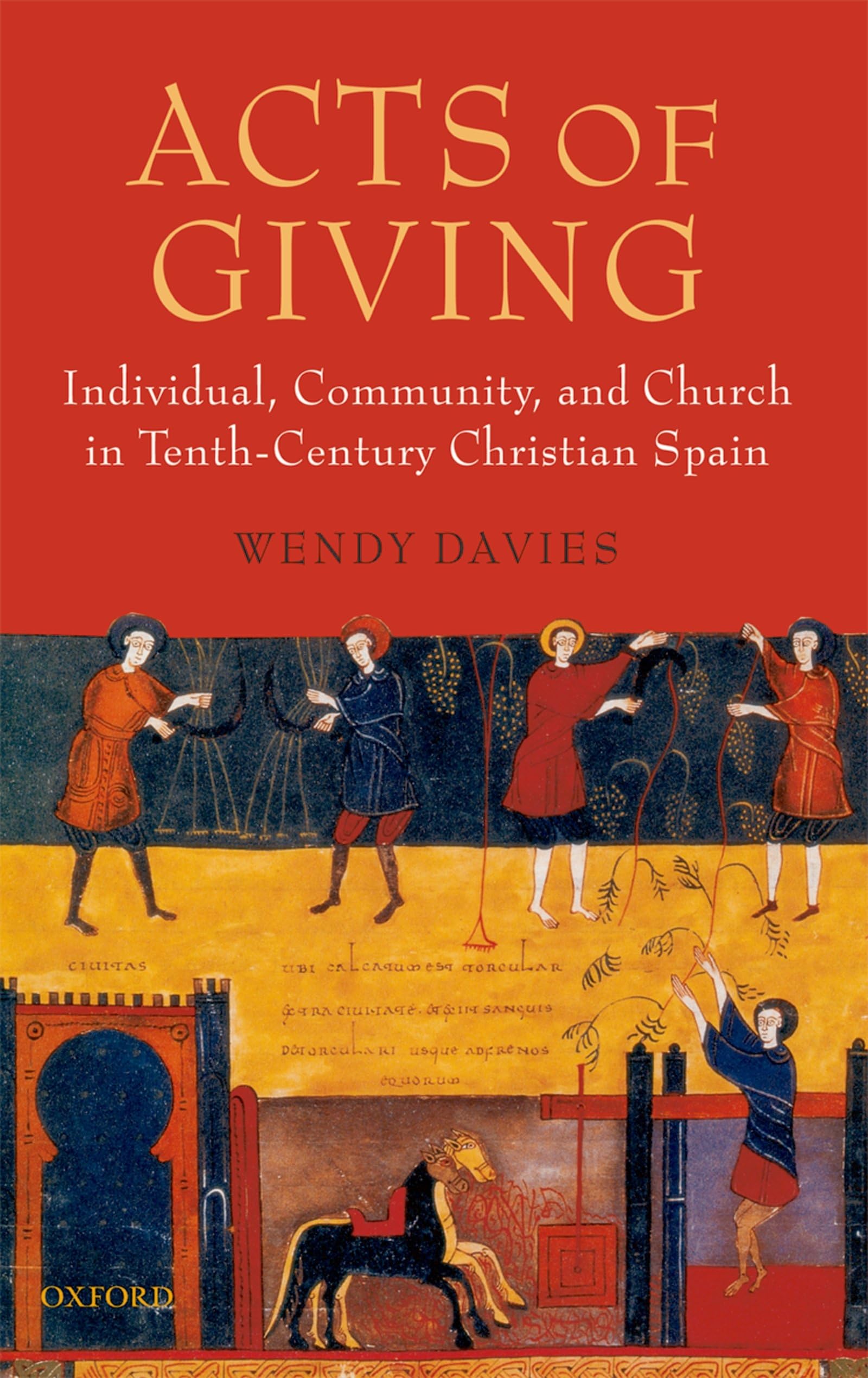
Acts of Giving examines the issues surrounding donation the giving of property, usually landed propertyin northern "Christian" Spain in the tenth century, when written texts became very plentiful, allowing us to glimpse the working of local society.Wendy Davies explores who gives and who receives; what is given; reasons for giving; and the place of giving within the complex of social and economic relationships in society as a whole. People gave land for all kinds of reasons because they were forced to do so, to meet debts or pay fines; because they wanted to gain material benefits in life, or to secure support in the short term or in old age. Giving pro anima, for the sake of the soul, was relatively limited; and gifts were made to lay persons as well as to the church. Family interests were strongly sustained across the tenth century and did not dwindle; family land was split and reassembled, not fragmented. The gender and status of donors are key themes, along with commemoration: more men than women took steps to memorialize, in contrast to some parts of western Europe, and more aristocrats than peasants, which is less of a contrast. Donation as a type of transaction is also examined, as well as the insights into status afforded by the language and form of the records. Buying and selling, giving and receiving continued in the tenthcentury as it had for centuries. However this period saw the volume of peasant donation to the church increasing enormously. It was this which set the conditions for substantial social and economic change.
⚠️ WARNING (California Proposition 65):
This product may contain chemicals known to the State of California to cause cancer,
birth defects, or other reproductive harm.
For MAP (Minimum Advertised Price) violations and Intellectual Property (IP) or Trademark concerns, please contact:
support@ergodebooks.com
⚠️ California Proposition 65 Warning: Some products sold on this website may expose you to chemicals known to the State of California to cause cancer, birth defects, or other reproductive harm. For more information, visit www.P65Warnings.ca.gov.