
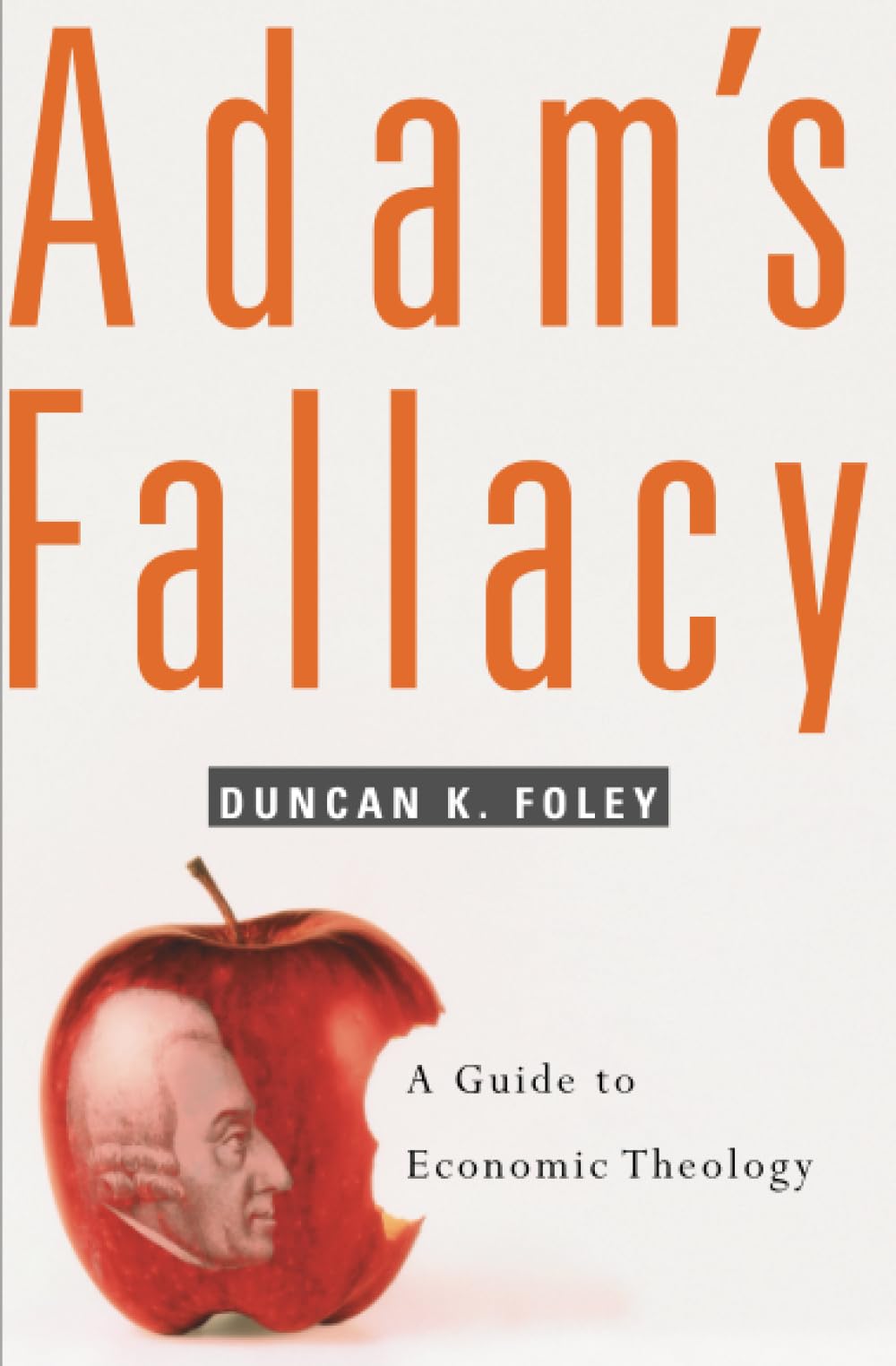
Title


Adams Fallacy: A Guide To Economic Theology
Sold by Ergodebooks, an authorized reseller.
Returns accepted within 30 days | support@ergodebooks.com
Shipping Information
- Free Standard Shipping — United States only
- Processing Time: 3–5 business days
- Estimated Delivery: 6–10 business days after dispatch
- Double-boxed, fully insured & discreetly packaged
- Tracking number sent via email once dispatched
Returns & Refund
Returns accepted within 30 days of delivery.
Damaged or Defective Item
Free return shipping + replacement or full refund
Wrong Item Received
Free return shipping + replacement or full refund
Change of Mind
Return shipping at customer's expense · 25% restocking fee applies
Payment Option

This Book Could Be Called The Intelligent Persons Guide To Economics. Like Robert Heilbroners The Worldly Philosophers, It Attempts To Explain The Core Ideas Of The Great Economists, Beginning With Adam Smith And Ending With Joseph Schumpeter. In Between Are Chapters On Thomas Malthus, David Ricardo, Karl Marx, The Marginalists, John Maynard Keynes, Friedrich Hayek, And Thorstein Veblen. The Title Expresses Duncan Foleys Belief That Economics At Its Most Abstract And Interesting Level Is A Speculative Philosophical Discourse, Not A Deductive Or Inductive Science. Adams Fallacy Is The Attempt To Separate The Economic Sphere Of Life, In Which The Pursuit Of Selfinterest Is Led By The Invisible Hand Of The Market To A Socially Beneficial Outcome, From The Rest Of Social Life, In Which The Pursuit Of Selfinterest Is Morally Problematic And Has To Be Weighed Against Other Ends.Smith And His Successors Argued That The Market And The Division Of Labor That Is Fostered By It Result In Tremendous Gains In Productivity, Which Lead To A Higher Standard Of Living. Yet The Market Does Not Address The Problem Of Distributionthat Is, How Is The Gain In Wealth To Be Divided Among The Classes And Members Of Society? Nor Does It Address Such Problems As The Longrun Wellbeing Of The Planet.Adams Fallacy Is Beautifully Written And Contains Interesting Observations And Insights On Almost Every Page. It Will Engage The Readers Thoughts And Feelings On The Deepest Level.
⚠️ WARNING (California Proposition 65):
This product may contain chemicals known to the State of California to cause cancer, birth defects, or other reproductive harm.
For more information, please visit www.P65Warnings.ca.gov.
- Q: What is the page count of Adam’s Fallacy? A: This book contains two hundred eighty-eight pages. It's a comprehensive guide that delves into economic theories and historical perspectives.
- Q: What are the dimensions of the book? A: The dimensions are five point twenty-five inches long, zero point seventy-two inches wide, and eight inches tall. This size makes it easy to handle and read.
- Q: What type of binding does this book have? A: Adam’s Fallacy is published in paperback binding. This makes it lightweight and easier to carry around.
- Q: Who is the author of Adam’s Fallacy? A: The author is Duncan K. Foley. He explores complex economic ideas in an accessible manner.
- Q: What genre does this book belong to? A: This book falls under the Economic History genre. It provides insights into economic theories and their historical context.
- Q: How can I apply the concepts in Adam’s Fallacy? A: You can apply these concepts by considering the philosophical underpinnings of economic decisions in real life. It offers a reflective approach to understanding economics.
- Q: Is this book suitable for beginners in economics? A: Yes, this book is suitable for beginners. It explains complex ideas in an engaging and understandable way.
- Q: What topics does Adam’s Fallacy cover? A: It covers topics including Adam Smith, Karl Marx, and John Maynard Keynes. Each chapter offers insights into their contributions to economic thought.
- Q: How should I store this book? A: Store this book in a cool, dry place to preserve its condition. Avoid exposure to direct sunlight to prevent fading.
- Q: Can I clean the book if it gets dirty? A: Yes, you can gently wipe the cover with a soft, dry cloth. Avoid using water or cleaning solutions on the pages.
- Q: What if my book arrives damaged? A: If your book arrives damaged, you can contact the seller for a replacement or refund. Make sure to report the issue promptly.
- Q: Is there a return policy for Adam’s Fallacy? A: Yes, there is a return policy. Check with the seller for specific details regarding returns and exchanges.
- Q: How does Adam’s Fallacy compare to other economics books? A: This book offers a unique philosophical perspective compared to more traditional economics texts. It emphasizes speculative discourse over strict scientific methods.
- Q: Is this book appropriate for advanced economics students? A: Yes, it can benefit advanced students by providing deeper philosophical insights into economic theories. It's a thought-provoking read.
- Q: What are the key themes in Adam’s Fallacy? A: Key themes include the tension between self-interest and social good, and the critique of the market's role in wealth distribution. These themes provoke critical thinking about economics.