
Title
Adaptive Governance and Water Conflict,Used
Sold by Ergodebooks, an authorized reseller.
Returns accepted within 30 days | support@ergodebooks.com
Shipping Information
- Free Standard Shipping — United States only
- Processing Time: 3–5 business days
- Estimated Delivery: 6–10 business days after dispatch
- Double-boxed, fully insured & discreetly packaged
- Tracking number sent via email once dispatched
Returns & Refund
Returns accepted within 30 days of delivery.
Damaged or Defective Item
Free return shipping + replacement or full refund
Wrong Item Received
Free return shipping + replacement or full refund
Change of Mind
Return shipping at customer's expense · 25% restocking fee applies
Payment Option

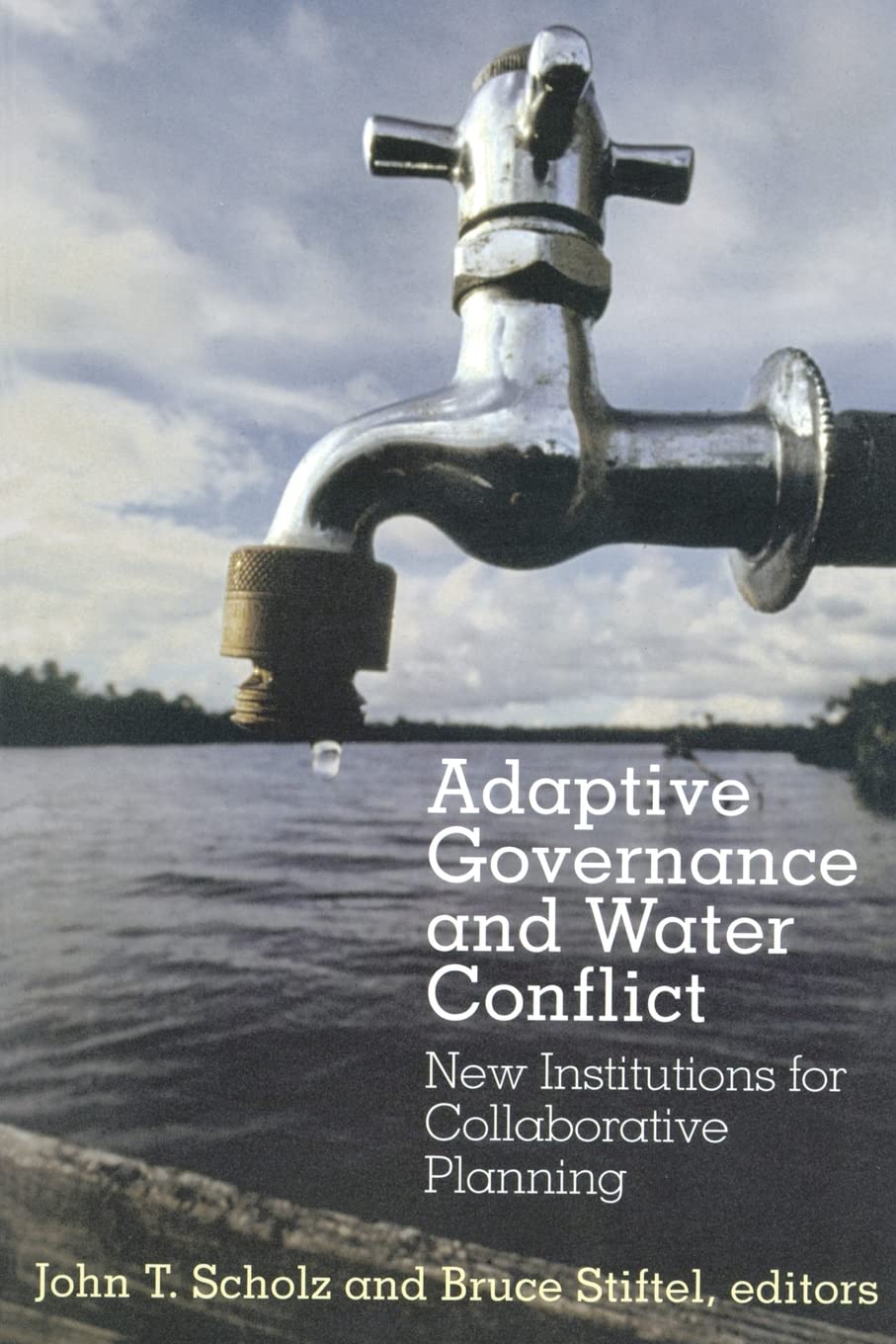
Water policy seems in perpetual crisis. Increasingly, conflicts extend beyond the statutory authority, competence, geographical jurisdictions, and political constituencies of highly specialized governing authorities. While other books address specific policy approaches or the application of adaptive management strategies to specific problems, this is the first book to focus more broadly on adaptive governance, or the evolution of new institutions that attempt to resolve conflicts among competing authorities. Adaptive Governance and Water Conflict investigates new types of water conflicts among users in the seemingly waterrich Eastern United States. Eight case studies of water quality, water quantity, and habitat preservation or restoration in Florida were chosen to span the range of conflicts crossing fragmented regulatory boundaries. Each begins with a history of the conflict and then focuses on the innovative institutional arrangements some successful, some not that evolved to grapple with the resulting challenges. In the chapters that follow, scholars and practitioners in urban planning, political science, engineering, law, policy, administration, and geology offer different theoretical and experiencebased perspectives on the cases. Together, they discuss five challenges that new institutions must overcome to develop sustainable solutions for water users: Who is to be involved in the policy process? How are they to interact? How is science to be used? How are users and the public to be made aware? How can solutions be made efficient and equitable? In its diverse perspectives and unique combination of theory, application, and analysis, Adaptive Governance and Water Conflict will be a valuable book for water professionals, policy scientists, students, and scholars in natural resource planning and management.
⚠️ WARNING (California Proposition 65):
This product may contain chemicals known to the State of California to cause cancer, birth defects, or other reproductive harm.
For more information, please visit www.P65Warnings.ca.gov.