
Title
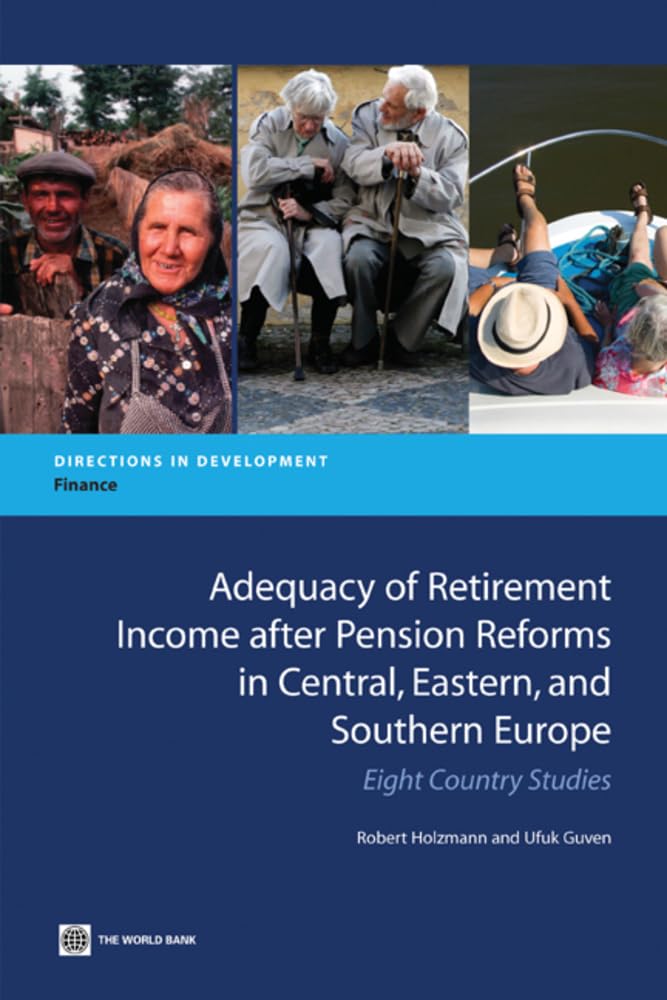
Adequacy Of Retirement Income After Pension Reforms In Central, Eastern And Southern Europe: Eight Country Studies (Directions I,Used
Sold by Ergodebooks, an authorized reseller.
Returns accepted within 30 days | support@ergodebooks.com
Shipping Information
- Free Standard Shipping — United States only
- Processing Time: 3–5 business days
- Estimated Delivery: 6–10 business days after dispatch
- Double-boxed, fully insured & discreetly packaged
- Tracking number sent via email once dispatched
Returns & Refund
Returns accepted within 30 days of delivery.
Damaged or Defective Item
Free return shipping + replacement or full refund
Wrong Item Received
Free return shipping + replacement or full refund
Change of Mind
Return shipping at customer's expense · 25% restocking fee applies
Payment Option

The former transition countries of Central, Eastern, and Southern Europe (CESE) inherited defined benefit public pension systems financed on a payasyougo basis. Under central planning, these systems exhibited fiscal strains which worsened during the early years of the transition and became unsustainable under a market economy and projected population aging. All CESE countries introduced reforms that varied with regard to the choice between parametric and systemic reforms and over the introduction of funding but typically focused on issues of sustainability rather than benefit adequacy. To assess benefit adequacy of the reformed systems against the imperative of longterm fiscal sustainability individual studies for nine CESE countries Bulgaria, Czech Republic, Croatia, Hungary, Poland, Romania, Slovakia, Slovenia, and Serbia have been prepared. Benefit adequacy is thereby assessed by the gross and net replacement rates for steady state conditions approximated by the year 2040 for both income and contribution record dimension of the insured. These nine case studies plus a summary are compiled in this book suggesting the following broad policy conclusions: (i) fiscal sustainability has improved in most study countries, but few are fully prepared for the inevitability of population aging; (ii) the linkage between contributions and benefits has been strengthened, and pension system designs are better suited to market conditions; (iii) levels of income replacement are generally adequate for all but some categories of workers (including those with intermittent formal sector employment or low lifetime wages) addressing their needs will require macro and microeconomic initiatives that go beyond pension policy; (iv) further reforms to cope with population aging should focus on extending labor force participation by the elderly to avoid benefit cuts that could undermine adequacy and very high contribution rates that could discourage formal sector employment; and (v) more decisive financial market reforms are needed for funded provisions to deliver on the return expectations of participants.
⚠️ WARNING (California Proposition 65):
This product may contain chemicals known to the State of California to cause cancer, birth defects, or other reproductive harm.
For more information, please visit www.P65Warnings.ca.gov.