
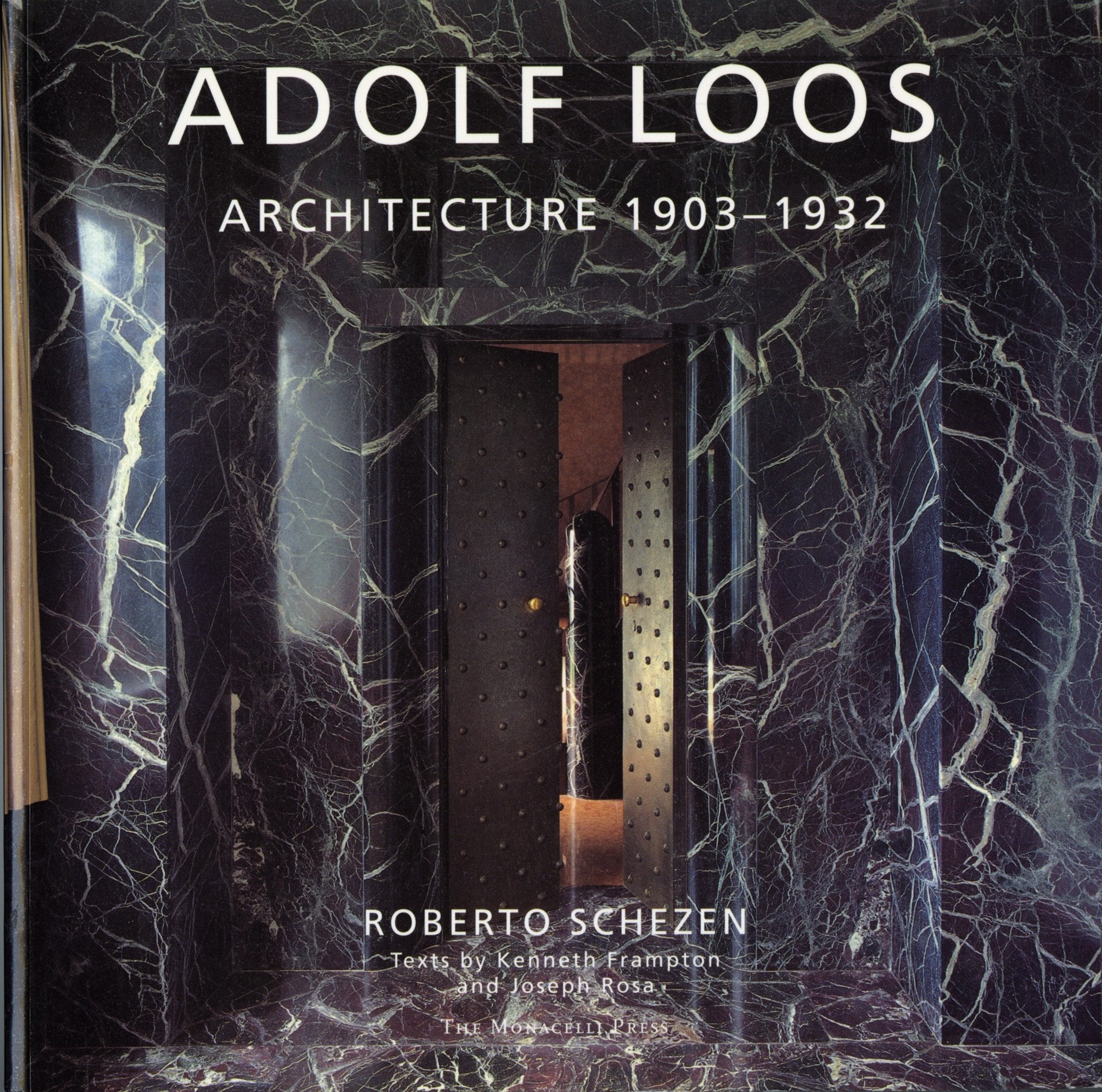
Title
Adolf Loos: Architecture 19031932
Sold by Ergodebooks, an authorized reseller.
Returns accepted within 30 days | support@ergodebooks.com
Shipping Information
- Free Standard Shipping — United States only
- Processing Time: 3–5 business days
- Estimated Delivery: 6–10 business days after dispatch
- Double-boxed, fully insured & discreetly packaged
- Tracking number sent via email once dispatched
Returns & Refund
Returns accepted within 30 days of delivery.
Damaged or Defective Item
Free return shipping + replacement or full refund
Wrong Item Received
Free return shipping + replacement or full refund
Change of Mind
Return shipping at customer's expense · 25% restocking fee applies
Payment Option

Adolf Loos not only was part of the first wave of modern architecture but also served as an important source of inspiration for all architects who followed. He is emblematic of the turnofthecentury generation that was torn between the traditional culture of the nineteenth century and the innovative modernism of the twentieth. Looss masterful astylistic architecture is captured in this volume by the esteemed photographer Roberto Schezen in over one hundred exceptional photographs.Starting with the refurbishment of his own apartment in 1903, twenty of Looss most significant buildings are beautifully displayed: Villa Karma, the Krntner Bar, the Goldman & Salatsch Michaelerplatz Building, the Zentralsparkasse Bank, and the Steiner, Scheu, Moller, and Mller houses. Schezens vivid color and luminous blackandwhite photographs display each building in detail, showing both the formal characteristics and the rich textures and materials Loos most frequently used.Complementing this remarkable visual material is Kenneth Framptons perceptive essay, which places Loos within the context of Viennese intellectuals of the time. His circle, which included Arnold Schnberg, Ludwig Wittgenstein, and at the center, Karl Kraus, explored the essential nature of architecture, and the other arts and sciences, through linguistic structures. Frampton identifies the hallmarks that Loos derived from these structures and with which he created his work: the blank, degreezero exterior with its luxurious interior; his commentary on architectures position between art and function, plus subtle recollections of both the classic and the vernacular. All these ploys were to subvert typical architectural expectations. Joseph Rosas accompanying descriptions comprehensively discuss each building, from the circumstances surrounding the realization of the projects to the use of Looss architectural conventions.
⚠️ WARNING (California Proposition 65):
This product may contain chemicals known to the State of California to cause cancer, birth defects, or other reproductive harm.
For more information, please visit www.P65Warnings.ca.gov.