If you have any questions, you are always welcome to contact us. We'll get back to you as soon as possible, withing 24 hours on weekdays.
Customer service
All questions about your order, return and delivery must be sent to our customer service team by e-mail at yourstore@yourdomain.com
Sale & Press
If you are interested in selling our products, need more information about our brand or wish to make a collaboration, please contact us at press@yourdomain.com
Help
If you have any questions, you are always welcome to contact us. We'll get back to you as soon as possible, withing 24 hours on weekdays.
Customer service
All questions about your order, return and delivery must be sent to our customer service team by e-mail at yourstore@yourdomain.com
Sale & Press
If you are interested in selling our products, need more information about our brand or wish to make a collaboration, please contact us at press@yourdomain.com
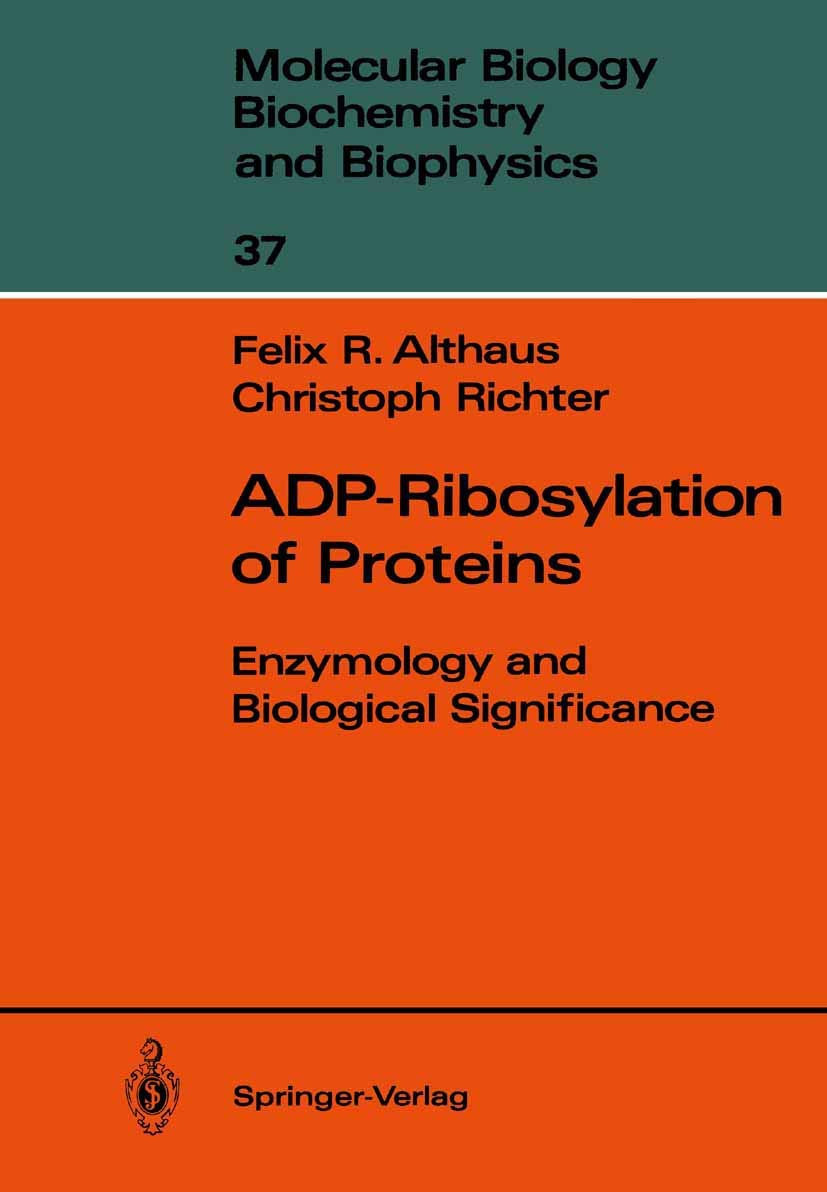
In 1966, a paper entitled 'On the formation of a novel adenylylic compound by enzymatic extracts of liver nuclei' from Paul Mandel's laboratory in Strasbourg, France, planted the seed for a rapidly growing new field of biological research focusing on ADPribosylation reactions. The development of this field over the past 2 decades reflects very much a modern trend of biological research. As more detailed knowledge accumulates, enigmatic phenomena turn into concepts which create their own enigmata. This process tends to favor the development of multiple, seemingly disconnected, research lines until simplicity emerges from chaos and unifying concepts substitute for controversy. It appears that the field of ADPribosylation reactions has not yet attained this latter stage. For example, with the identification of two different classes of ADPribosylation reactions, i.e., monoADPribosyla tion and polyADPribosylation reactions, the field split very early into two separate branches of research. With the present volume, we have divided the task of reviewing these two classes of ADP ribosylation accordingly, although their coexistence in eukaryotes may involve a closer functional linkage than hitherto recognized.
⚠️ WARNING (California Proposition 65):
This product may contain chemicals known to the State of California to cause cancer,
birth defects, or other reproductive harm.
For MAP (Minimum Advertised Price) violations and Intellectual Property (IP) or Trademark concerns, please contact:
support@ergodebooks.com
⚠️ California Proposition 65 Warning: Some products sold on this website may expose you to chemicals known to the State of California to cause cancer, birth defects, or other reproductive harm. For more information, visit www.P65Warnings.ca.gov.