
Title
Adsorption mechanism in membranes: Modeling, Thermokinetics and Fabrication,Used
Sold by Ergodebooks, an authorized reseller.
Returns accepted within 30 days | support@ergodebooks.com
Shipping Information
- Free Standard Shipping — United States only
- Processing Time: 3–5 business days
- Estimated Delivery: 6–10 business days after dispatch
- Double-boxed, fully insured & discreetly packaged
- Tracking number sent via email once dispatched
Returns & Refund
Returns accepted within 30 days of delivery.
Damaged or Defective Item
Free return shipping + replacement or full refund
Wrong Item Received
Free return shipping + replacement or full refund
Change of Mind
Return shipping at customer's expense · 25% restocking fee applies
Payment Option

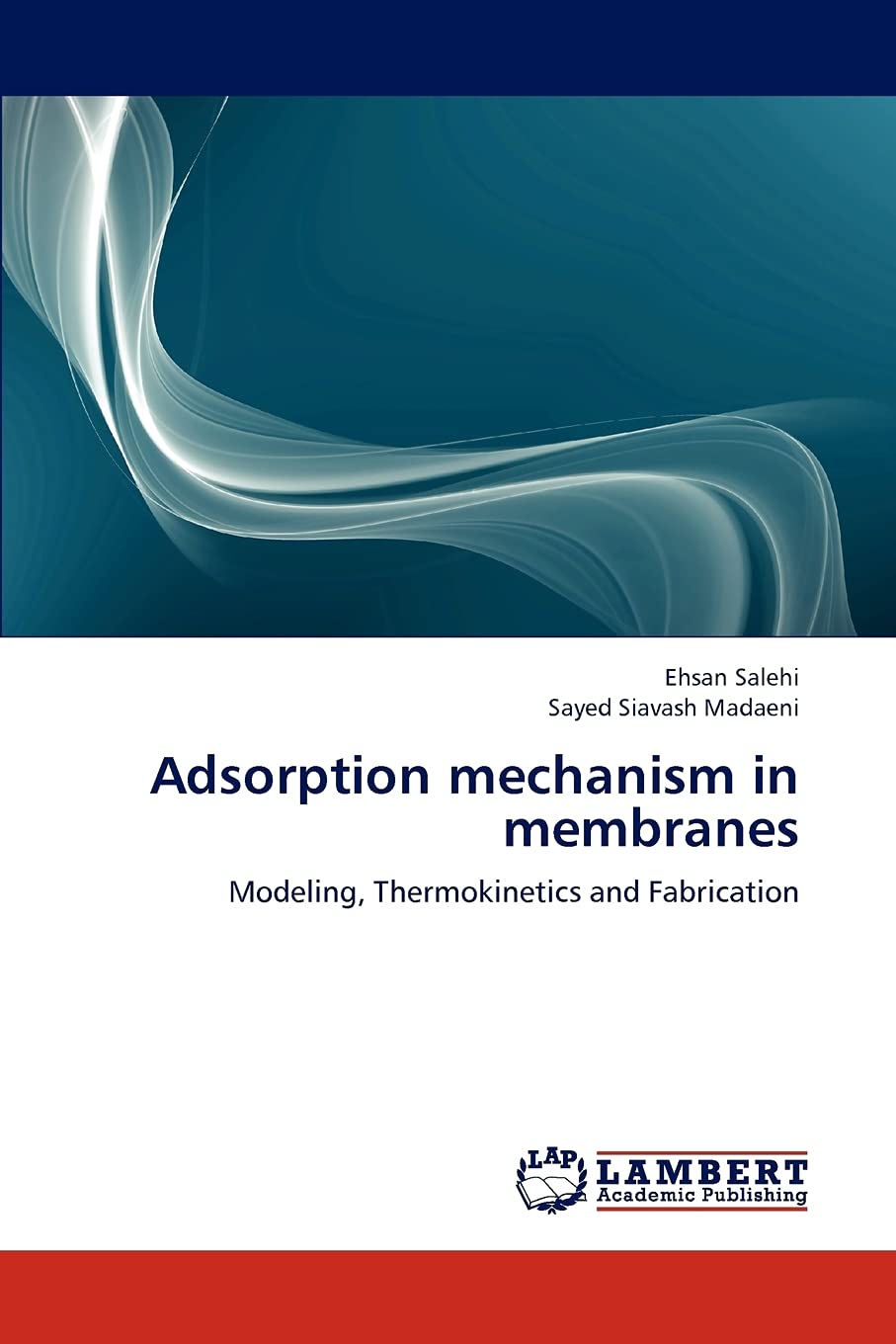
Adsorption plays a bilateral role as a membrane separation mechanism. As a fouling mechanism, adsorption is unfavorable and should be controlled; however, affinity membranes are powerful adsorbents for the separation of proteins and heavy metals. Such aspects of adsorption mechanism with respect to membrane technology have not been tackled in literature and thus, they are aimed by the current book. To study adsorption, mathematical modeling has been employed as well as classical thermodynamics. In this book, parameters affecting adsorptive fouling including membrane characteristics (e.g., conductivity, morphology, roughness), solution properties (e.g., ionic charge, pH) and operating conditions (e.g., temperature) have been studied. Besides, imprinted membranes and thin adsorptive membranes as novel membraneadsorbents have been tackled. Ionimprinted membranes can selectively adsorb target ions. Thin adsorptive membranes offer great potential for the separation of trace amounts of heavy metals. This book may be useful for the membranologists especially, those interested in adsorptive membranes, adsorptive fouling and modeling of transport phenomena in membranes.
⚠️ WARNING (California Proposition 65):
This product may contain chemicals known to the State of California to cause cancer, birth defects, or other reproductive harm.
For more information, please visit www.P65Warnings.ca.gov.