
Title
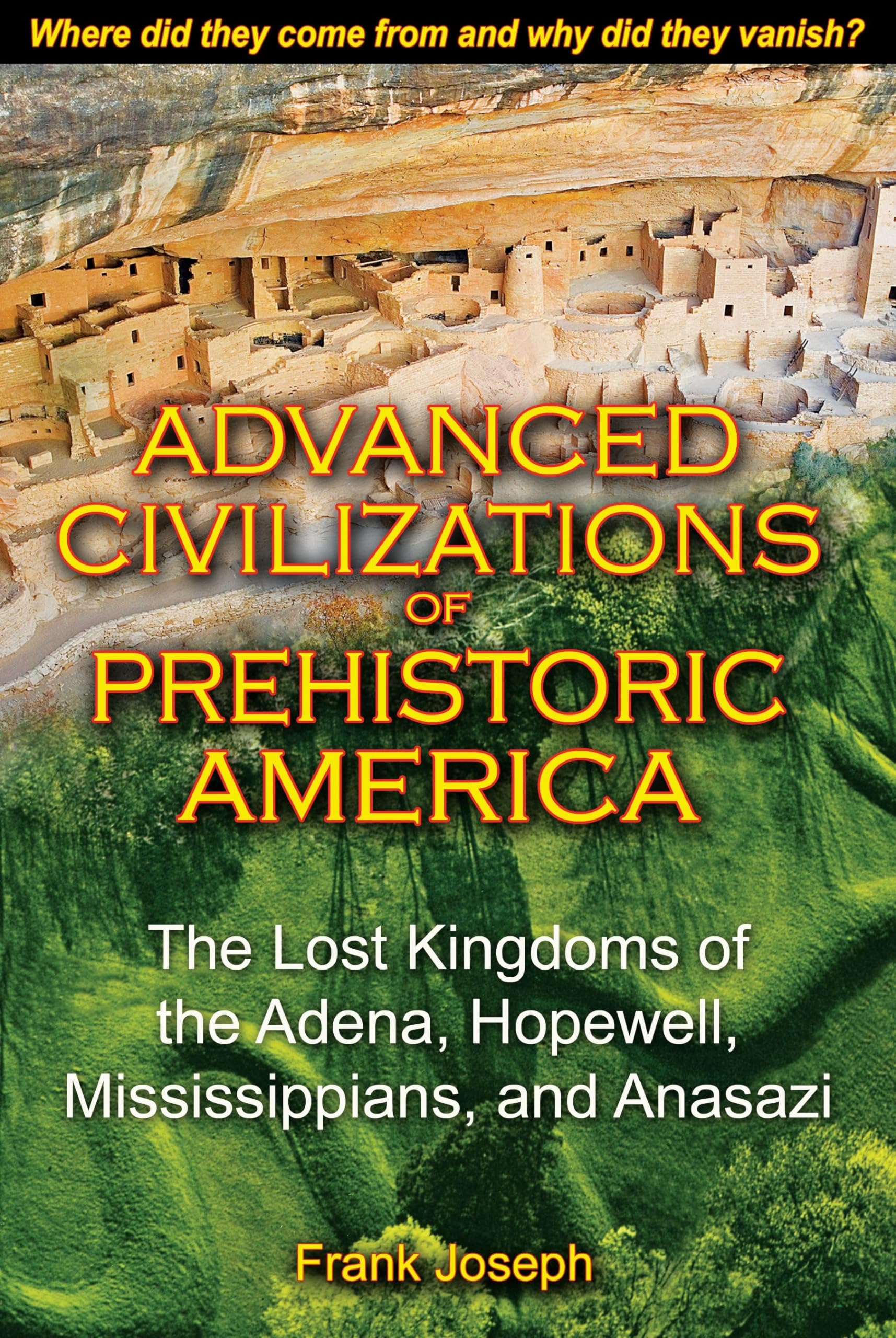
Advanced Civilizations of Prehistoric America: The Lost Kingdoms of the Adena, Hopewell, Mississippians, and Anasazi,Used
Sold by Ergodebooks, an authorized reseller.
Returns accepted within 30 days | support@ergodebooks.com
Shipping Information
- Free Standard Shipping — United States only
- Processing Time: 3–5 business days
- Estimated Delivery: 6–10 business days after dispatch
- Double-boxed, fully insured & discreetly packaged
- Tracking number sent via email once dispatched
Returns & Refund
Returns accepted within 30 days of delivery.
Damaged or Defective Item
Free return shipping + replacement or full refund
Wrong Item Received
Free return shipping + replacement or full refund
Change of Mind
Return shipping at customer's expense · 25% restocking fee applies
Payment Option

The examination of four great civilizations that existed before Columbuss arrival in North America offers evidence of sustained contact between the Old and New Worlds Describes the cultural splendor, political might, and incredibly advanced technology of these precursors to our modern age Shows that North Americas first civilization, the Adena, was sparked by ancient Kelts from Western Europe and explores links between Hopewell Mound Builders and prehistoric Japanese seafarersBefore Rome ruled the Classical World, gleaming stone pyramids stood amid smoking iron foundries from North Americas Atlantic seaboard to the Mississippi River. On its east bank, across from todays St. Louis, Missouri, flourished a walled city more populous than London was one thousand years ago, with a pyramid largerat its basethan Egypts Great Pyramid. During the 12th century, hydraulic engineers laid out a massive irrigation network spanning the American Southwest that, if laid end to end, would stretch from Phoenix, Arizona, to the Canadian border. On a scale to match, they built a fivemilewide dam from ten million cubic yards of rock. While Europe stumbled through the Dark Ages, a metropolis of weirdly shaped, multistory superstructures, precisely aligned to the sun and moon, sprawled across the New Mexico Desert.Who was responsible for such colossal achievements? Where did their mysterious builders come from, and what became of them? These are some of the questions investigated by Frank Joseph in his examination of ancient influences at work on our continent. He reveals that modern civilization is not the first to arise in North America but was preceded instead by four high cultures that rose and fell over the past three thousand years: the Adena, Hopewell, Mississippian, and AnasaziHohokam. How they achieved greatness and why they vanished so completely are the intriguing enigmas explored by this unconventional prehistory of our country, Advanced Civilizations of Prehistoric America.
⚠️ WARNING (California Proposition 65):
This product may contain chemicals known to the State of California to cause cancer, birth defects, or other reproductive harm.
For more information, please visit www.P65Warnings.ca.gov.
- Q: How many pages does the book have? A: The book has three hundred twenty-eight pages. This length provides a comprehensive exploration of ancient North American civilizations.
- Q: What is the binding type of this book? A: The book is paperback bound. This makes it lightweight and portable for easy reading.
- Q: What are the dimensions of the book? A: The book measures six inches in length, zero point six inches in width, and nine point zero two inches in height. These dimensions make it a standard size for easy handling.
- Q: Who is the author of the book? A: The author of the book is Frank Joseph. He is known for his work exploring ancient civilizations and their impact.
- Q: What genre does this book fall under? A: The book falls under the Native American genre. It focuses on the historical and cultural aspects of ancient civilizations in North America.
- Q: What is the main focus of the book? A: The main focus of the book is the examination of four great civilizations that existed in North America before Columbus. It provides insights into their culture, technology, and eventual decline.
- Q: Can this book be read by children? A: Yes, this book is suitable for older children and young adults. It provides educational content about ancient civilizations.
- Q: Is there an age recommendation for reading this book? A: The book is recommended for ages twelve and up. It contains complex themes suitable for a mature audience.
- Q: How can I benefit from reading this book? A: Reading this book can enhance your understanding of North American history and ancient civilizations. It offers unique insights into cultural connections.
- Q: What should I do to keep the book in good condition? A: To maintain the book's condition, store it in a cool, dry place away from direct sunlight. Avoid bending the cover or pages.
- Q: Is it safe to read this book around children? A: Yes, it is safe to read this book around children, but adult supervision is recommended for younger readers due to complex themes.
- Q: What if the book arrives damaged? A: If the book arrives damaged, you should contact customer service for a return or exchange. Most retailers have policies for damaged items.
- Q: How do I clean the book if it gets dirty? A: To clean the book, gently wipe the cover with a dry cloth. Avoid using liquids as they can damage the pages.
- Q: Does the book include illustrations or images? A: No, this book does not include illustrations or images. It focuses on text to convey its historical narrative.
- Q: Is there a warranty for this book? A: No, books typically do not come with a warranty. However, check the retailer's return policy for any guarantees.