If you have any questions, you are always welcome to contact us. We'll get back to you as soon as possible, withing 24 hours on weekdays.
Customer service
All questions about your order, return and delivery must be sent to our customer service team by e-mail at yourstore@yourdomain.com
Sale & Press
If you are interested in selling our products, need more information about our brand or wish to make a collaboration, please contact us at press@yourdomain.com
Help
If you have any questions, you are always welcome to contact us. We'll get back to you as soon as possible, withing 24 hours on weekdays.
Customer service
All questions about your order, return and delivery must be sent to our customer service team by e-mail at yourstore@yourdomain.com
Sale & Press
If you are interested in selling our products, need more information about our brand or wish to make a collaboration, please contact us at press@yourdomain.com
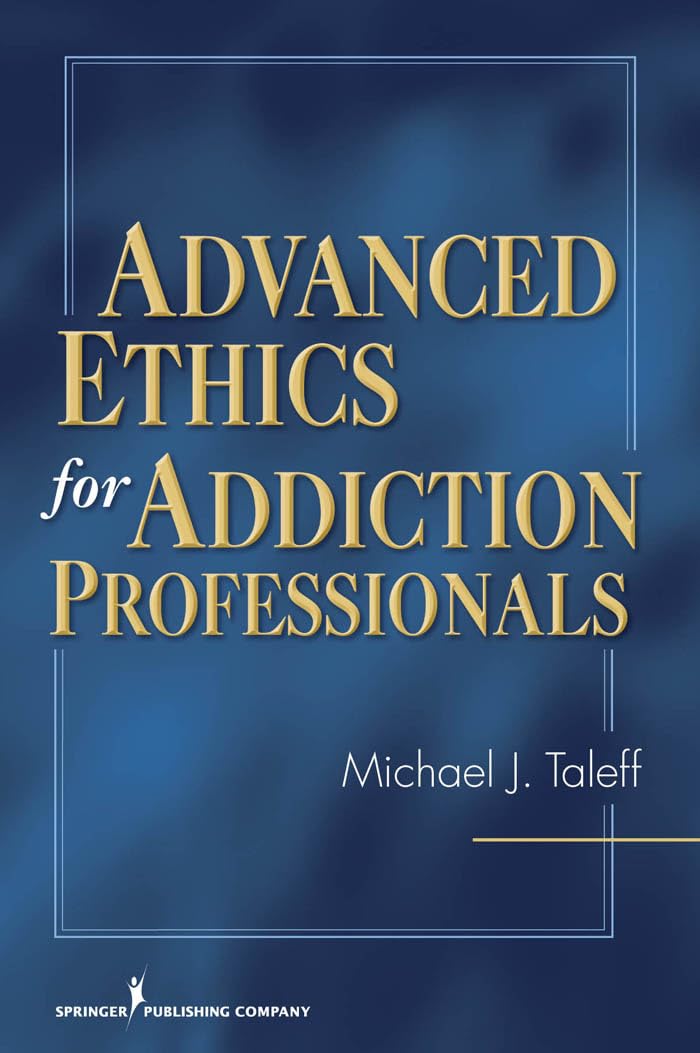
The aspects of the book related to the philosophy of science and cognitive science (inductive and deductive reasoning, biases, and heuristics) are distilled in reasonable and useful ways. I recommend this book to those addiction professionals who want to create their own framework for ethical decision making.PsycCRITIQUESEthical decisionmaking is required in many of the difficult situations faced by addiction professionals. In this guide, Michael Taleff describes how to integrate critical thinking with ethical decisionmaking. This is a guide not on 'what to do' when confronted with difficult ethical dilemmas, but on how to think about what to do.The author presents common ethical dilemmas that addiction professionals face in their daily worksuch as boundary issues, confidentiality, dual relationships, and moreand asks readers to consider their own responses to these dilemmas. The book then shows readers how to apply new models of ethical thinking to practice.Key features: Presents an ethical selfexam to encourage critical thinking about one's own decisionmaking method Introduces a variety of models such as the social contract theory, existentialist theory, and ethical egoism Discusses how biases, emotional reactions, and fallacies can weaken ethical decisionmaking Presents an introductory 'Ethics Judgment Kit,' a simple, practical decisionmaking procedure for studentsThis book demonstrates how critical thinking skills can impact and improve the process of ethical decisionmaking.'
⚠️ WARNING (California Proposition 65):
This product may contain chemicals known to the State of California to cause cancer,
birth defects, or other reproductive harm.
For MAP (Minimum Advertised Price) violations and Intellectual Property (IP) or Trademark concerns, please contact:
support@ergodebooks.com
⚠️ California Proposition 65 Warning: Some products sold on this website may expose you to chemicals known to the State of California to cause cancer, birth defects, or other reproductive harm. For more information, visit www.P65Warnings.ca.gov.