
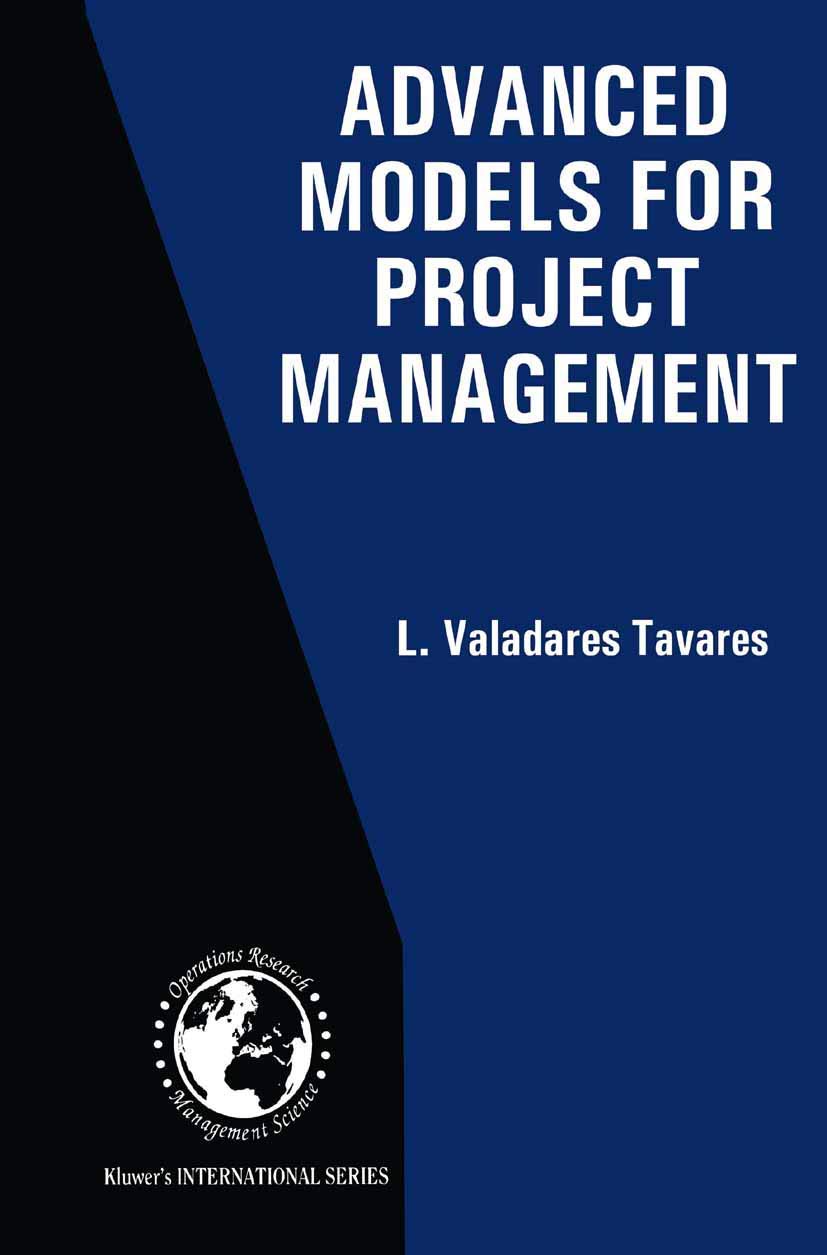
Title
Advanced Models for Project Management (International Series in Operations Research & Management Science, 16),New
Sold by Ergodebooks, an authorized reseller.
Returns accepted within 30 days | support@ergodebooks.com
Shipping Information
- Free Standard Shipping — United States only
- Processing Time: 3–5 business days
- Estimated Delivery: 6–10 business days after dispatch
- Double-boxed, fully insured & discreetly packaged
- Tracking number sent via email once dispatched
Returns & Refund
Returns accepted within 30 days of delivery.
Damaged or Defective Item
Free return shipping + replacement or full refund
Wrong Item Received
Free return shipping + replacement or full refund
Change of Mind
Return shipping at customer's expense · 25% restocking fee applies
Payment Option

More than forty years have passed since the early attempts to model projects. A large domain of theoretical developments has grown producing a high number of analytical and numerical results, but it seems that the main model is still the same: the concept of project network. This concept has come to represent the two major features underlying the notion of a project: the sequential and the competitive nature of its components, the project's activities. Actually, the sequential property defines the structure of the project and the competitive nature stems from the use of common resources (facilities, goods, equipment, management, etc.) to carry out the different activities. However, significant advances have been achieved in project modelling, allowing the production of much more powerful results: A. the concept of precedence and the description of activities has been generalized to produce a wide range of realistic representation of projects. B. the stochastic study of the features of projects such as the duration and cost of their activities is carried out by several analytical and numerical models, allowing experimental and forecasting analyses. C. the allocation of resources can be now studied for more complex situations and restrictions. D. the financial description of projects is more accurately studied and its optimization is thoroughly pursued. E. the assessment and the evaluation of projects now can be studied within the framework of multicriteria decision theory considering multiple perspectives and supporting the project manager to select the most appropriate compromises between risk, time and expected gains.
⚠️ WARNING (California Proposition 65):
This product may contain chemicals known to the State of California to cause cancer, birth defects, or other reproductive harm.
For more information, please visit www.P65Warnings.ca.gov.